
The global internet governance community has just closed the books on ICANN86 — and the conversations that happened under Spain's blazing June sun could shape how the internet works for years to come.
After four intensive days of negotiations, working sessions, and cross-community dialogue, the ICANN86 Policy Forum officially wrapped up today, Thursday, 11 June 2026, at the FIBES Conference and Exhibition Centre in Seville, Spain. The meeting, which kicked off on 8 June, brought together some of the sharpest minds in internet governance — from governments and civil society to technical experts and business leaders — all under one roof in Andalusia’s sun-drenched capital.
And they didn’t leave without plenty to talk about.
A Forum Built for Policy, Not Ceremony
Unlike ICANN’s Annual General Meeting, the Policy Forum is deliberately stripped back. No lavish welcome ceremonies. No sponsor exhibitions. Just serious, heads-down policy work.
This year’s agenda was packed with issues that touch every internet user on the planet:
- DNS Abuse Mitigation — Multiple sessions tackled how to detect, prevent, and respond to misuse of the Domain Name System, including the growing role of AI in abuse detection.
- New Generic Top-Level Domains (gTLDs) — Discussions advanced around the much-anticipated next round of new internet suffixes, covering application processes, safeguards, and community readiness.
- Registration Data & Privacy — Governments and privacy advocates continued their ongoing tug-of-war over who gets access to domain name registration information — and under what rules.
- DNS Security & Resilience — Technical experts dug into DNSSEC, root server operations, and how to keep the internet’s core infrastructure bulletproof.
- Internationalised Domain Names (IDNs) & Universal Acceptance — Ensuring the internet truly works for speakers of every language remained a key priority, especially for communities in Asia, Africa, and the Arab world.
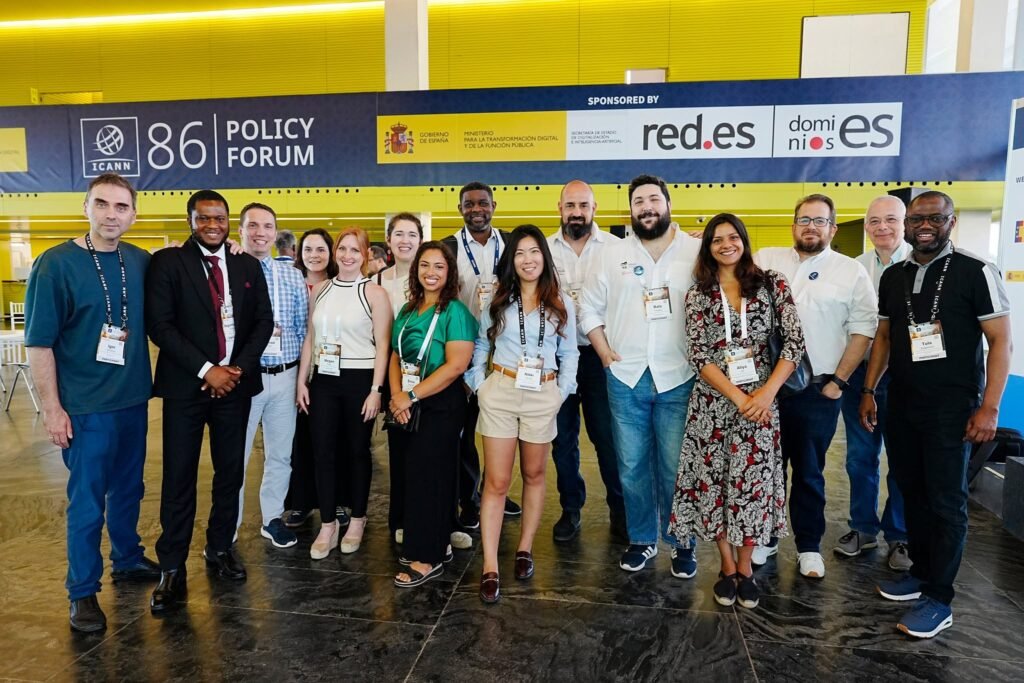
A Truly Global Gathering in Seville
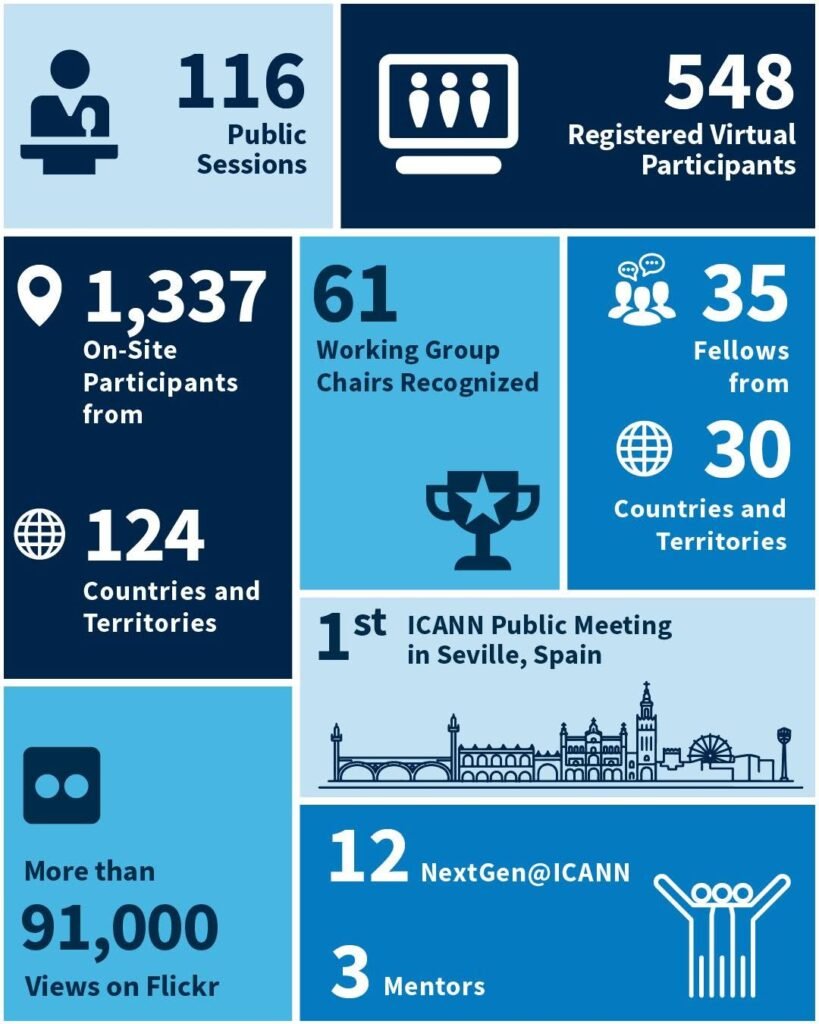
Hosted by Spain’s Ministry for Digital Transformation and Civil Service, ICANN86 marked the first-ever ICANN Public Meeting held in Seville — though Spain is no stranger to the community, having previously hosted ICANN63 in Barcelona back in 2018.
The meeting ran as a hybrid event, with participants attending both in person at the FIBES Centre and virtually from across the globe — a format ICANN has embraced to ensure no voice goes unheard regardless of geography or travel budget.
Among the standout community programmes:
- 35 Fellows from 30 countries participated through ICANN’s Fellowship Programme, representing civil society, government, academia, ccTLD operators, and technical communities.
- 12 NextGen@ICANN participants — all university students from across the European region — attended to build the next generation of internet governance leaders.
- Prep Week sessions in late May gave newcomers and veterans alike a head start on the policy agenda before the formal meeting began.
Relive the great moments documented through our Flickr albums >>https://www.flickr.com/photos/icann/albums/
Governments Weigh In
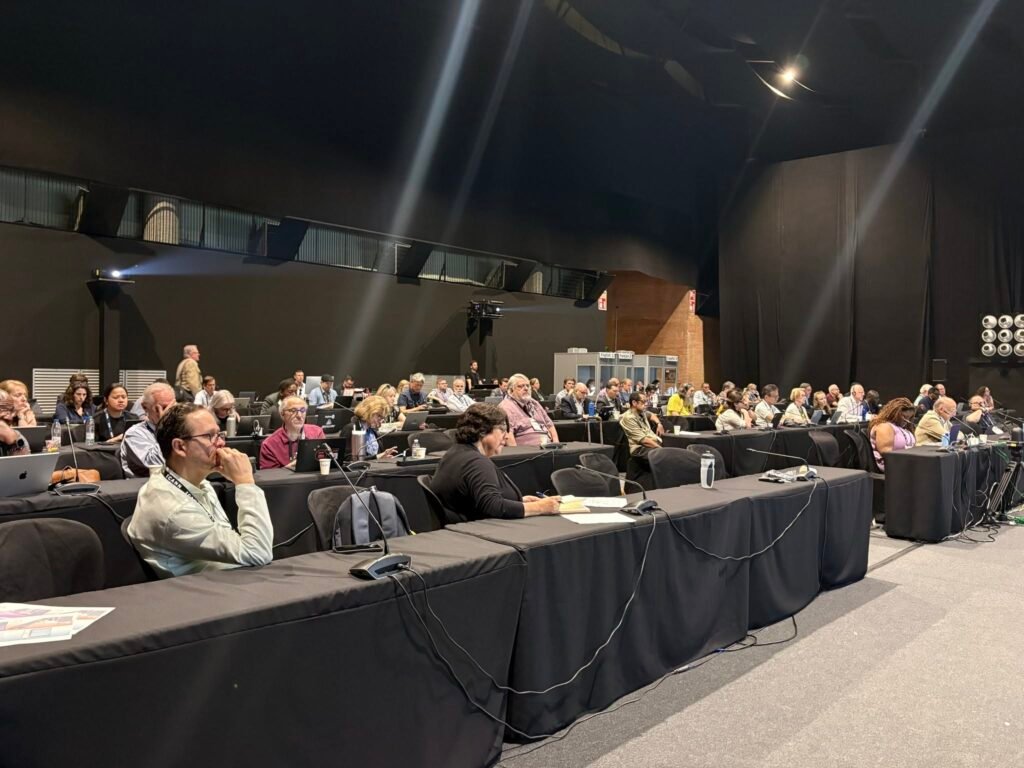
The Governmental Advisory Committee (GAC) was particularly active this week, with member representatives from dozens of countries deliberating on three priority areas:
- The next round of new gTLD applications and government safeguards
- Registration information and data protection policies
- DNS abuse mitigation measures
A final GAC communiqué was drafted during the meeting — a document that will formally advise the ICANN Board on governmental positions, and one that the wider community will be watching closely.
Seville to Bali: What Comes Next?
With ICANN86 now closed, the community is already looking ahead — and the next stop is nothing short of spectacular.
ICANN87, the Annual General Meeting, will be held in Bali, Indonesia, from 17 to 22 October 2026, at the Bali International Convention Centre, attached to The Westin Resort Nusa Dua.
The move to Bali was itself a decision made partly on the sidelines of this very meeting in Seville. The AGM was originally planned for Muscat, Oman, but escalating tensions in the Middle East prompted ICANN to relocate — a decision formalised by the ICANN Board back in May. The new venue announcement was welcomed by the Indonesian delegation, including representatives from the Ministry of Communication and Digital Affairs (Komdigi) and domain administrator PANDI, who met with ICANN’s Vice President Samiran Gupta right here in Seville on 9 June.
The Bali AGM is expected to draw approximately 1,500 delegates from 150 countries — a mammoth global gathering in one of the world’s most iconic island destinations. Registration is expected to open in early July 2026.
Why Any of This Matters!
It’s easy to dismiss internet governance meetings as inside baseball for tech policy wonks. But ICANN’s work — coordinating domain names, IP addresses, and the root zone of the internet — literally determines how you find anything online.
When ICANN86 debated DNS abuse, it was talking about phishing attacks that steal your passwords. When it discussed new gTLDs, it was shaping what future web addresses will look like. When governments deliberated over registration data access, they were wrestling with the tension between privacy rights and law enforcement needs.
These aren’t abstract conversations. They’re the architecture decisions that underpin the internet you use every day.
The ICANN community now heads home from Seville, policy notebooks full and conversations continuing online. The next chapter begins in Bali in October — and the whole internet is, in a sense, waiting to see what they decide.

Dipankar Barua is an internet governance advocate from Dhaka, Bangladesh, who believes that voices from the Global South must be heard in the rooms where the internet’s future is decided. As an ICANN advocate and VSIG member, he actively engages in multistakeholder policy processes spanning DNS security, digital inclusion, and responsible AI governance. With an academic grounding in Computer Science and AI, and over 15 years of applied IT experience, Dipankar bridges the gap between technical communities and policy spaces — writing, participating, and advocating for a more open, equitable, and inclusive internet for all.