There is a quiet power struggle happening right now that most people know nothing about — and its outcome will shape whether the internet you use in 2030 looks like the open, global network you enjoy today, or something fundamentally different.
At the heart of this struggle is a debate between two organizations with very different visions for how the internet should be governed: ICANN and the ITU.
One is a California-based non-profit born in the digital age. The other is a 160-year-old United Nations agency with 193 member states. Together, they represent the two dominant — and competing — models of internet governance: the multi-stakeholder approach and the intergovernmental approach.
Understanding ICANN vs ITU is not just an academic exercise. It is one of the defining geopolitical and digital questions of the 21st century. Let’s break it all down.
ICANN vs ITU: Quick Snapshot
| ICANN | ITU |
| Founded: 1998 | Founded: 1865 |
| Type: Non-profit corporation | Type: UN Specialized Agency |
| HQ: Los Angeles, California, USA | HQ: Geneva, Switzerland |
| Membership: Open multi-stakeholder | Membership: 193 member states + sectors |
| Decision model: Consensus-based | Decision model: One nation, one vote |
| Legal authority: Contractual (DNS) | Legal authority: Treaty-based |
| Annual revenue: ~$170M+ (fees) | Annual revenue: ~$180M+ (contributions) |
| Core mandate: DNS & internet identifiers | Core mandate: Telecom, spectrum, satellites |
| Key output: Policies & contracts | Key output: Treaties & technical standards |
| Philosophy: Bottom-up governance | Philosophy: Top-down, intergovernmental |
| Transparency: Very high (all docs public) | Transparency: Moderate (some restricted) |
| UN affiliation: None — independent | UN affiliation: Full UN agency since 1947 |
ICANN: The Multi-Stakeholder Internet Manager
ICANN — the Internet Corporation for Assigned Names and Numbers — was created in 1998 to take over management of the internet’s technical naming and addressing infrastructure from a US government contractor. From the start, it was designed as something genuinely new: a non-governmental, multi-stakeholder body where governments, business, civil society, academia, and the technical community all participate.
| Core Mandate: ICANN coordinates the unique identifiers that make the internet work globally — domain names (DNS), IP address space allocation through the RIRs, and protocol parameters. It does not govern internet content, data privacy, or national infrastructure. |
ICANN’s Foundational Principles
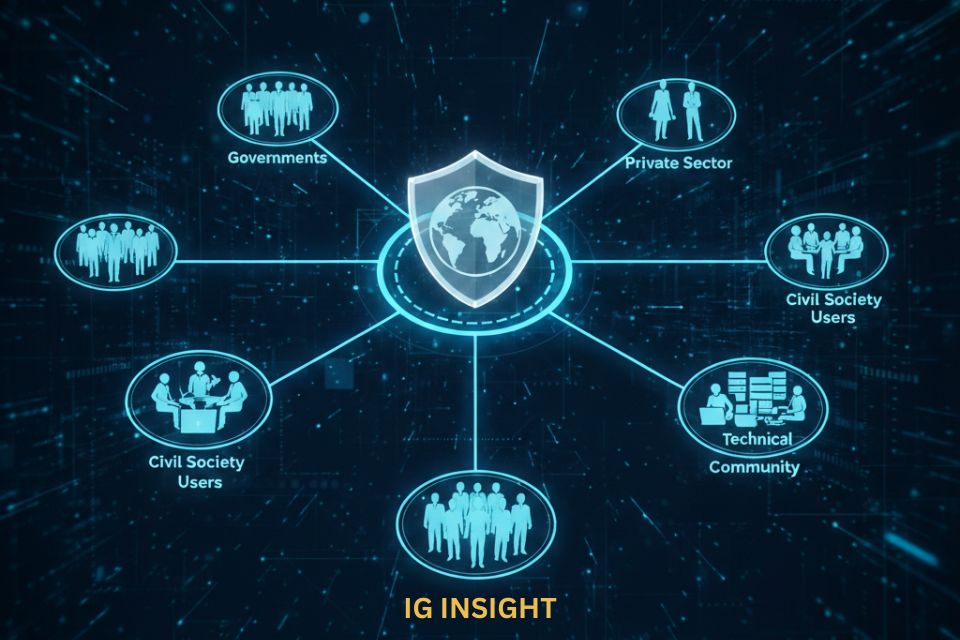
- Multi-stakeholder: Governments, private sector, civil society, and technical community share governance as equals
- Bottom-up: Policies emerge from community working groups, not top-down government mandates
- Consensus-based: Decisions require broad community agreement — not simple majority votes
- Transparency: All meetings, documents, and comment processes are open and publicly archived
- Accountability: Community mechanisms can challenge and reverse Board decisions
- Single unified internet: ICANN’s mandate explicitly supports one globally interoperable internet
ICANN’s Governance Structure
| Body | Type | Role |
| Board of Directors | 21 members (15 voting) | Final decision-making authority |
| GNSO | Supporting Organisation | Policy for generic TLDs (.com, .org, .shop) |
| ccNSO | Supporting Organisation | Policy for country-code TLDs (.uk, .ng, .bd) |
| ASO | Supporting Organisation | IP address policy with RIRs |
| GAC | Advisory Committee | Government advice on public policy |
| ALAC / At-Large | Advisory Committee | Individual internet users worldwide |
| SSAC | Advisory Committee | DNS security and stability |
| RSSAC | Advisory Committee | Root server system advisory |
ICANN’s Community Activities (2024-2025)
| Activity | Description & Community Impact |
| New gTLD Program Round 2 | Largest-ever DNS expansion — thousands of new domain extensions transforming the namespace |
| Universal Acceptance (UASG) | Ensuring non-Latin domains work in all software — critical for 4 billion non-English speakers |
| DNS Abuse Framework | Community-driven crackdown on phishing, malware, and spam domains |
| ICANN Public Meetings | 3 annual global meetings open to all — rotating across world regions |
| Public Comment Process | Every ICANN policy open to global public comment — radical governance transparency |
| Fellowship Programme | Funded participation for engineers and advocates from developing economies |
| ICANN Learn Platform | Free online education covering DNS, governance, and ICANN processes |
| RDAP Implementation | Modern, privacy-respecting replacement for legacy WHOIS — now fully deployed |
| IDN Fast Track | Approving internationalized ccTLDs in Arabic, Chinese, Devanagari scripts and more |
| IANA Functions | Managing IP address delegation to RIRs and maintaining protocol parameters |
- Budget: ~$170M+ annually from domain fees — fully independent of government funding
- 2016 IANA Transition: US government’s NTIA formally relinquished oversight — a historic internet governance milestone
- ICANN79 (Istanbul, June 2024) | ICANN80 (Istanbul, Nov 2024) | ICANN81 (Washington DC, March 2025)
ITU: The UN’s 160-Year-Old Telecom Powerhouse
The International Telecommunication Union (ITU) is the world’s oldest surviving international organization, founded in Paris in 1865 to coordinate telegraph communications between European nations. Today it is a full UN specialized agency headquartered in Geneva, Switzerland, with 193 member states — essentially every country on Earth.
| Core Mandate: The ITU manages global allocation of radio-frequency spectrum and satellite orbital positions, develops technical telecom standards, and assists developing countries in building ICT capacity. Its internet governance role is significant — and increasingly contested. |
ITU’s Three Sectors
- ITU-R (Radiocommunication Sector): Manages spectrum and satellite orbits — enabling 5G, WiFi, GPS, satellite internet (Starlink, OneWeb, Amazon Kuiper), and global broadcasting
- ITU-T (Telecommunication Standardization Sector): Develops telecom standards complementing IETF — including H.264/H.265 video codecs, G.711 voice, and growing IP-layer standards
- ITU-D (Telecommunication Development Sector): Supports developing countries in building ICT infrastructure, digital skills, national cybersecurity strategies, and affordable broadband connectivity
ITU’s Governance Model
- 193 member states — every UN member has one vote: the classic intergovernmental treaty model
- Sector Members: Private companies, universities, and civil society can participate — but cannot vote in ITU assemblies
- Plenipotentiary Conference (PP): Supreme governing body meeting every 4 years — elects leadership and sets policy
- WCIT: World Conference on International Telecommunications — negotiates binding international telecom regulations
- Secretary-General Doreen Bogdan-Martin (USA) — historic first female SG, elected in 2022, defeating Russia’s candidate 139-25
ITU’s Community Activities (2024-2025)
| Activity | Description & Community Impact |
| Radio Spectrum Management | Manages global spectrum enabling WiFi, 5G, GPS, satellite internet, aviation, maritime comms |
| Satellite Orbit Coordination | Critical coordination for Starlink, OneWeb, Amazon Kuiper LEO mega-constellations |
| IMT-2030 (6G Framework) | ITU-R defining the technical framework for next-generation mobile internet beyond 5G |
| AI for Good Platform | UN AI governance dialogue hub — 3,000+ participants from 100+ countries in 2024 |
| Connect 2030 Agenda | SDG-aligned framework for universal meaningful connectivity by 2030 |
| Global Cybersecurity Index (GCI) | Annual ranking of all 193 countries’ cybersecurity commitments and capacity |
| PP-24 (New Delhi, Oct 2024) | Adopted new AI governance mandates and spectrum rules for LEO satellite constellations |
| WSIS Co-Organization | Co-organizes the landmark World Summit on the Information Society process with UN |
| Broadband Commission | Joint ITU/UNESCO body advocating for universal broadband policy globally |
| E-Waste Programme | Global standards and advocacy on sustainable electronics and e-waste management |
- Budget: ~$180M annually from member state contributions and sector member fees
- PP-24 (New Delhi, October 2024): Key decisions on AI, spectrum policy, and satellite mega-constellations
- AI for Good Global Summit 2024 (Geneva): The UN’s flagship AI governance event
ICANN vs ITU: The Core Differences That Actually Matter
The ICANN vs ITU debate is not just an organizational chart comparison. It is a fundamental disagreement about power, democracy, and the internet’s future. Here are the differences that actually matter.
Difference 1: Governance Philosophy — The Central Fault Line
| The Central Tension: ICANN embodies the multi-stakeholder model: governments, business, civil society, and technical experts govern as equals through open processes. The ITU embodies the intergovernmental model: governments decide, and everyone else advises. This is the defining philosophical fault line in internet governance today. |
| Governance Dimension | ICANN (Multi-Stakeholder) | ITU (Intergovernmental) |
| Who decides? | All stakeholders — governments, business, civil society, technical community as equals | Governments only — companies and civil society are observers, not voters |
| How are decisions made? | Rough consensus through community working groups and public processes | One country, one vote — majority or consensus of member states |
| Who can participate? | Anyone — individuals, companies, NGOs, governments with equal procedural standing | Member states vote; sector members (companies, NGOs) engage but cannot vote |
| Decision speed | Slow but legitimate — consensus-building is hard and time-consuming | Can be faster via government agreement but may lack technical community buy-in |
| Accountability | High — community mechanisms can challenge and reverse Board decisions | Lower — intergovernmental processes have limited external review mechanisms |
| Transparency | Very high — all meetings, drafts, and decisions publicly archived | Moderate — some ITU work restricted to member states and sector members only |
Difference 2: Mandate and Scope
| Internet Domain | ICANN’s Authority | ITU’s Authority |
| Domain Names (DNS) | Full authority — manages root zone and TLD policies globally | No direct role; some governments seek to expand ITU’s DNS role |
| IP Addresses | Coordinates through five RIRs (indirect oversight) | No direct role in IP address management |
| Radio Spectrum | No role — outside ICANN’s mandate | Full treaty authority — manages all global frequency allocations |
| Satellite Orbits | No role | Full treaty authority — manages orbital slot coordination globally |
| Internet Standards | Defers to IETF for technical protocol standards | Develops telecom standards via ITU-T — some overlap with IETF work |
| Cybersecurity | DNS abuse frameworks — operational focus | GCI index, capacity building, national strategy support for 193 states |
| AI Governance | Emerging (DNS and namespace implications) | Leading UN AI governance platform — AI for Good Summit |
| Development | Fellowship programs, UASG, ICANN Learn | Largest globally-funded developing-country ICT programs |
Difference 3: The WCIT-12 Crisis — When the Rivalry Went Public
The ICANN vs ITU tension reached its most dramatic public peak at the 2012 World Conference on International Telecommunications (WCIT-12) in Dubai. It exposed the full depth of the governance divide.
- Russia, China, and 87 other nations signed a revised ITR treaty critics argued would expand ITU authority over internet routing and governance
- 55 countries — including the US, EU, Japan, and Australia — refused to sign, citing internet freedom concerns
- Many civil society groups were excluded from key WCIT-12 negotiations — the ITU’s transparency deficit on full display
- WCIT-12 galvanized the technical community and civil society around defending the multi-stakeholder model
- The divide exposed at WCIT-12 persists today — and WSIS+20 in 2025 will test it again
Difference 4: The Developing World Dimension
One of the most important — and underappreciated — aspects of the ICANN vs ITU debate is how developing nations view it. Many countries in Africa, Asia, and Latin America see the ITU’s intergovernmental model as more democratically legitimate.
| The Development Argument: Developing countries argue that ICANN’s multi-stakeholder model is dominated by technically sophisticated actors from wealthy, English-speaking nations — effectively privileging Western interests. The ITU’s one-country-one-vote model gives every nation equal formal power regardless of digital infrastructure or economic size. This is a genuine concern, not merely authoritarian posturing. |
Recent Facts: ICANN and ITU in 2024-2025
| Metric / Event | 2024-2025 Data & Context |
| Global internet users (2025) | ~5.56 billion — 68.7% of world population (ITU 2024 estimate) |
| ICANN New gTLD Round 2 | 4,000+ applications expected — the largest-ever domain name expansion |
| ITU PP-24, New Delhi | Oct 2024 — AI governance mandates and spectrum rules for LEO constellations adopted |
| Global Digital Compact | UN General Assembly, Sept 2024 — explicitly reaffirms multi-stakeholder governance |
| WSIS+20 Review | 2025 — reshapes balance of ICANN vs ITU for a generation |
| ICANN RDAP rollout | Full WHOIS-to-RDAP transition complete — privacy-respecting data access now standard |
| ITU AI for Good Summit 2024 | Geneva — 3,000+ participants; flagship UN AI governance event |
| Internet shutdowns 2024 | Access Now reports 196+ shutdowns — pressure on both ICANN and ITU to respond |
| Starlink orbital disputes | 42,000+ planned satellites creating unprecedented ITU coordination challenges |
| ICANN79-81 meetings | Istanbul x2 and Washington DC — multi-stakeholder participation at record levels |
| IPv6 deployment | ~47% of global traffic over IPv6 — an IETF/RIR success story, not ITU-driven |
| ITU SG re-election | Doreen Bogdan-Martin’s re-election due 2026 — her tenure remains transformative |
Other Key Organizations Shaping the ICANN vs ITU Debate
The ICANN vs ITU rivalry does not play out in isolation. A constellation of organizations actively influences which governance model prevails — and on which issues.
1. IETF — Internet Engineering Task Force
Technical anchor of the multi-stakeholder model
The IETF develops the voluntary technical protocols that make the internet work — TCP/IP, DNS, TLS, HTTP, BGP, QUIC. It is the bedrock of multi-stakeholder governance: genuinely open, engineer-driven, and consensus-based. When ITU-T seeks to expand into internet technical standards, the IETF community resists.
| IETF Activity | Impact on ICANN vs ITU Debate |
| RFC Publication | Freely published standards reinforce open, non-governmental internet governance |
| QUIC and HTTP/3 | ~30% of internet traffic — demonstrates IETF’s practical and technical authority |
| Post-Quantum Cryptography | IETF leading quantum-safe standards — sidelining potential ITU-T role |
| RPKI and BGP Security | Routing security anchored in multi-stakeholder IETF/RIR system, not ITU |
| 100+ Open Working Groups | Any engineer participates — no government gatekeeping, no membership fees |
| IETF Hackathons | Running code as governance legitimacy — practical outcomes over political agreements |
2. Internet Society (ISOC)
Global advocate for the open, multi-stakeholder internet
ISOC is the organizational home of the IETF and one of the most active advocates for the multi-stakeholder model. In the ICANN vs ITU context, ISOC consistently defends open, bottom-up governance against intergovernmental encroachment.
- Internet Impact Assessment Toolkit: Helps policymakers evaluate whether governance changes harm the internet
- Internet Pulse: Real-time monitoring of internet fragmentation and shutdown risks globally
- 150+ national chapters — geographically distributed advocacy for multi-stakeholder governance
- Encryption advocacy: Strong defense of end-to-end encryption — a key ICANN vs ITU battleground
3. IGF — Internet Governance Forum
The multi-stakeholder forum the ITU has never fully embraced
The IGF was created by WSIS 2005 as a compromise between UN/ITU governance advocates and multi-stakeholder model supporters. It is a UN body — satisfying governments — but operates on multi-stakeholder principles. WSIS+20 in 2025 will determine its future mandate.
- 10,000+ participants from 180+ countries — the broadest internet governance participation globally
- 170+ National and Regional IGF initiatives bringing global debates to local contexts
- AI Governance is the dominant new IGF theme — creating new tensions between ICANN, IGF, and ITU
- WSIS+20 outcome may enhance the IGF’s mandate — or see it marginalized in favor of ITU-led processes
4. Regional Internet Registries (RIRs)
IP address custodians aligned with the multi-stakeholder model
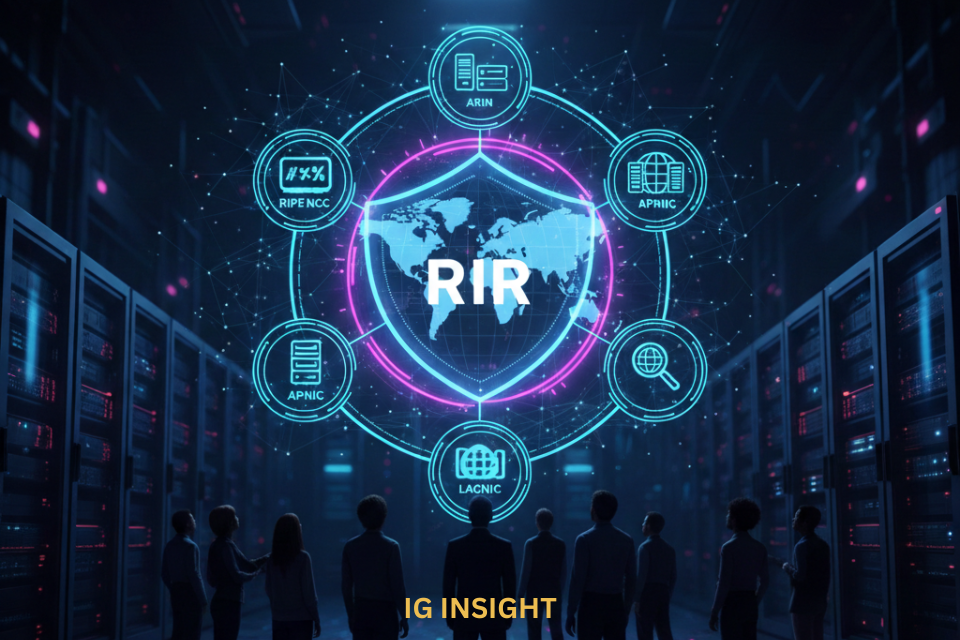
ARIN, RIPE NCC, APNIC, LACNIC, and AFRINIC manage IP address allocation through community-driven policy. They represent a direct counterpoint to any ITU claim over internet numbering resources.
- The ITU has historically sought to manage IP address allocation — RIRs have successfully resisted this repeatedly
- All five RIRs have exhausted free IPv4 pools — IPv6 transition is a community-driven RIR/IETF success story
- RPKI routing security — anchored in the RIR system — is purely multi-stakeholder in governance
5. Governments and Regional Blocs
The swing voters whose positions determine the outcome
| Government/Body | Governance Stance | Key Position in ICANN vs ITU |
| USA | Strong multi-stakeholder | ICANN architect; resists any ITU expansion into DNS governance |
| European Union | Multi-stakeholder + regulatory | Supports ICANN; regulates platforms independently (DSA, DMA, AI Act) |
| China | Intergovernmental / cyber sovereign | Prefers ITU/government model; advocates cyber sovereignty doctrine |
| Russia | Intergovernmental | Led WCIT-12 push; advocates Runet disconnection capability |
| Brazil | Strong multi-stakeholder | CGI.br model; strong IGF participant; bridges North-South divide |
| India | Pragmatic / evolving | Balances multi-stakeholder support with growing data sovereignty concerns |
| African Union | Mixed / development-focused | Values ITU development support; increasingly engaging ICANN |
| ASEAN | Pragmatic / regional | Engages both bodies; focuses on connectivity and digital economy |
Trending: What’s Reshaping ICANN vs ITU in 2026
The rivalry is being transformed by new forces that neither organization fully anticipated. Here is what is actively reshaping the ICANN vs ITU landscape right now:
1. WSIS+20 — The Make-or-Break Moment for Both
The 2025 review of the World Summit on the Information Society is the most consequential internet governance event since WSIS 2005. It will determine whether the IGF gets a stronger mandate, whether the ITU gains expanded internet authority, or whether ICANN’s multi-stakeholder model is fully reaffirmed. The outcome will define the ICANN vs ITU balance for the next decade — and every major stakeholder is positioning aggressively.
2. The Global Digital Compact (2024) — A New Baseline
Adopted by the UN General Assembly in September 2024, the Global Digital Compact explicitly reaffirms the multi-stakeholder model — a meaningful win for ICANN’s governance philosophy. However, it also establishes new UN-anchored mechanisms for AI governance, creating potential new institutional footholds for the ITU system in internet-adjacent policy. The GDC is both a vindication of multi-stakeholderism and a new frontier for intergovernmental internet involvement.
3. AI Governance — The New Battleground
Neither ICANN nor ITU was designed to govern artificial intelligence — but AI is now inseparable from internet governance. The ITU’s AI for Good platform gives it a significant institutional head start. ICANN is beginning to engage on AI’s implications for DNS security and the internet namespace. The question of which body — or which governance model — addresses AI will define the next chapter of the ICANN vs ITU story.
4. Starlink and the Satellite Internet Governance Crisis
SpaceX’s Starlink (6,000+ satellites deployed; plans for 42,000+) is creating an unprecedented governance crisis at the ITU. Legacy spectrum and orbital coordination processes were not designed for mega-constellations of this scale. Simultaneously, Starlink is providing internet access in conflict zones and sanctioned countries — raising questions that neither ITU spectrum rules nor ICANN’s DNS policies were built to answer.
5. Internet Fragmentation — The Shared Existential Threat
The biggest long-term challenge facing both ICANN and ITU is internet fragmentation. If the splinternet becomes reality — with incompatible technical, regulatory, and geopolitical internet fragments — both ICANN’s DNS coordination and ITU’s spectrum management become incoherent. This shared threat is creating unexpected common ground between organizations that are usually framed as rivals.
6. ICANN’s New gTLD Round 2 — Governance Implications
ICANN’s new gTLD program Round 2 — potentially the largest-ever DNS namespace expansion — is raising governance questions with ITU dimensions. Who controls the registry for a country’s language or geographic identifier? How are geographic TLDs governed when they represent shared cultural heritage? These questions are pushing ITU member states to seek more formal input into ICANN processes — a quiet expansion of intergovernmental influence in the DNS world.
7. Post-Quantum Cryptography — The Next Technical Governance Frontier
The transition to quantum-safe cryptography is urgent. IETF is already standardizing post-quantum algorithms. ITU-T is developing quantum communication standards in parallel. This emerging technical domain — where IETF and ITU-T work in overlapping spaces — previews the governance tensions that will define internet standards politics for the next decade.
Where ICANN and ITU Actually Work Together?
The ICANN vs ITU framing can make it seem like open warfare. But in practice there are significant areas of cooperation essential for the internet to function.
- WSIS Co-organization: Both participate actively in the World Summit on the Information Society
- IGF Participation: Both organizations engage at the Internet Governance Forum — often on the same panels
- Developing country connectivity: ITU’s development programs complement ICANN’s fellowship and capacity-building work
- Technical liaisons: Formal liaison relationships exist on numbering, naming, and security standards
- Cybersecurity: Both contribute to global cybersecurity frameworks — ITU through GCI, ICANN through DNS abuse
- Emergency communications: ITU spectrum management enables the internet connectivity that ICANN’s DNS serves
- Universal Acceptance: ITU digital inclusion programs and ICANN’s UASG share goals for multilingual internet access
| The Real Relationship: ICANN and ITU are more complementary than competitive in actual operations. ICANN handles DNS; ITU handles spectrum and satellites. The genuine conflict is about governance philosophy and future scope — particularly who governs emerging internet policy issues like AI, data sovereignty, and platform regulation. |
The Definitive ICANN vs ITU Comparison
| Category | ICANN | ITU |
| Full name | Internet Corporation for Assigned Names & Numbers | International Telecommunication Union |
| Year founded | 1998 | 1865 (Paris telegraph convention) |
| Headquarters | Los Angeles, California, USA | Geneva, Switzerland |
| Legal status | California non-profit corporation | UN Specialized Agency |
| Membership | Open multi-stakeholder — no nationality limit | 193 UN member states + sector members |
| Governance model | Multi-stakeholder, bottom-up consensus | Intergovernmental, one-state-one-vote |
| Core mandate | DNS, domain names, internet identifiers | Spectrum, satellites, telecom standards |
| Internet authority | Binding contracts over registrars/registries | Advisory in most internet matters |
| Annual budget | ~$170M+ (domain registration fees) | ~$180M (member state contributions) |
| Annual meetings | 3 public meetings per year (open to all) | PP every 4 years; sector assemblies annually |
| Civil society role | Full participant (ALAC, At-Large, public comment) | Observer/sector member only — cannot vote |
| Private sector role | Full participant (GNSO, ccNSO, etc.) | Sector member — can engage but cannot vote |
| Transparency level | Very high — all documents and meetings public | Moderate — some work restricted to members |
| Developing nation view | Mixed — sometimes seen as Western-centric | Often seen as more democratic and inclusive |
| AI governance | Emerging (DNS security and namespace implications) | Leading (AI for Good platform, UN framework) |
| Internet fragmentation | Explicitly opposes fragmentation — core mandate | Varies by member state — some support it |
| WSIS+20 stake | Reaffirmation of multi-stakeholder model | Opportunity to expand internet governance role |
| Satellite internet | No direct role | Full authority over spectrum and orbital slots |
Frequently Asked Questions
Q: Is ICANN part of the ITU or the United Nations?
A: No. ICANN is an independent, California-incorporated non-profit corporation with no formal relationship to the ITU or the United Nations. ICANN was created in 1998 specifically as an alternative to placing internet governance under a UN or intergovernmental body. While ICANN participates in UN forums like WSIS and the IGF, it is institutionally independent from both the UN and the ITU. The ITU is a full UN specialized agency — a fundamentally different legal and organizational status.
Q: Why do some countries prefer the ITU over ICANN for internet governance?
A: Several reasons: (1) The ITU’s one-state-one-vote model gives every country equal formal power — unlike ICANN’s multi-stakeholder model, which developing countries sometimes feel is dominated by technically sophisticated actors from wealthy Western nations. (2) Governments are more comfortable in intergovernmental institutions where they control outcomes. (3) Authoritarian governments prefer the ITU model because it provides legitimate cover for restricting internet access. (4) Some developing nations genuinely believe government-led governance better serves national digital development goals and sovereignty interests.
Q: What was WCIT-12 and why does it still matter in 2026?
A: The 2012 World Conference on International Telecommunications (WCIT-12) in Dubai was a watershed moment. Russia, China, and 87 other nations signed a revised treaty critics argued would expand ITU authority over internet routing. The US, EU, and 53 other nations refused to sign. WCIT-12 still matters in 2026 because the countries that signed it have not changed their governance preferences — and WSIS+20 will test this divide again. The fundamental geopolitical split revealed at WCIT-12 remains the defining feature of international internet governance politics.
Q: Could the ITU ever take over ICANN’s role in managing the DNS?
A: Very unlikely in the foreseeable future. ICANN’s management of the DNS is anchored in contracts, decades of technical infrastructure, and strong community legitimacy. The global technical community, major internet companies, and most democratic governments strongly oppose any transfer of DNS authority to an intergovernmental body. However, if WSIS+20 produces new UN mandates or geopolitical fragmentation accelerates, governance could shift incrementally in ways that give intergovernmental bodies more influence — not through dramatic takeover, but through gradual mandate expansion in new areas like AI and platform governance.
Q: What is the multi-stakeholder model and why do authoritarian governments resist it?
A: The multi-stakeholder model means internet governance decisions involve governments, private sector, civil society, the technical community, and academia as equals — not just governments. Authoritarian governments resist it for a specific reason: it gives civil society organizations — including human rights groups, journalists, and independent technical experts — equal formal standing with governments. In an intergovernmental model like the ITU, governments decide and civil society merely advises. For governments that want to control what their citizens read, say, or access online, the multi-stakeholder model is a structural constraint on that power.
Q: What is WSIS+20 and how will it affect both ICANN and ITU?
A: WSIS+20 is the 2025 twenty-year review of the World Summit on the Information Society. It will evaluate digital development progress, determine the future mandate of the IGF, and potentially reshape the authority balance between multi-stakeholder bodies and intergovernmental institutions. For ICANN, the best outcome is strong reaffirmation of multi-stakeholderism. For ITU-aligned governments, the goal is new mandates giving intergovernmental bodies greater internet governance authority. The negotiations will be among the most consequential in internet governance history.
Q: How does the EU fit into the ICANN vs ITU debate?
A: The EU occupies a unique position. It formally supports the multi-stakeholder model and ICANN’s authority over DNS. However, the EU is simultaneously the world’s most aggressive internet regulator — GDPR, DSA, DMA, AI Act — implementing these through government regulatory authority rather than multi-stakeholder processes. This creates a third model: multi-stakeholder for technical infrastructure, heavily regulatory for platform and data governance. Because companies find it easier to implement EU standards globally, Brussels has become a de facto global internet regulator without formally claiming that title.
Q: What is the Global Digital Compact and how does it change the ICANN vs ITU dynamic?
A: The Global Digital Compact (GDC), adopted by the UN General Assembly on September 22, 2024, explicitly reaffirms the multi-stakeholder model — a win for ICANN’s governance philosophy and a setback for those seeking expanded ITU internet authority. However, the GDC also establishes new UN-anchored mechanisms for AI governance, including an independent international AI safety panel. These create new institutional footholds for the UN system in internet-adjacent policy — potentially strengthening the ITU’s position in AI governance even while ICANN’s DNS authority is reaffirmed.
The Verdict: Two Models, One Internet — For Now
The ICANN vs ITU debate is, at its core, a debate about power, democracy, and what kind of internet we want for the next generation.
The multi-stakeholder model has delivered 30 years of extraordinary internet innovation, global connectivity, and open access. Its transparency, technical legitimacy, and genuine openness are real achievements. But it has concentrated influence among technically sophisticated, English-speaking actors from wealthy nations — a genuine democratic deficit.
The intergovernmental model gives formal equal standing to every nation, including the smallest and poorest. But it also gives authoritarian governments legitimate tools to restrict and censor internet access — a real danger to the open internet.
The truth is: the internet needs elements of both. ICANN’s technical coordination and multi-stakeholder legitimacy. The ITU’s spectrum management, satellite coordination, and developing-world reach. What it cannot afford is either body claiming exclusive authority over the internet’s future — or geopolitical fragmentation making the question academic.
WSIS+20 in 2025 is the moment to get this balance right. The voices that show up to shape that moment will determine what the internet looks like for the next 20 years.
The Internet’s Future Is Being Decided Right Now
WSIS+20 in 2025 will reshape internet governance for a generation. Your voice belongs in that conversation.
- Engage with ICANN public comments: icann.org/public-comments
- Participate in WSIS+20: wsis.itu.int
- Join the Internet Governance Forum: intgovforum.org
- Track internet fragmentation: pulse.internetsociety.org
- Apply for ICANN Fellowship: icann.org/fellowshipprogram
One internet. Many voices. Show up.
© 2026 IG Insight Blog. This article is published for educational and informational purposes.

Dipankar Barua is an internet governance advocate from Dhaka, Bangladesh, who believes that voices from the Global South must be heard in the rooms where the internet’s future is decided. As an ICANN advocate and VSIG member, he actively engages in multistakeholder policy processes spanning DNS security, digital inclusion, and responsible AI governance. With an academic grounding in Computer Science and AI, and over 15 years of applied IT experience, Dipankar bridges the gap between technical communities and policy spaces — writing, participating, and advocating for a more open, equitable, and inclusive internet for all.