Your Voice Belongs in the Room Where the Internet Is Governed
The Complete Step-by-Step Guide to Joining ICANN's Multi-Stakeholder Policy Process — No Technical Degree Required
Here is a fact that surprises most people: ICANN — the organization that coordinates the global domain name system and shapes internet policy for billions of users — is not a closed club of technical experts and corporate lobbyists. It is a multi-stakeholder organization that is specifically designed to include your voice.
Every ICANN policy that governs how domain names are registered, how internet security standards are applied, and how the DNS evolves — goes through an open, documented process where any individual in the world can participate. You do not need a technical degree. You do not need to represent a company. You do not even need a budget.
What you need is knowledge of the process, the commitment to show up consistently, and the willingness to engage with good-faith arguments from people around the world. This guide gives you everything else.
| 💡 The Core Principle: ICANN’s multi-stakeholder model is built on the premise that everyone who is affected by the internet has a legitimate stake in how it is governed. Individuals participation in ICANN policy development is not just permitted — it is essential to the legitimacy of the entire system. Your perspective as an end user, a civil society advocate, a researcher, or an engaged citizen is exactly what the process needs. |
What Kind of Policies Does ICANN Actually Make?
Before diving into how to participate, it helps to understand what kinds of decisions ICANN makes. ICANN’s policy scope is specific — it covers the internet’s unique identifier systems, not the internet in general. The main policy areas where individuals can have real impact include:
- Domain name registration rules — who can register what, under what conditions
- New generic Top-Level Domain (gTLD) program — criteria, processes, and expansion decisions
- WHOIS and RDAP policy — how domain registration data is collected, stored, and shared
- DNS security policy — DNSSEC requirements, DNS abuse response standards, registry obligations
- Internationalized Domain Names (IDNs) — domain names in non-Latin scripts
- Universal Acceptance — ensuring all domain names work in all internet applications
- Competition and consumer protection — how the domain name marketplace is structured
- At-Large policy — formal representation of individual internet users in ICANN’s governance
These are not abstract technical decisions. They affect who owns what domain name, how much it costs, whether your language is represented online, whether your email is private, and whether the internet namespace grows in an open and inclusive direction. Your stake in these decisions is real.
Understanding ICANN’s Multi-Stakeholder Model
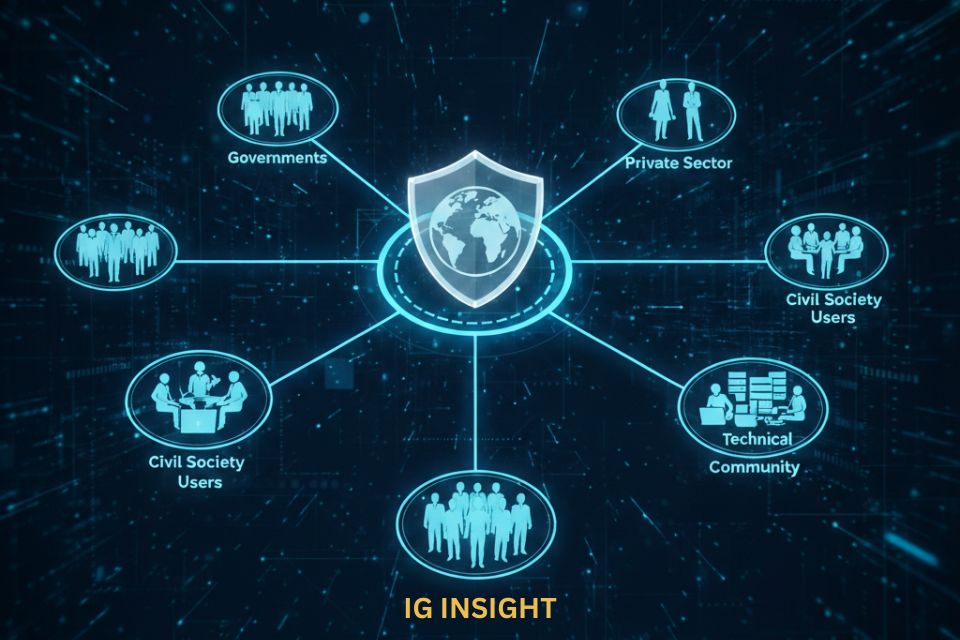
ICANN’s governance model divides participants into stakeholder groups, each with specific roles in the policy process. Understanding this structure is the first step to knowing where you fit:
| Body | Who It Represents | How Individuals Engage |
| GNSO (Generic Names SO) | Registrars, registries, commercial users, non-commercial users, ISPs, intellectual property interests | Join a Stakeholder Group or Constituency; participate in Policy Development Processes (PDPs) |
| ccNSO (Country Code NSO) | Country-code TLD registry operators (e.g., .uk, .ng, .de) | Engage through your national ccTLD registry’s community participation channels |
| ASO (Address SO) | Regional Internet Registries (RIRs) — ARIN, RIPE NCC, APNIC, AFRINIC, LACNIC | Participate through your RIR’s policy development process |
| GAC (Govt Advisory Committee) | National governments — 180+ member states | Engage through your national government’s GAC delegation |
| ALAC (At-Large Advisory Cmte) | Individual internet users worldwide — the most accessible entry point for individuals | Join an At-Large Structure (ALS) or Regional At-Large Organization (RALO) |
| SSAC (Security Advisory Cmte) | Security and stability experts — appointment-based | Apply for membership; submit public comments on SSAC consultations |
| Board of Directors | Represents the global multi-stakeholder community — elected by SOs and Advisory Committees | Contribute to policy that the Board adopts through the processes above |
| 🎯 Best Entry Point for Individuals: The At-Large Community (ALAC and RALOs) is the primary pathway specifically designed for individual internet users. It is the most accessible, the most welcoming to newcomers, and the most directly focused on representing end-user interests in ICANN policy. Start here. |
How the ICANN Policy Development Process (PDP) Works?
ICANN’s formal policy-making mechanism is called the Policy Development Process (PDP). This is the structured pathway through which policy proposals become ICANN policy — and where individual participation has the most direct impact.
Phase 1: Issue Identification and Initiation
A policy issue is identified — often through community discussion, a public petition, or a formal request from a Supporting Organization or Advisory Committee. The GNSO Council (for generic domain name policies) votes to initiate a formal PDP. Anyone can contribute to the issue identification phase by raising concerns through public forums, mailing lists, or by contacting their Stakeholder Group or Constituency.
Phase 2: Working Group Formation and Charter
An Issue Report is commissioned and published for community input. A Cross-Community Working Group (CCWG) or Policy Development Process Working Group (PDPWG) is formed with open membership — any interested party can join. The Working Group adopts a charter defining its scope, timeline, and deliverables. Joining a Working Group is one of the most direct ways for an individual to shape ICANN policy.
Phase 3: Working Group Deliberation
The Working Group meets regularly — typically via weekly video conference — and uses mailing lists for ongoing discussion between meetings. Members research the issue, hear from subject matter experts, review submissions from the broader community, and work toward consensus positions. Meetings are open and recorded. Anyone can participate in Working Group mailing lists even without formal membership.
Phase 4: Public Comment Periods
At critical junctures — including on the Initial Report and Final Report — the Working Group’s outputs are published for a formal public comment period, typically 30-60 days. During this window, anyone in the world can submit a written comment through ICANN’s online public comment system. Public comments are read, considered, and formally responded to in the Working Group’s summary. This is the broadest and most accessible participation channel — no registration or affiliation required.
Phase 5: Final Report and Board Adoption
The Working Group publishes a Final Report with policy recommendations. The GNSO Council votes on the recommendations. Approved recommendations go to the ICANN Board for adoption as official ICANN policy. The Board must formally respond to all GNSO policy recommendations — accepting, rejecting with explanation, or sending back for further community work.
| 📋 Timeline Reality: ICANN policy development is thorough and therefore not fast. Most PDPs take 18 months to 3+ years from initiation to final Board adoption. The WHOIS/RDAP Expedited Policy Development Process (EPDP), for example, ran for over two years. Your sustained engagement across that timeline is what makes individual participation meaningful. |
Five Concrete Pathways for Individual Participation
Here are the five most practical and accessible ways for individuals to participate in ICANN policy development — from zero to full engagement:
| Submit a Public Comment The lowest barrier, highest accessibility participation channel. Visit icann.org/public-comments, find an open consultation on a topic you care about, and submit your written view. No registration, no affiliation, no cost. ICANN staff and Working Groups are required to read, consider, and formally respond to all public comments. One well-reasoned public comment from a credible individual perspective can influence a policy recommendation. |
| Join the At-Large Community (ALAC/RALO) Find your Regional At-Large Organization (RALO) at atlarge.icann.org. There are five RALOs: AFRALO (Africa), APRALO (Asia Pacific), EURALO (Europe), LACRALO (Latin America and Caribbean), NARALO (North America). Join or affiliate with an At-Large Structure (ALS) in your region. Once affiliated, you gain formal representation in ICANN’s governance through the ALAC, which provides advice directly to ICANN’s Board on behalf of individual internet users. |
| Join a GNSO Policy Working Group Browse open Working Groups at gnso.icann.org/en/group-activities. Select a Working Group on a topic relevant to your expertise or interests. Send an email expressing your interest in joining to the Working Group’s mailing list or the GNSO Secretariat. Working Groups are open to anyone with genuine interest — you do not need to represent an organization. Attend the weekly calls, contribute to mailing list discussions, and help draft policy recommendations. |
| Apply for the ICANN Fellowship Program The ICANN Fellowship Program provides fully funded participation — travel, hotel, registration — for individuals from underserved regions to attend ICANN Public Meetings. Apply at icann.org/fellowships, typically 3-4 months before each meeting. Fellowships come with pre-meeting training, mentorship from experienced community members, and dedicated fellowship sessions that orient you to the policy process. This is the fastest path from newcomer to active participant for those who cannot self-fund international travel. |
| Attend ICANN Public Meetings (Virtual) ICANN holds three Public Meetings per year, rotating globally. Virtual participation is free — register at icann.org/meetings. Attend open sessions, public forums, and policy working group meetings. Use the remote participation tools to make statements in real time. The ICANN Public Forum — where anyone can make a statement directly to the ICANN Board — is one of the most powerful participation channels available to individuals at no cost. |
What Individual Participation Actually Achieves: Real Outcomes
Individual participation in ICANN policy development is not performative. It produces real policy outcomes that shape the internet. Here are documented examples of how individual and community voices changed ICANN decisions:
| WHOIS Privacy Policy (EPDP) — Civil Society Shaped the Outcome The GDPR-driven WHOIS policy debate (2018-2021) was one of the most contested in ICANN’s history. Individual civil society participants in the Expedited Policy Development Process (EPDP) — representing digital rights organizations and individual users — were instrumental in pushing for stronger privacy protections in the final RDAP access policy framework, against significant commercial opposition. |
| New gTLD Program Safeguards — At-Large Advocacy The At-Large Community’s sustained participation in the new gTLD program policy development resulted in the inclusion of consumer protection safeguards, reserved names protections, and community priority evaluation mechanisms that would not have been present without individual user advocacy in the GNSO working groups. |
| Universal Acceptance Awareness — Individual Champions The UA (Universal Acceptance) movement within ICANN — which advocates for all valid email addresses and domain names to be accepted by internet applications — has been substantially driven by individual participants from Asia Pacific and Africa who brought the lived experience of multilingual internet exclusion into ICANN’s policy forums. |
| DNS Abuse Framework — Community Working Group Shaped Standards The DNS Abuse Framework (2021) was developed through a community working group that included individual participants alongside registry and registrar representatives. The inclusion of civil society voices in defining the five categories of DNS abuse and the minimum response standards resulted in a more user-protective framework than industry-only processes would have produced. |
Individual Participation in ICANN: The Quick-Reference Guide
| Participation Channel | Barrier to Entry | Time Commitment | Direct Impact On |
| Submit Public Comment | Zero — anyone, anywhere | 1-4 hours per comment | Specific policy under consultation |
| Join RALO / ALS | Low — free registration | 2-5 hrs/month | At-Large advice to ICANN Board |
| Join GNSO Working Group | Low — email to join | 4-8 hrs/month | Generic domain name policy PDPs |
| Attend Virtual Public Mtg | Zero — free registration | Hours per session | Awareness + Public Forum statement |
| Apply for Fellowship | Application required | 1-2 weeks pre-event prep | Full in-person policy engagement |
| ALAC Statement Drafting | Via RALO membership | Project-based 10-20 hrs | Formal ALAC advice to ICANN Board |
| GNSO Council Observer | Via Stakeholder Group | Monthly meetings + prep | GNSO Council deliberations |
| Board Nomination (elected) | Via community vetting process | Full-time equivalent | All ICANN Board-level decisions |
UNIQUE FEATURE: The ICANN Participation Ladder — From First Comment to Board Influence
The ICANN Participation Ladder: Your Progression Pathway
Think of ICANN participation as a ladder. Every rung is accessible from the one below — and each step builds the knowledge, network, and credibility that opens the next door:
| Rung 1 — Observer (Week 1) Register at icann.org/meetings for free virtual access. Browse icann.org/public-comments for open consultations. Read one GNSO Working Group mailing list archive to understand how discussions work. Subscribe to ICANN’s community updates. |
| Rung 2 — Commenter (Month 1) Submit your first public comment on an active ICANN consultation. Join the mailing list of one GNSO Working Group or At-Large community. Introduce yourself on the list. Attend one virtual ICANN Public Meeting session. |
| Rung 3 — Participant (Months 2-6) Join your regional RALO at atlarge.icann.org. Participate in monthly RALO calls. Contribute regularly to a Working Group mailing list. Apply for the ICANN Fellowship at icann.org/fellowships for your first in-person meeting. |
| Rung 4 — Contributor (Year 1-2) Attend your first ICANN Public Meeting (in-person or as a Fellow). Make a statement at the Public Forum. Take a leadership role in an At-Large Structure. Co-author an ALAC statement or Working Group contribution document. |
| Rung 5 — Policy Influencer (Year 2-4) Lead a Working Group subteam or drafting group. Represent your RALO as an ALAC member. Participate in Board engagement on specific policy issues. Mentor newer participants entering the community. |
Frequently Asked Questions
Q1: Do I need technical expertise to participate in ICANN policy development?
No. While technical knowledge is valuable in some working groups, many of the most active and impactful ICANN community members come from legal, policy, civil society, academic, and advocacy backgrounds. ICANN’s policy process needs diverse perspectives — economists who understand market dynamics, lawyers who understand jurisdiction and rights, civil society advocates who understand user impacts, and engaged citizens who bring the perspective of ordinary internet users. The ICANN Fellowship and At-Large programs are specifically designed to welcome non-technical participants.
Q2: What is the At-Large community and is it really open to individuals?
Yes, genuinely open to individuals. The At-Large community is ICANN’s formal structure for individual internet user representation. It is organized into five Regional At-Large Organizations (RALOs) — AFRALO, APRALO, EURALO, LACRALO, and NARALO — each bringing together At-Large Structures (ALS) from their region. An ALS can be any civil society organization, community group, or advocacy body focused on internet users’ interests. As an individual, you can join an existing ALS in your region or affiliate with your RALO directly. The At-Large Advisory Committee (ALAC) formed from these groups provides formal advice to the ICANN Board.
Q3: How do public comments actually influence ICANN policy decisions?
Public comments are formally recorded and must be read, considered, and responded to by the relevant Working Group or ICANN staff. The Working Group publishes a Comment Summary and Analysis document that identifies each substantive public comment, summarizes the view expressed, and states explicitly how the Working Group responded to it — whether incorporating the point, disagreeing with reasons, or requesting further input. Well-reasoned, evidence-based public comments that raise points the Working Group has not considered do shift policy recommendations. The quality and clarity of your comment matters far more than who you are or who you represent.
Q4: What is the ICANN Fellowship and how competitive is it?
The ICANN Fellowship Program provides full travel support — flights, hotel, per diem, and registration — for individuals from underserved regions to attend ICANN Public Meetings. There are approximately 30-50 Fellows selected per meeting from a competitive pool of applicants. Applications are reviewed on the basis of demonstrated interest in internet governance, relevance of professional background to ICANN policy issues, and the potential for the applicant to contribute meaningfully to the community. The process is competitive but not prohibitive for well-prepared applicants. Apply 3-4 months before each meeting at icann.org/fellowships.
Q5: What does participating in ICANN policy development do for my career?
ICANN participation builds a globally recognized profile in the internet governance field. Alumni of ICANN Working Groups, ALAC, and Fellowship programs are found in leadership positions at national telecommunications regulators, international organizations, civil society groups, law firms, technology companies, and academic institutions worldwide. The skills you develop — consensus-building, policy drafting, multi-stakeholder negotiation, technical literacy about DNS and domain names — are increasingly valued in digital policy, tech regulation, cybersecurity governance, and international affairs. ICANN participation is a career asset, not just a civic activity.
Your Seat at the Internet’s Policy Table Is Waiting.
ICANN’s multi-stakeholder model works because individuals show up — not just corporations and governments. Every public comment submitted, every working group meeting attended, every RALO call joined is a contribution to a policy process that determines how the internet evolves for billions of people.
The most impactful internet governance voices did not start as experts. They started as curious, engaged individuals who showed up consistently and contributed honestly. You can do the same.
Start Your ICANN Participation Journey Today
© 2026 IG Insight Blog. This article is published for educational and informational purposes.

Dipankar Barua is an internet governance advocate from Dhaka, Bangladesh, who believes that voices from the Global South must be heard in the rooms where the internet’s future is decided. As an ICANN advocate and VSIG member, he actively engages in multistakeholder policy processes spanning DNS security, digital inclusion, and responsible AI governance. With an academic grounding in Computer Science and AI, and over 15 years of applied IT experience, Dipankar bridges the gap between technical communities and policy spaces — writing, participating, and advocating for a more open, equitable, and inclusive internet for all.