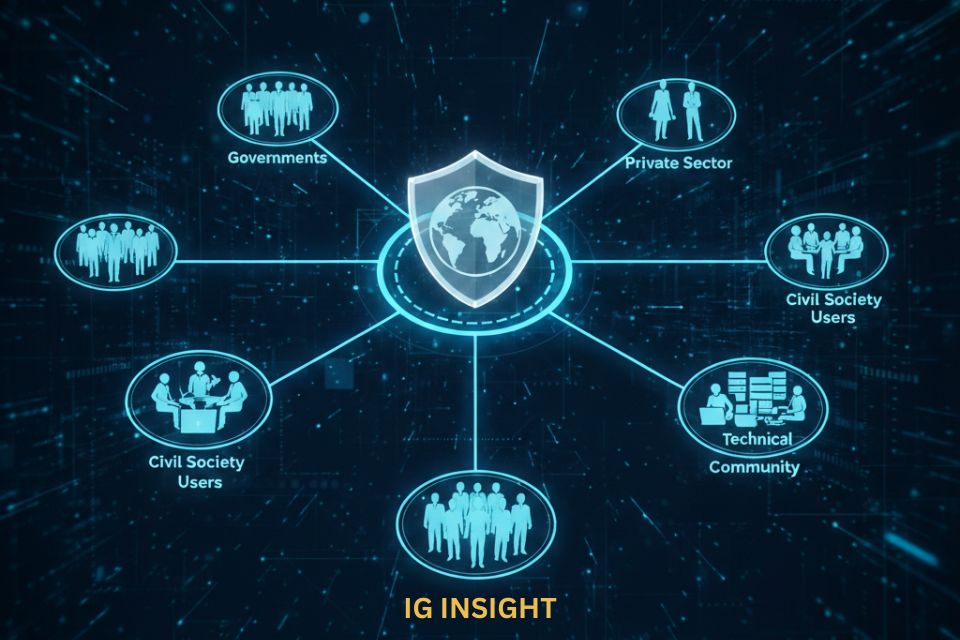
Your No-Cost, No-Excuses Guide to Mastering the Policies, People, and Platforms That Govern the Global Internet
From Complete Beginner to Confident Participant — Using Free Resources from ICANN, IGF, Internet Society, APNIC, APTLD, VSIG, and More
You Can Learn Internet Governance Online for Free. Here Is How.
The internet is one of the most powerful forces shaping human civilization in the 21st century. And yet, most people have no idea who governs it, how decisions about it are made, or how they could be part of those conversations.
Here is the good news: the world’s leading internet governance organizations have thrown open their doors. ICANN, the Internet Governance Forum, the Internet Society, APNIC, APTLD, VSIG, and a growing ecosystem of learning platforms now offer world-class education — completely free, online, and open to anyone on Earth.
Whether you are a student discovering internet policy for the first time, a network engineer wanting to understand the governance layer, a civil society advocate fighting for digital rights, or a government official navigating tech regulation — this guide gives you everything you need to learn internet governance online for free.
And the best part? You do not need a degree, a subscription, or a budget. You just need curiosity and an internet connection.
| 💡 What This Guide Delivers: A complete, practical, and up-to-date roadmap covering the six major organizations offering free internet governance education, their specific learning resources, fellowship opportunities, community programs, a trendy skill-mapping scorecard, and your step-by-step learning action plan. |
Why Learning Internet Governance Matters More Than Ever in 2026
If you think internet governance is too technical or too abstract to matter to your life, think again. Every one of these real-world issues is shaped by internet governance decisions:
- Whether your email address in Arabic, Hindi, or Chinese is accepted by mainstream websites
- Whether an AI system that affects your employment was developed with democratic oversight
- Whether your government can shut down the internet during protests or elections
- Whether your personal data is protected when it crosses international borders
- Whether the next billion people in Africa and Asia can access a fast, affordable internet
- Whether the domain name you registered can be taken from you by a corporate complaint
- Whether cybercriminals can steal your identity by hijacking your internet provider’s routing data
These are not hypothetical futures. They are happening right now. And the people who understand internet governance — who show up to the forums, engage with the policy processes, and build technical expertise — are the ones shaping the outcomes.
| 📊 Key Fact: According to ICANN’s own surveys, fewer than 0.001% of internet users actively participate in internet governance processes. That means a tiny group is making decisions that affect 5+ billion people. Learning internet governance is how you become part of the solution. |
The Six Key Organizations: Your Free Internet Governance Teachers
Each of these organizations plays a distinct role in the internet governance ecosystem — and each has built free learning resources specifically to bring more voices into global policy conversations. Here is your complete guide:
| 1. ICANN — Internet Corporation for Assigned Names and Numbers Type: Nonprofit technical coordination body — manages the global DNS and IP address policy Founded: 1998 HQ: Los Angeles, California, USA Free Platform: ICANN Learn — learn.icann.org Key Strength: Deepest free content on DNS, domain names, ICANN policy processes, and IANA functions Best For: Anyone wanting to understand how domain names, IP addresses, and the DNS actually work |
ICANN: What You Can Learn for Free
ICANN Learn is the gold standard for free internet governance technical education. With 500,000+ learners from 190+ countries, it is the world’s largest free platform focused specifically on the internet’s naming and numbering systems.
| Free Courses at ICANN Learn Introduction to Internet Governance (2 hrs — start here) DNS Fundamentals — how the Domain Name System actually works DNSSEC Fundamentals — cryptographic security for the DNS Introduction to ICANN — mission, community, and structure New gTLD Program — how new domain extensions are approved Universal Acceptance — making the internet multilingual WHOIS and RDAP — domain registration data and privacy policies IPv6 Fundamentals — the future of internet address space | Learning Opportunities ICANN Fellowship Program — fully funded travel to ICANN meetings NextGen@ICANN — youth program for ages 18-30 (no experience needed) ICANN Public Meeting webcasts — hundreds of free recorded sessions ICANN Participate — open policy working groups for all stakeholders ICANN Blog — daily policy and governance news ICANN Community wiki — open reference resource Public comment periods — submit input on any ICANN policy Free digital certificate for every completed course |
| 🏆 ICANN Start Here: learn.icann.org — register free in 60 seconds, start Introduction to Internet Governance, earn your first certificate in 2 hours. This single course gives you the vocabulary and framework to engage with everything else in this guide. |
| 2. IGF — Internet Governance Forum Type: UN-mandated multistakeholder dialogue forum — non-binding, open to all Established: 2006, by the UN Secretary-General following WSIS Tunis 2005 Secretariat: Geneva, Switzerland — hosted by UNDESA Free Platform: IGF Resource Library — intgovforum.org + YouTube channel Key Strength: The world’s most inclusive internet governance conversation — 6,000+ participants annually Best For: Policy, digital rights, AI governance, and multistakeholder process understanding |
IGF: What You Can Learn for Free
The IGF does not have a structured MOOC platform, but its resource library is arguably the richest free archive of internet governance dialogue on the planet. Eighteen-plus years of sessions on every conceivable governance topic are freely available — from AI ethics to DNS abuse, from cybersecurity to digital inclusion.
| Free Learning Resources Full video archive of all annual IGF meetings from 2006 onward Best Practice Forums (BPF) reports — cybersecurity, gender, access Dynamic Coalition publications on 30+ niche governance topics Policy Network reports — AI, environment, meaningful access IGF Secretariat reports — annual synthesis of global IG debates Intersessional working group outputs between annual meetings National and Regional IGF event recordings (170+ initiatives) Youth IGF Programme resources and youth policy papers | Learning & Engagement Opportunities Free virtual registration for IGF 2026 — join the global dialogue ISOC IGF Fellowship — fully funded travel for civil society leaders Dynamic Coalitions — join open permanent working groups on any topic Open mailing lists — subscribe and follow live policy debates National IGF events — attend your local IG forum (170+ countries) Youth IGF Ambassadors Program — mentored leadership track Submit a session proposal — anyone can propose an IGF session IGF Leadership Panel — open public submissions and consultations |
| 🏆 IGF Start Here: Watch the IGF 2025 Oslo plenary sessions free at intgovforum.org/recordings. Start with any session on AI governance or digital rights — both are immediately accessible to newcomers and will show you exactly what real internet governance dialogue looks like. |
| 3. Internet Society (ISOC) Type: Global nonprofit — ‘The Internet is for Everyone’ — founded by Vint Cerf and Bob Kahn Founded: 1992 HQ: Reston, Virginia, USA + Geneva, Switzerland Free Platform: internetsociety.org/learning/internet-governance/ + ISOC Pulse + policy resource library Key Strength: Policy advocacy, digital rights, routing security, and 160+ local chapters worldwide Best For: Civil society advocates, policy professionals, and anyone focused on internet inclusion |
Internet Society: What You Can Learn for Free
The Internet Society’s learning resources span from the highly technical — routing security, DNSSEC deployment — to the deeply human — encryption rights, internet shutdowns, and digital inclusion for underserved communities. Its 160+ local chapters make ISOC unique: you can learn online AND connect with local advocates in your own country.
| Free Learning Resources MANRS tutorials — routing security for network operators Internet Impact Assessment Toolkit — evaluate policy effects Encryption explainers and advocacy guides Internet shutdowns policy reports and case studies Policy briefs on net neutrality, AI, and data governance ISOC Pulse — real-time global internet health tracking tool Monthly Internet Governance webinar series (free archive) Community Networks guides for rural connectivity advocates | Learning & Engagement Opportunities ISOC IGF Fellowship — fully funded attendance at the global IGFISOC Foundation grants for internet development research ISOC Chapter events — 160+ local communities in your country ISOC Ambassadors Program — youth digital rights advocates ISOC Annual Internet Report — the definitive internet trends study Join ISOC for free — become a global community member ISOC policy fellowships — year-long professional developmentIETF Hackathon participation support via ISOC |
| 🏆 ISOC Start Here: Read the Internet Society’s Internet Impact Assessment Toolkit at internetsociety.org/impact — a free framework that teaches you how to evaluate any regulation or policy for its effect on the open internet. Essential reading for anyone entering digital policy. |
| 4. APNIC — Asia-Pacific Network Information Centre Type: Regional Internet Registry for Asia Pacific — 56 economies, 4.3 billion people served Founded: 1993 HQ: Brisbane, Queensland, Australia Free Platform: APNIC Academy — academy.apnic.net + APNIC Blog Key Strength: Deepest free technical content on routing, IPv6, DNS, and network operations globally Best For: Network engineers, ISP professionals, and technical internet governance practitioners |
APNIC: What You Can Learn for Free
APNIC Academy is the most technically rigorous free learning platform in the internet governance space. Originally built for Asia Pacific network operators, it has grown into a global resource for anyone wanting hands-on technical knowledge about how the internet’s infrastructure actually operates.
APNIC’s research blog is a bonus treasure: regularly cited in academic papers and IETF discussions, it is arguably the most authoritative free publication on internet measurement, routing security, and DNS operations.
| Free Courses at APNIC Academy IPv6 Deployment — comprehensive end-to-end deployment guide BGP Routing Security — RPKI, route filtering, MANRS compliance DNS Operations — authoritative and recursive server management Internet Governance Fundamentals — for Asia Pacific professionals DNSSEC Implementation — step-by-step cryptographic DNS security Network Security — DDoS mitigation and traffic analysis Internet Measurement — using RIPE Atlas and APNIC tools Open-Source Networking — FRRouting, BIND, Unbound, and more | Learning & Engagement Opportunities APNIC Fellowship — fully funded APNIC Conference participation APNIC Conference — annual technical and policy hybrid meeting APNIC Blog — free expert articles (most cited in the industry) APNIC Foundation grants for internet development in the Pacific APNICx events — regional capacity building workshops Hands-on virtual network labs — practice in real environments APNIC community mailing lists and technical help forums Instructor-led workshops across Asia Pacific at national NOGs |
| 🏆 APNIC Start Here: Enroll free in IPv6 Deployment at academy.apnic.net — the most practical and comprehensive free IPv6 course available anywhere. If you work in networking, this is the single most impactful course you can take in 2026. Certificate included. |
| 5. APTLD — Asia Pacific Top Level Domain Association Type: Regional association of country-code TLD (ccTLD) registry operators in Asia Pacific Founded: 1998 HQ: Hong Kong (Secretariat) Free Platform: aptld.org/resources — meeting presentations, workshops, and policy documents Key Strength: Specialized ccTLD operations, DNS security, and domain name policy for Asia Pacific Best For: ccTLD registry professionals, DNS operators, and domain name policy practitioners |
APTLD: What You Can Learn for Free
APTLD occupies a specialized but critical niche: it is the primary community for national domain name registries (ccTLDs) in Asia Pacific. Its free resources — meeting presentations, workshop slides, and policy documents — contain operational knowledge about running a ccTLD that is simply not available anywhere else.
For professionals working in or aspiring to work in national internet registries, DNS policy, or country-code domain operations, APTLD’s resource library is an essential and uniquely valuable free resource.
| Free Resources Available APTLD Meeting presentations — all slides and recordings free ccTLD Operations Best Practices — national registry operator guides DNS Security Workshop materials — DNSSEC, DDoS, abuse mitigation Registry Technology Workshop presentations — EPP, RDAP, WHOIS Universal Acceptance implementation guides for ccTLD operators IDN (Internationalized Domain Name) implementation resources ccTLD delegation and redelegation process documentation New gTLD applicant guidance specific to Asia Pacific operators | Learning & Engagement Opportunities APTLD Members Meeting — biannual technical and policy event APTLD Technical Workshops — hands-on DNS and registry training Networking with 40+ Asia Pacific ccTLD registry operators APTLD Fellowship opportunities for emerging ccTLD professionals Joint workshops with ICANN, APNIC, and ISOC at regional events APTLD Policy Working Groups — contribute to regional ccTLD policy Access to ccTLD operator community mailing lists ICANN ccNSO participation training via APTLD community |
| 🏆 APTLD Start Here: Browse APTLD Meeting resources at aptld.org/resources — filter for the most recent biannual meeting and download presentations on DNS security and ccTLD operations. This is specialized knowledge you will not find in any textbook or MOOC. |
| 6. VSIG — Virtual School on Internet Governance Type: Free online capacity-building program for internet governance education Model: Virtual, self-paced, and live-session learning — accessible from anywhere in the world Free Platform: www.virtualsig.org — fully free access Key Strength: Structured curriculum specifically designed for Internet Governance learners at all levels Languages: English (primary); multilingual resources growing Best For: Absolute beginners to internet governance who want a structured, guided learning experience |
The Virtual School on Internet Governance (VSIG) is a free, multilingual MOOC built on Moodle and designed to be the most accessible structured internet governance curriculum available anywhere. Created by Glenn McKnight and Alfredo Calderon, VSIG’s mission is to create a multilingual online training platform that allows novice and advanced students to learn the basics of Internet Governance — without any geographic or economic barrier.
What sets VSIG apart in 2026 is its genuine multilingual commitment. Alongside English, Spanish, and French cohorts, VSIG launched its inaugural Bengali/Bangla course in December 2025, starting with students from the University of Dakar — making it one of the very few internet governance programs to offer instruction in Bengali. This is internet governance education meeting the people where they are, in the language they speak.
The platform uses BigBlueButton for live weekly chat sessions, hosts open discussion forums, delivers quizzes for knowledge reinforcement, and maintains a rich repository of recorded sessions. Students must achieve 80% or greater on all quizzes to earn the certificate of completion — making the credential genuinely meaningful.
| VSIG 10-Module Curriculum (Free) Module 1: History — origins and evolution of internet governanceModule 2: Actors — who shapes the internet: ICANN, IGF, RIRs, governments, civil societyModule 3: Infrastructure — DNS, IP addressing, routing, and the technical layerModule 4: Development — digital inclusion, connectivity, and the global digital divideModule 5: Security — cybersecurity policy, DNS abuse, and incident responseModule 6: Legal — jurisdiction, intellectual property, and internet lawModule 7: Economic — digital economy, e-commerce, and platform regulationModule 8: Social and Cultural Issues — language, identity, and the multilingual webModule 9: Human Rights — freedom of expression, privacy, and digital rightsModule 10: Emergent Technologies — AI governance, IoT, blockchain policy | Learning Features & Opportunities Available in English, Spanish, French, and Bengali/Bangla Weekly live BigBlueButton chat sessions with expert speakers Moodle-based — open forums, quizzes, and downloadable materials Certificate of completion awarded on 80%+ quiz scores Graduation/confirmation session for certificate cohorts Alumni list membership after certification New GSMA partner courses added January 2026Group O cohort open for registration — February 2026 |
| 🏆 VSIG Start Here: Visit www.virtualsig.org and explore the Course Details page. Register for the next open cohort — Group O is now accepting applications. If you are a Bengali speaker, the inaugural Bengali/Bangla cohort launched December 2025 and is a historic opportunity to learn internet governance in your own language. Free, structured, and certificate-bearing. |
Your Free Internet Governance Learning Path: Platform by Platform
Your Free Internet Governance Learning Path: Platform by Platform
Use this table to match your background, goals, and learning style to the right starting platform:
| Your Background | Start With | Then Add | Fellowship Target | Goal |
| Complete beginner | VSIG | ICANN Learn | ISOC IGF Fellowship | Active IGF participant in 12 months |
| Student / youth | ICANN Learn | IGF Archive | NextGen@ICANN | First ICANN meeting in 12 months |
| Network engineer | APNIC Academy | RIPE NCC Acad. | APNIC Fellowship | RPKI deployment + routing security cert |
| Policy / civil society | Internet Soc. | DiploFoundation | ISOC IGF Fellowship | IGF Dynamic Coalition contributor |
| Government official | ICANN Learn | IGF Sessions | ICANN Fellowship | GAC community engagement |
| DNS / ccTLD professional | APTLD | ICANN Learn | APTLD Fellowship | ccNSO participation in 18 months |
| Academic / researcher | IGF Archive | APNIC Blog | RIPE NCC Fellowship | Published IG research in 24 months |
| Journalist / communicator | VSIG | Internet Soc. | IGF Media Pass | Expert internet governance reporting |
What You Will Actually Learn: The Internet Governance Topic Map
Internet governance is not a single subject — it is an ecosystem of interconnected technical, policy, legal, and social topics. Here is the complete map of what free courses across all six organizations will teach you:
| Topic Area | What You Will Learn | Best Free Source |
| DNS & Domain Names | How the Domain Name System works; domain registration; ccTLD vs gTLD; DNSSEC security | ICANN Learn — learn.icann.org |
| IP Addressing & Routing | IPv4 exhaustion; IPv6 deployment; BGP routing; RPKI routing security; route hijacking | APNIC Academy — academy.apnic.net |
| Internet Governance Model | Multistakeholder model; ICANN structure; RIRs; ccNSO; GNSO; ASO; NRO; WSIS legacy | ICANN Learn + VSIG |
| Policy Development | How internet policies are made; public comment processes; working groups; consensus | ICANN Participate + IGF Dynamic Coalitions |
| Digital Rights | Freedom of expression; privacy; internet shutdowns; encryption rights; surveillance | Internet Society + IGF Archive |
| AI & Emerging Tech Gov. | AI governance frameworks; algorithmic accountability; digital trade; platform regulation | IGF Policy Network 2025-26 + VSIG |
| Cybersecurity Policy | DNS abuse; cybercrime policy; incident response; BGP security; CSIRT frameworks | APNIC Academy + Internet Society MANRS |
| Data Governance | GDPR; cross-border data flows; data localization; WHOIS/RDAP privacy policies | DiploFoundation + Internet Society |
| ccTLD Operations | Running a national domain registry; EPP; RDAP; abuse management; IDN implementation | APTLD Resources — aptld.org |
| Universal Acceptance | IDN support; internationalized email; multilingual internet; UA-readiness testing | ICANN Learn (UA course) + UASG+ VSIG |
| Internet Measurement | Network measurement; RIPE Atlas; APNIC stats; latency mapping; routing analytics | APNIC Blog + RIPE Labs |
| Fellowship & Participation | How to get funded to attend ICANN, IGF, APNIC meetings; application strategies | icann.org/fellowships + internetsociety.org |
The 2026 Internet Governance Skill Passport
We created the Internet Governance Skill Passport — a unique achievement-tracking framework designed for the modern learner. Think of it as your personal IG knowledge credential map. Complete each badge by finishing the linked free resource, then build your public profile as a credible internet governance voice:
| Badge | Skill Earned | How to Earn It (Free) | Platform | Level |
| DNS | DNS & Domain Name Fundamentals | Complete DNS Fundamentals course | ICANN Learn | Beginner |
| IG | Internet Governance Foundations | Complete Intro to Internet Governance | ICANN Learn / VSIG | Beginner |
| IPv6 | IPv6 Deployment Skills | Complete IPv6 Deployment course | APNIC Academy | Intermediate |
| RPKI | Routing Security / RPKI | Complete BGP Routing Security course | APNIC Academy | Intermediate |
| POL | Internet Policy Analysis | Complete Internet Governance Course | DiploFoundation | Intermediate |
| DR | Digital Rights Advocacy | Read Internet Impact Assessment Toolkit | Internet Society | Intermediate |
| ccT | ccTLD Operations Knowledge | Review APTLD Meeting presentations | APTLD | Advanced |
| IG | Internet Governance Fundamentals | Complete VSIG Internet Governance module | VSIG | Advanced |
| FEL | Fellowship Participation | Attend ICANN or IGF on fellowship | ICANN / ISOC | Advanced |
| COM | Community Contribution | Submit a working group comment or policy paper | ICANN / IGF | Expert |
| 🛂 Skill Passport Tip: Share your completed Skill Passport badges on LinkedIn using the hashtag #InternetGovernance and tag the relevant organization. Many ICANN and Internet Society staff actively engage with and amplify community learners who share their progress. This is one of the fastest ways to build visibility in the internet governance community. |
Your Step-by-Step Plan to Learn Internet Governance Online for Free
Here is your practical, week-by-week action plan — zero cost, zero prerequisites, zero excuses:
| Week 1 — Build Your Foundation (2-4 hours) Register free at learn.icann.org. Complete Introduction to Internet Governance (2 hrs) and download your certificate. Register free at vsig.internetgovernance.org to get oriented to the broader learning community. Add your ICANN Learn certificate to your LinkedIn profile. |
| Week 2 — Explore Your Interest Track (3-5 hours) Technical track: Enroll in DNS Fundamentals at ICANN Learn + start IPv6 Deployment at APNIC Academy. Policy track: Begin DiploFoundation’s Internet Governance Course online modules + read ISOC’s Internet Impact Assessment Toolkit. Both tracks: Watch one IGF 2025 session recording on your chosen topic. |
| Week 3-4 — Go Deep on One Topic (4-8 hours) Choose one topic from the Skill Passport (DNS, IPv6, Policy, or Digital Rights) and go deep. Complete the full course on that topic, read the supplementary blog posts and reports, and join the relevant mailing list (ICANN working group list or IGF Dynamic Coalition). Start absorbing how real discussions happen. |
| Month 2 — Engage With a Live Community Attend a free virtual event: ICANN Public Meeting webcast, IGF intersessional session, APNIC community meeting, or VSIG live session. Register to ask a question or make a comment in a public forum. Find your local National IGF at intgovforum.org and attend the next national event. |
| Month 3 — Apply for a Fellowship You now have enough knowledge and community exposure to apply for a fellowship. Submit to the ICANN Fellowship at icann.org/fellowships OR the ISOC IGF Fellowship at internetsociety.org/fellowships. Applications open 3-4 months before each event. Write a clear statement of why you want to participate and what you will contribute. |
| Month 4-6 — Become a Contributor Submit a public comment on an active ICANN policy consultation. Join an IGF Dynamic Coalition on a topic you care about. Write a blog post or article summarizing what you have learned. Mentor one other person starting their internet governance journey. At this stage, you are no longer a student — you are a participant. You can also share your learning experience and key outcomes by writing a reflective post for the IG Insight Blog, helping others understand complex governance issues in a simple way. |
Frequently Asked Questions
Q1: Is it really possible to learn internet governance online completely for free?
Yes, absolutely. Every resource listed in this guide is 100% free with no credit card, subscription, or payment required. ICANN Learn, APNIC Academy, VSIG, the IGF resource library, ISOC’s learning hub, and APTLD’s meeting resources are all completely free. DiploFoundation’s Internet Governance Course has a tuition fee, but scholarship and fee waiver programs are available — apply for them specifically if you are from a developing nation.
Q2: I have no technical background. Can I still learn internet governance?
Yes — and you are exactly who these programs are designed for. The internet governance community actively needs non-technical voices: policy analysts, journalists, civil society advocates, lawyers, economists, and engaged citizens. Start with VSIG or ICANN Learn’s Introduction to Internet Governance — both are designed for complete beginners with no technical background. The technical knowledge you need will follow naturally as you go deeper.
Q3: What is VSIG and how is it different from the other platforms?
VSIG — the Virtual School on Internet Governance — is the only platform in this guide that offers a specifically structured, curriculum-based learning journey through internet governance as a whole subject. While ICANN Learn covers ICANN-specific topics and APNIC Academy covers technical networking, VSIG gives you the full internet governance picture in a guided, cohort-based format. It also offers live sessions with expert speakers and peer community access that self-paced platforms do not provide. It is the ideal starting point if you want structure rather than open-ended self-direction.
Q4: How long does it take to become confident enough to participate in real internet governance processes?
Most motivated learners can move from beginner to active community participant in three to six months, following the step-by-step plan outlined in this guide. Attending your first ICANN or IGF event — virtually free or through a fellowship — is a realistic goal within six to twelve months. Being a recognized contributor to a working group or policy forum within eighteen to twenty-four months is achievable with consistent effort. The key is progressive engagement: start online, then join virtual meetings, then apply for fellowships.
Q5: Why does the internet governance community offer so much free learning?
Because the organizations that govern the internet have a genuine vested interest in bringing more diverse voices into the room. ICANN, the Internet Society, APNIC, APTLD, VSIG, and the IGF all operate on the principle that better governance outcomes require broader participation. They know that if internet governance is left to a small group of experts from wealthy countries, the resulting policies will not serve the 5+ billion people who depend on the internet globally. Free education is how they break that barrier — and it is also why your participation matters so much.
The Knowledge Is Free. The Opportunity Is Real. Start Today.
The organizations that govern the internet — ICANN, the Internet Governance Forum, the Internet Society, APNIC, APTLD, and VSIG — have invested millions of dollars building free learning platforms because they know one thing: the internet works better when more people understand it.
You now have the map. You know the platforms. You have the step-by-step plan. All that is left is the first step — and that step costs nothing but the time you are willing to invest.
Your Free Internet Governance Journey Starts Now
- Register free at learn.icann.org — earn your first certificate in 2 hours today
- Join free at virtualsig.org — start the structured IG learning journey
- Enroll free at academy.apnic.net — begin your technical IPv6 or routing security track
- Join free at internetsociety.org/learning — find your local chapter and the IGF Fellowship
- Apply free at icann.org/fellowships — next ICANN meeting fellowship deadline approaching
- Watch free at intgovforum.org — start with one IGF 2025 session on AI governance
- Share this guide with one person who cares about the internet’s future
The internet governs the world. You can help govern the internet. Start learning today.
© 2026 IG Insight Blog. This article is published for educational and informational purposes.

Dipankar Barua is an internet governance advocate from Dhaka, Bangladesh, who believes that voices from the Global South must be heard in the rooms where the internet’s future is decided. As an ICANN advocate and VSIG member, he actively engages in multistakeholder policy processes spanning DNS security, digital inclusion, and responsible AI governance. With an academic grounding in Computer Science and AI, and over 15 years of applied IT experience, Dipankar bridges the gap between technical communities and policy spaces — writing, participating, and advocating for a more open, equitable, and inclusive internet for all.