The Truth About ICANN and What It Actually Does
No, it's not Big Tech. No, it's not the US government. The real answer is far more interesting.

ICANN is the nonprofit organization that keeps the internet running smoothly by managing domain names, IP addresses, and the Domain Name System (DNS). In short, it ensures that when you type a web address, you actually reach the right site. Without ICANN, the internet would be chaotic and unreliable.
Ask most people who controls the internet and you will get a range of confident — and wrong — answers. Google? The US government? The United Nations? Tech billionaires in Silicon Valley?
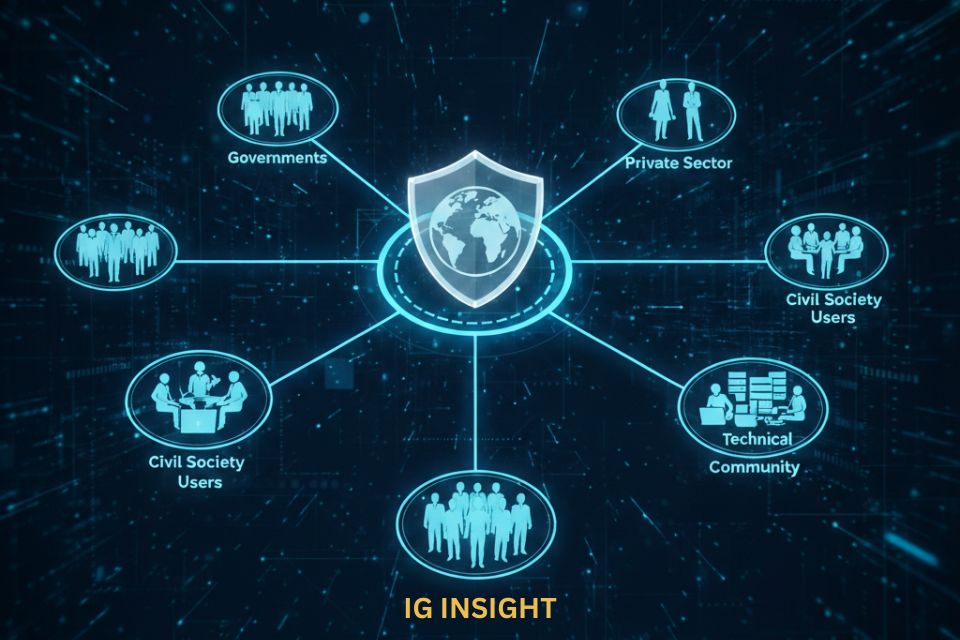
Here’s the truth: no single entity controls the internet. But that doesn’t mean it’s an ungoverned free-for-all either.
The internet is governed by a complex, layered ecosystem of organizations, standards bodies, governments, and community groups — each controlling a different piece of the puzzle. And at the centre of the most critical piece sits an organization most people have never heard of: ICANN.
This is the story of who really controls the internet — and what ICANN actually does with its enormous (and often misunderstood) power.
The Myth vs. The Reality: Who Controls the Internet?
Let’s bust some myths first, because the misconceptions around internet control are widespread — and they matter.
Common Myths About Internet Control
| The Myth | The Reality |
| The US government controls the internet | The US once oversaw ICANN’s technical functions, but relinquished that role in 2016. No government ‘controls’ the internet. |
| The UN runs the internet | The UN hosts internet governance forums (IGF) and the ITU manages spectrum, but has no direct control over internet infrastructure. |
| ICANN controls everything | ICANN manages domain names and identifiers only. It has no power over content, data flows, cybersecurity policy, or national regulations. |
| Big Tech (Google, Meta, Amazon) control the internet | These companies control their own platforms and significant infrastructure, but not the internet’s core standards or naming system. |
| The internet has no governance | The internet has extensive governance — distributed across dozens of technical bodies, policy forums, and national regulators. |
| Whoever owns the servers controls the internet | Physical infrastructure matters, but the internet’s logic runs on open protocols that no single owner controls. |
| 💡 The Real Answer: The internet is governed through a distributed multi-stakeholder model. Technical coordination, policy development, and operational decisions are spread across ICANN, the IETF, Regional Internet Registries, national governments, civil society, and the private sector — with no single master. |
Recent Facts: The Internet
| Metric | 2025 Data |
| Global internet users | ~5.56 billion (68.7% of world population) — ITU 2024 estimate |
| Daily internet traffic | ~5.4+ exabytes per day and growing at ~20% annually |
| Registered domain names | 360 million+ across all top-level domains globally |
| Websites on the internet | Over 1.1 billion websites; ~200 million actively maintained |
| Internet Exchange Points (IXPs) | 1,000+ IXPs globally routing traffic between networks |
| IPv4 address pools | All five RIRs have exhausted free IPv4 allocations |
| IPv6 deployment | ~47% of global traffic now served over IPv6 (Google, 2024) |
| ICANN accredited registrars | 3,500+ worldwide selling domain names |
| New gTLD Round 2 applications | 4,000+ applications expected in ICANN’s new program |
| Government internet shutdowns | 180+ documented shutdowns globally in 2023 (Access Now) |
| Internet economy value | ~$30.1 trillion USD (World Bank digital economy estimate, 2023) |
| Global Digital Compact | Adopted by UN General Assembly, September 2024 |
ICANN: The Truth About What It Actually Does
ICANN — the Internet Corporation for Assigned Names and Numbers — is a non-profit corporation founded in 1998, headquartered in Los Angeles, California. It emerged from a US government initiative to transition management of the internet’s technical naming and addressing functions from a single US contractor (Network Solutions/SAIC) to a global multi-stakeholder body.
ICANN’s mandate is specific, technical, and enormously consequential: it coordinates the global Domain Name System (DNS), the system that translates human-readable website names like ‘google.com’ into machine-readable IP addresses.
| 🔑 ICANN’s Core Power: ICANN does not control the internet’s content, services, or infrastructure broadly. But it does control the internet’s address book — the DNS. And without the DNS, the internet as we know it simply stops working. That makes ICANN’s role foundational, even if limited. |
What ICANN Actually Controls
- The DNS Root Zone: The master list of all top-level domains (TLDs) — .com, .org, .uk, .app, .africa, etc.
- Domain Name Policy: The rules under which domain names are allocated, transferred, and disputed
- Registry and Registrar Accreditation: ICANN licenses the companies that sell domain names
- New TLD Introductions: ICANN runs the program that creates new domain name extensions
- IANA Functions: IP address allocation coordination and protocol parameter management
- UDRP: The Uniform Domain Name Dispute Resolution Policy used to settle cybersquatting cases
What ICANN Does NOT Control
- Internet content or censorship (that is handled by national governments and platforms)
- Routing of internet traffic (that is the domain of ISPs, NOGs, and the IETF/BGP)
- Cybersecurity policy at the national or platform level
- Social media, cloud services, or application-layer infrastructure
- Data privacy laws or cross-border data flow rules
- Who can access the internet or at what price
ICANN’s Internal Structure: Who Makes the Decisions?
ICANN operates through a multi-stakeholder governance structure. Its Board of Directors makes final decisions, but is heavily informed by three Supporting Organizations and four Advisory Committees.
| Body | Type | Role in Decision-Making |
| Board of Directors | 21 members (15 voting) | Final decision-making authority on all ICANN policies |
| GNSO | Supporting Organisation | Develops policy for generic TLDs (.com, .org, .shop, etc.) |
| ccNSO | Supporting Organisation | Policy for country-code TLDs (.uk, .jp, .bd, .za, etc.) |
| ASO | Supporting Organisation | Policy for IP address allocation (coordinates with RIRs) |
| GAC | Advisory Committee | Governments advise ICANN on public policy concerns |
| ALAC | Advisory Committee | Represents individual internet users globally |
| SSAC | Advisory Committee | Security and stability of the DNS and internet naming |
| RSSAC | Advisory Committee | Root server operations and architecture |
The Full Scenario: 10 Organizations That Shape the Internet
ICANN is the most discussed, but it’s far from the only organization with meaningful power over the internet. Here is the complete ecosystem of control — and what each body actually does.
1. ICANN — Internet Corporation for Assigned Names and Numbers
Controls: The DNS, Domain Names, and Internet Identifiers
| ICANN Activity | Community Impact |
| DNS Root Zone Management | Maintains the master list all TLDs; the anchor of the entire naming system |
| New gTLD Program (Round 2) | Creating thousands of new domain extensions — transforming the internet namespace |
| UDRP Domain Dispute Resolution | 70,000+ disputes resolved; protects trademarks and consumers from cybersquatting |
| Registry & Registrar Accreditation | 3,500+ accredited registrars; ensures competitive, accountable domain market |
| IANA Functions | Manages IP address delegation to RIRs; maintains protocol parameters |
| Universal Acceptance (UASG) | Hosts the UASG to ensure non-Latin domain names work in all software |
| ICANN Public Meetings | 3 annual global meetings open to all — Nairobi, Istanbul, Los Angeles in 2025 |
| ICANN Learn | Free online education platform covering DNS, governance, policy |
| Fellowship Programme | Funded travel for engineers and advocates from developing countries |
| DNS Abuse Framework | Community-driven initiatives against malicious domain use (phishing, malware) |
- Revenue: ~$170M+ per year from registry and registrar fees
- 2016 IANA Transition: The US Commerce Department’s NTIA relinquished oversight, completing the multi-stakeholder transition
- New gTLD Round 2: Expected 4,000+ applications for new TLDs — the largest DNS expansion in history
- ICANN79 (June 2024, Istanbul), ICANN80 (Nov 2024, Istanbul), ICANN81 (March 2025)
2. IETF — Internet Engineering Task Force
Controls: The Technical Standards That Make the Internet Work
If ICANN manages the internet’s address book, the IETF writes the grammar and syntax of how data moves across the internet. Every time you load a webpage over HTTPS, send an email, or make a video call, you’re using protocols standardized by the IETF.
| IETF Activity | Community Impact |
| RFC Publication | Publishes the definitive standards for internet protocols — freely available to all |
| TCP/IP Suite | The foundational protocols for all internet communication — IETF standards |
| TLS (Transport Layer Security) | HTTPS encryption protecting billions of daily transactions — IETF standard |
| DNS Standards (RFC 1034/1035) | The original and evolving standards for how the DNS operates |
| QUIC and HTTP/3 | Next-generation web transport — now deployed by Google, Facebook, Cloudflare |
| IPv6 Standardization | The next-generation internet addressing protocol replacing IPv4 |
| RPKI and BGP Security | Routing security standards preventing hijacking of internet traffic |
| SMTP and Email Standards | How email is sent, received, and secured globally |
| IETF Hackathons | Pre-meeting events for implementing and testing new protocol standards |
| Open Working Groups | 100+ active WGs open to any engineer — truly global participation |
- The IETF motto: ‘Rough consensus and running code’ — pragmatic, engineer-driven governance
- No membership fees; no government representatives in official roles — the most open major standards body
- RFC 9000 (QUIC) is now used by ~30% of all internet traffic — the fastest-adopted protocol in IETF history
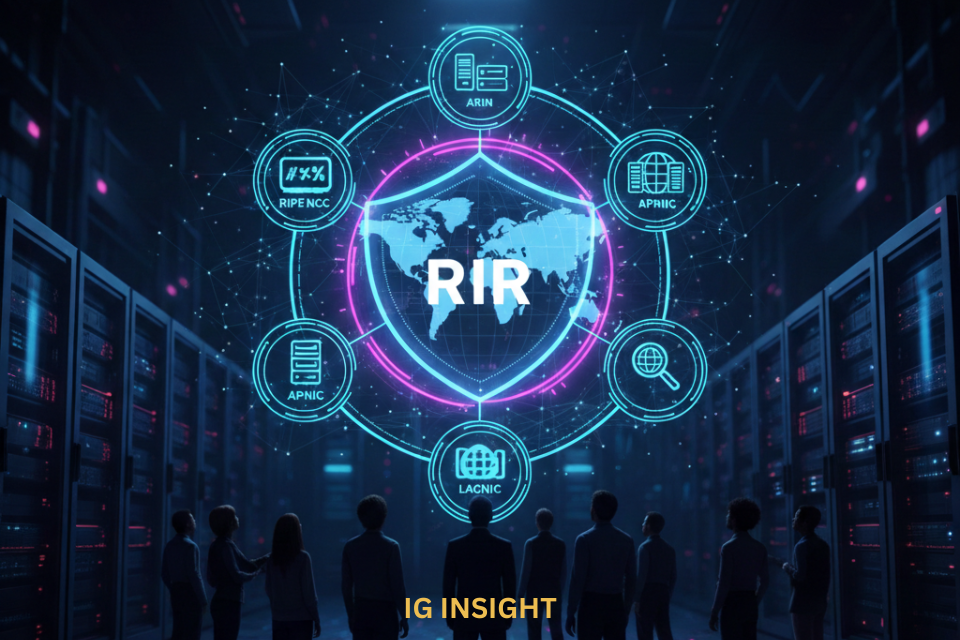
3. The Five Regional Internet Registries (RIRs)
Controls: IP Addresses — the Actual Location Numbers of the Internet
Every device on the internet needs an IP address — a unique numerical identifier. The five Regional Internet Registries allocate and manage these addresses for their respective global regions. They are the custodians of the internet’s most fundamental resource.
| RIR | Region | Founded | Members | Notable 2024 Activity |
| ARIN | North America | 1997 | ~3,800 | RPKI ROV deployment campaign |
| RIPE NCC | Europe/ME/CA | 1992 | ~25,000 | RIPE 89 meeting; RIPE Atlas expansion |
| APNIC | Asia-Pacific | 1993 | ~6,500 | IPv6 50% milestone in Asia-Pacific |
| LACNIC | Latin Am/Caribbean | 1999 | ~7,000 | LACNIC 43 meeting in Medellin |
| AFRINIC | Africa | 2004 | ~2,500 | AFRINIC 40; governance recovery post-crisis |
- All five RIRs have exhausted their free IPv4 address pools — the transition to IPv6 is now existential
- RPKI (Resource Public Key Infrastructure) adoption: ARIN reports 50%+ of IPv4 routes now have Route Origin Authorizations
- AFRINIC controversy: A 2021-2023 governance crisis at AFRINIC — resolved through community-driven accountability processes — demonstrated both the fragility and resilience of the multi-stakeholder model
4. ITU — International Telecommunication Union
Controls: Radio Spectrum, Satellite Orbits, and Telecom Standards
The ITU is the oldest UN agency (founded 1865) and the one most governments are most comfortable with — because it operates through traditional intergovernmental treaty processes. Its power over the internet is both real and contested.
| ITU Activity | Community Impact |
| Radio Spectrum Allocation | Manages global spectrum — enabling WiFi, 5G, satellite internet (Starlink, OneWeb) |
| Satellite Orbit Coordination | Orbital slot management — critical for LEO mega-constellations like Starlink |
| 5G and IMT-2030 Standards | ITU-R sets the framework for next-generation mobile internet |
| ITU-D Broadband Programs | $500M+ annually in connectivity programs for developing countries |
| WSIS Co-Organization | Co-organizes the WSIS process — setting global digital development goals |
| AI for Good Platform | UN platform for ethical AI — increasingly central to internet governance |
| Connect 2030 Agenda | SDG-aligned framework: universal meaningful connectivity for all by 2030 |
| Cybersecurity Capacity Building | GCI (Global Cybersecurity Index) and national strategy support for developing nations |
| WCIT and WTSA | World Conferences on International Telecommunications and Standardization |
| E.164 Numbering | Manages global telephone numbering — including internet telephony (VoIP) |
- The 2024 ITU Plenipotentiary Conference (PP-24, New Delhi) addressed AI governance, digital inclusion, and spectrum policy
- ITU’s WCIT-24 renewed debate over intergovernmental vs. multi-stakeholder internet governance
- Starlink and OneWeb’s explosive growth is making ITU’s satellite orbit management increasingly politically charged
5. National Governments and Regional Bodies (EU, AU, ASEAN)
Controls: National Law, Regulation, and Sovereignty Over Their Territory’s Internet
Governments don’t control the global internet — but they powerfully control how the internet works within their borders. And as major regulators of the world’s largest digital markets, their decisions ripple globally.
| Government/Body | Key Internet Governance Action | Global Impact |
| European Union | GDPR, DSA, DMA, AI Act, NIS2 Directive | Sets global data privacy and platform regulation standards |
| United States | FCC spectrum policy; NTIA digital strategy; export controls | Technology export controls shape global AI and chip access |
| China | Great Firewall; MIIT; data localisation laws | Manages world’s largest national internet (1B+ users) |
| India | IT Act amendments; Data Protection Act 2023; TRAI | 2nd largest internet market; significant policy-setter |
| Brazil | Marco Civil; LGPD; CGI.br model | Pioneers multi-stakeholder internet governance nationally |
| African Union | AU Convention on Cybersecurity; Digital Transformation Strategy | Coordinating digital policy for 55 AU member states |
| ASEAN | ASEAN Digital Masterplan 2025; cross-border data frameworks | Harmonising digital rules for 680M-person market |
| Council of Europe | Budapest Convention on Cybercrime (65+ parties) | Global reference point for cyber law |
- The EU’s Digital Services Act (DSA) and Digital Markets Act (DMA) are reshaping global platform governance from Brussels
- China’s internet governance model — centralized, sovereign, nationalized — is the primary alternative to the multi-stakeholder model
- India’s Digital Personal Data Protection Act 2023 is among the world’s most significant recent internet governance developments
6. Major Technology Platforms — The Invisible Internet Governors
Controls: Content Rules, Platform Standards, and Infrastructure for Billions
Here’s the uncomfortable truth: the companies that most directly govern the internet experience for billions of people are not ICANN, not the IETF, and not the ITU. They are Alphabet, Meta, Amazon, Microsoft, Apple, and Cloudflare.
| Company | Internet Infrastructure Controlled | Internet Governance Role |
| Google/Alphabet | World’s largest DNS resolver (8.8.8.8), BGP routing, submarine cables | IETF active; ICANN participant; sets web standards via Chrome |
| Meta | 3B+ user platform; own BGP network; transatlantic cables | IETF participant; content governance for global users |
| Amazon (AWS) | 40%+ of cloud market; Route 53 DNS; CloudFront CDN | Critical infrastructure for majority of global websites |
| Microsoft (Azure) | Major cloud provider; LinkedIn; GitHub; Teams | Azure DNS; enterprise internet; GitHub hosts open-source internet tools |
| Cloudflare | 25M+ protected websites; 1.1.1.1 DNS; DDoS protection | Operates critical internet security infrastructure globally |
| Apple | App Store gateway; Safari browser; iCloud | Controls app distribution for 1B+ iOS devices globally |
| ⚠️ Critical Insight: These platforms exercise enormous de facto internet governance power through their Terms of Service, content moderation decisions, and infrastructure choices — often affecting hundreds of millions of people with minimal public accountability. This is why platform governance is one of the hottest topics in internet policy. |
7. Civil Society Organizations — The Internet’s Watchdogs
Controls: Accountability, Rights Advocacy, and Public Interest Representation
Civil society organizations don’t control internet infrastructure — but they are essential players in ensuring that those who do are held accountable. They advocate for users’ rights, fight government overreach, challenge corporate power, and represent the public interest in policy forums.
| Organization | Focus Area | Key 2024-2025 Contribution |
| Access Now | Digital rights & shutdowns | KeepItOn campaign; 2024 Shutdown Report |
| Electronic Frontier Foundation (EFF) | Digital civil liberties | Encryption defense; surveillance opposition |
| Internet Society (ISOC) | Open internet advocacy | Internet Impact Assessment; community networks |
| Association for Progressive Comm (APC) | Gender & internet rights | Feminist internet framework; gender digital divide |
| Article 19 | Free expression online | Platform governance; content moderation standards |
| Center for Democracy & Technology (CDT) | Policy & rights | US and EU platform regulation input |
| Global Network Initiative (GNI) | Corporate accountability | Company commitments on privacy and free expression |
| Freedom House | Internet freedom index | Annual Freedom on the Net report — 70+ countries |
8. Internet Society (ISOC) — The Guardian of the Open Internet
Controls: Norms, Advocacy, and the Organizational Home of the IETF
ISOC is a global non-profit that serves as the organizational home of the IETF, runs an extensive network of national chapters, and advocates for an open, globally connected internet. It is one of the most influential voices in internet governance debates at every level.
- Manages the IETF Trust and provides institutional support for IETF activities
- Internet Pulse: Real-time dashboard monitoring internet resilience and shutdowns globally
- Internet Impact Assessment Toolkit: Framework for evaluating whether policies help or harm the internet
- Encryption advocacy: ISOC strongly defends end-to-end encryption against government backdoor proposals
- Community Networks: Funds and supports grassroots connectivity projects in underserved communities
- 150+ chapters worldwide — making it one of the most geographically diverse IG organisations
9. Root Server Operators — The Internet’s Anchor Points
Controls: The 13 Logical Root Servers That All DNS Queries Start From
Every DNS query on the internet ultimately traces back to 13 logical root server clusters (labelled A through M). These are operated by 12 independent organizations — not by ICANN alone. Their stability is existential for the internet.
| Server | Operator | Location & Scale |
| A | Verisign | Operated globally via anycast — hundreds of instances worldwide |
| B | USC-ISI | Marina Del Rey, California + anycast instances |
| C | Cogent Communications | Global anycast deployment |
| D | University of Maryland | College Park, MD + global anycast |
| E | NASA Ames Research Center | Mountain View, California + global instances |
| F | Internet Systems Consortium (ISC) | Global anycast — 100+ instances worldwide |
| G | US DoD Network Information Center | Operated by US Department of Defense |
| H | US Army Research Laboratory | Aberdeen, Maryland + global instances |
| I | Netnod | Sweden-based; global anycast — critical for European DNS |
| J | Verisign | Global anycast — the busiest root server by query volume |
| K | RIPE NCC | Amsterdam-based; 100+ anycast instances globally |
| L | ICANN | Los Angeles + global anycast instances |
| M | WIDE Project | Japan-based; Asia-Pacific DNS anchor |
- Despite only 13 logical root servers, anycast technology means there are 1,800+ physical instances globally
- Root server resilience: the system is designed to survive catastrophic attacks; no successful attack has ever taken down the root
- Root servers handle ~1 trillion queries per day globally
10. Network Operator Groups (NOGs) — The Engineers Running the Internet
Controls: Day-to-Day Routing, Peering, and Operational Standards
The humans who actually push packets across the internet every second of every day are network engineers — and they coordinate through Network Operator Groups (NOGs). These are the practitioners whose decisions make the internet fast, resilient, and secure at the operational level.
- NANOG (North America), RIPE NCC (Europe), AfNOG (Africa), APRICOT (Asia-Pacific), LACNOG (Latin America)
- NOGs develop Best Current Operational Practices (BCOPs) — practical guidelines followed by ISPs globally
- RPKI deployment is NOG-driven: network operators community are pushing routing security adoption
- NOGs coordinate real-time responses to major internet outages, BGP hijacks, and DDoS attacks
- NOG mailing lists are where the internet’s operational decisions are made — in public, by practitioners
The Internet Power Map: Who Controls What?
| Organization | What It Controls | Decision Power | Accountability Model |
| ICANN | DNS, domain names, TLDs | Binding contracts | Multi-stakeholder |
| IETF | Internet protocols & standards | Voluntary adoption | Open consensus |
| RIRs (x5) | IP addresses & ASNs | Policy binding | Member-driven |
| ITU | Spectrum, satellite, telecom | Treaty-based | Intergovernmental |
| Governments | National law & regulation | Legislative/regulatory | Democratic (varies) |
| Big Tech Platforms | Platform rules, content, CDN | Terms of Service | Corporate (minimal) |
| Civil Society | Accountability & advocacy | Soft power/norms | Mission-driven |
| ISOC | Open internet norms, IETF home | Advocacy/grants | Membership-based |
| Root Operators | DNS root zone queries | Operational | Distributed/voluntary |
| NOGs | Routing, peering, operations | Operational norms | Practitioner-led |
The Hottest Trends Reshaping Internet Control
The question of who controls the internet is not static. Here is what is actively changing the answer right now:
1. The Global Digital Compact — A New UN Framework
In September 2024, the UN General Assembly adopted the Global Digital Compact (GDC) — the most significant internet governance milestone since WSIS 2005. The GDC reaffirms the multi-stakeholder model, commits to closing the digital divide, establishes a new AI governance framework, and creates the first UN mechanism specifically for AI oversight. For anyone asking who controls the internet, the GDC represents a new layer of international norms — non-binding, but politically significant.
2. WSIS+20 — Redrawing the Map
The 2025 WSIS+20 review will be the decade’s defining internet governance moment. Governments, civil society, and the technical community are engaged in a high-stakes negotiation over whether the IGF should get binding powers, whether the ITU should take a greater role, and what ‘multi-stakeholder’ means in 2025 vs. 2005. The outcome will reshape who controls the internet — and how — for the next decade.
3. ICANN’s New gTLD Round 2 — Reshaping the Internet’s Namespace
ICANN’s new gTLD Program Round 2 is underway, with potentially 4,000+ new top-level domain applications expected. This will fundamentally change the internet’s naming landscape — creating new geographic, linguistic, and brand domains at a scale never seen before. It also forces Universal Acceptance: new domains only work if software everywhere accepts them.
4. AI Governance — The New Battlefield
Artificial intelligence is forcing a reckoning in internet governance. Who controls the AI models that are increasingly mediating people’s internet experience? Who governs the data pipelines that train them? The IETF, ICANN, ITU, IGF, and every national regulator are all grappling with AI governance simultaneously — and the answers will shape internet control for decades.
5. The Splinternet Risk — Internet Fragmentation
The biggest threat to the unified internet in 2025 is fragmentation. China operates its own sovereign internet behind the Great Firewall. Russia has deployed Runet infrastructure to disconnect from the global internet if it chooses. The EU’s data localisation requirements create regulatory barriers. ICANN has published a dedicated Internet Fragmentation analysis, and ISOC’s Pulse platform monitors fragmentation risks in real time.
6. Submarine Cable Geopolitics
99% of international internet traffic travels through roughly 400 submarine cables. Who owns, builds, and can cut these cables is becoming a critical geopolitical issue. The US government has blocked Chinese companies from new trans-Pacific cable projects. The EU is investing in new cable routes. This is internet infrastructure geopolitics at its rawest — and it directly affects who controls the physical substrate of the internet.
7. Quantum Computing and Cryptography
Quantum computers powerful enough to break current internet encryption (TLS, HTTPS) may be 5-10 years away. The IETF is already standardizing post-quantum cryptographic algorithms. The transition to quantum-safe encryption will be one of the largest coordinated technical changes in internet history — and whoever manages it will exercise enormous influence over internet security globally.
Frequently Asked Questions
Q: Does the US government control the internet?
A: No — not anymore, and even historically its control was limited. The US government did have oversight of ICANN and the IANA functions from 1998 to 2016 through a contract with the National Telecommunications and Information Administration (NTIA). In October 2016, the NTIA formally relinquished that oversight as part of the IANA Stewardship Transition, transferring authority to the global multi-stakeholder community. Today, the US government is one voice among many in internet governance — influential, but not controlling.
Q: What is ICANN and why does it matter?
A: ICANN (Internet Corporation for Assigned Names and Numbers) is a non-profit corporation that coordinates the Domain Name System (DNS) — the internet’s address book. It decides which top-level domains (.com, .org, .africa, .shop) exist, sets the rules for domain name registration, accredits the companies that sell domains, and manages the IANA functions that allocate IP addresses and maintain protocol standards. It matters because without a functioning, globally consistent DNS, the internet fragments into incompatible networks.
Q: Can a country disconnect from the global internet?
A: Technically, yes — and some have partially done so. Russia has built ‘Runet’ infrastructure designed to allow disconnection from the global internet. North Korea operates an almost entirely closed national network. Iran has implemented a National Information Network. China’s Great Firewall is not a full disconnection but a heavily filtered gateway. However, full disconnection is economically catastrophic for modern economies, which is why even geopolitically hostile states maintain some global connectivity.
Q: What was the IANA Transition and why was it historic?
A: The IANA (Internet Assigned Numbers Authority) Stewardship Transition, completed in October 2016, was the formal transfer of oversight over the IANA functions — the management of IP addresses, domain name system root zone, and internet protocol parameters — from the US government’s NTIA to the global multi-stakeholder community. It was historic because it ended 18 years of US government authority over these critical functions, fulfilled a promise made at WSIS 2005, and demonstrated that the multi-stakeholder model could manage itself without government oversight.
Q: What is the ‘splinternet’ and how real is the threat?
A: The ‘splinternet’ refers to the scenario where the global internet fragments into incompatible regional internets — one controlled by the US and allies, one by China, perhaps others by Russia or the EU. It is a real and growing concern: China’s Great Firewall, Russia’s Runet, data localisation laws, geopolitical restrictions on submarine cable projects, and technical fragmentation risks all point in this direction. ICANN, ISOC, and the IGF actively monitor and work against fragmentation. The Global Digital Compact (2024) explicitly commits signatories to maintaining a unified, interoperable internet.
Q: Does ICANN have the power to take down websites?
A: No. ICANN has no authority to take down websites or remove content. ICANN can revoke a domain name registration in extreme cases — such as persistent abuse by a registry — but this is rare and governed by contract, not content. Websites are taken down by hosting providers, courts (through legal orders), or registrars (for clear violations of terms of service). ICANN’s role is coordination, not content policing.
Q: How does the EU influence global internet governance?
A: The EU’s regulatory power over digital markets is increasingly global. The GDPR (data protection) has become a de facto global standard because companies serving EU users must comply globally. The DSA (Digital Services Act) and DMA (Digital Markets Act) are reshaping how platforms operate worldwide. The AI Act is the world’s first comprehensive AI regulation. Because the EU is the world’s largest trading bloc, companies find it easier to implement EU standards globally than to maintain separate systems — making Brussels a de facto global internet regulator.
Q: What is the Global Digital Compact and what does it change?
A: The Global Digital Compact (GDC), adopted by the UN General Assembly on September 22, 2024, is a landmark agreement establishing principles and commitments for an open, free, and secure digital future. It reaffirms the multi-stakeholder model of internet governance, commits to closing the digital divide, establishes the first UN framework for AI governance (including an independent AI safety panel), and creates new accountability mechanisms for digital platforms. It does not give the UN new operational power over the internet, but it establishes important international norms and creates new multilateral coordination mechanisms.
The Verdict: Nobody Controls the Internet — And That’s the Point
The internet was designed — deliberately and brilliantly — to have no single point of control. Its distributed architecture makes it resilient to outages, censorship, and capture by any single actor.
But ‘no single controller’ does not mean ‘ungoverned.’ The internet’s governance is distributed, multi-layered, and fiercely contested. ICANN controls the domain name system. The IETF controls the protocols. The RIRs control IP addresses. The ITU controls spectrum. National governments control their own territories. Big Tech platforms control the experience of billions. And civil society, NOGs, and the open-source community hold the whole system accountable.
Understanding this ecosystem is no longer optional for any engaged citizen, policymaker, entrepreneur, or technologist. The decisions being made right now — about AI governance, internet fragmentation, WSIS+20, ICANN’s new gTLD program, and the Global Digital Compact — will shape the internet for the next 20 years.
The question is not just who controls the internet. The question is: will you help shape how it’s controlled?
Know Who Controls the Internet — Then Help Shape It
The internet’s rules are written by those who show up. Don’t let others write them for you.
✦ Comment on ICANN policy: icann.org/public-comments
✦ Participate in the IGF: intgovforum.org
✦ Contribute to IETF standards: ietf.org/participate
✦ Join the Internet Society: internetsociety.org
✦ Track internet freedom: freedomhouse.org/report/freedom-net
The internet belongs to everyone. Fight to keep it that way.
© 2026 IG Insight Blog. This article is published for educational and informational purposes.

Dipankar Barua is an internet governance advocate from Dhaka, Bangladesh, who believes that voices from the Global South must be heard in the rooms where the internet’s future is decided. As an ICANN advocate and VSIG member, he actively engages in multistakeholder policy processes spanning DNS security, digital inclusion, and responsible AI governance. With an academic grounding in Computer Science and AI, and over 15 years of applied IT experience, Dipankar bridges the gap between technical communities and policy spaces — writing, participating, and advocating for a more open, equitable, and inclusive internet for all.