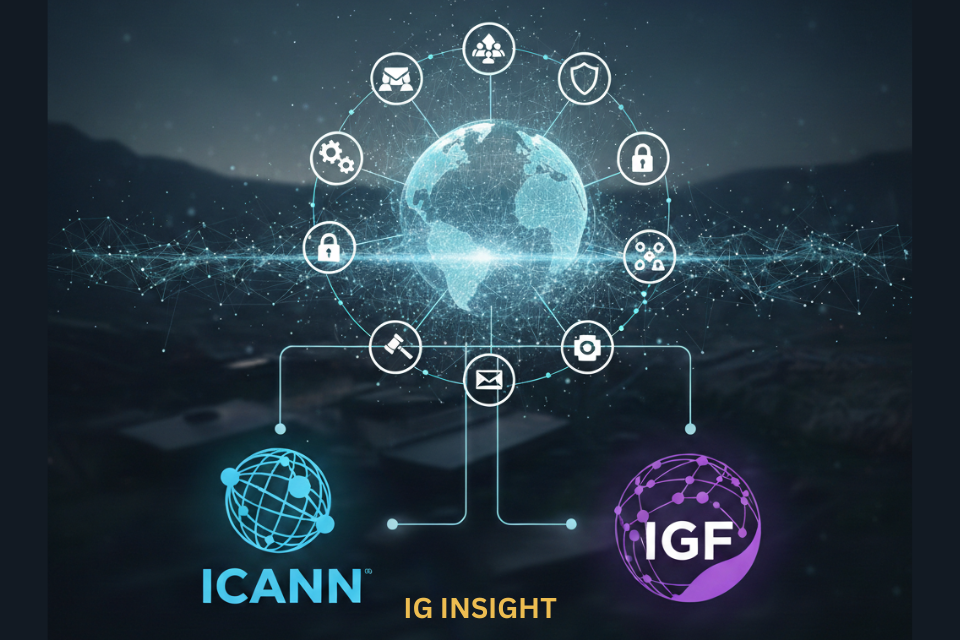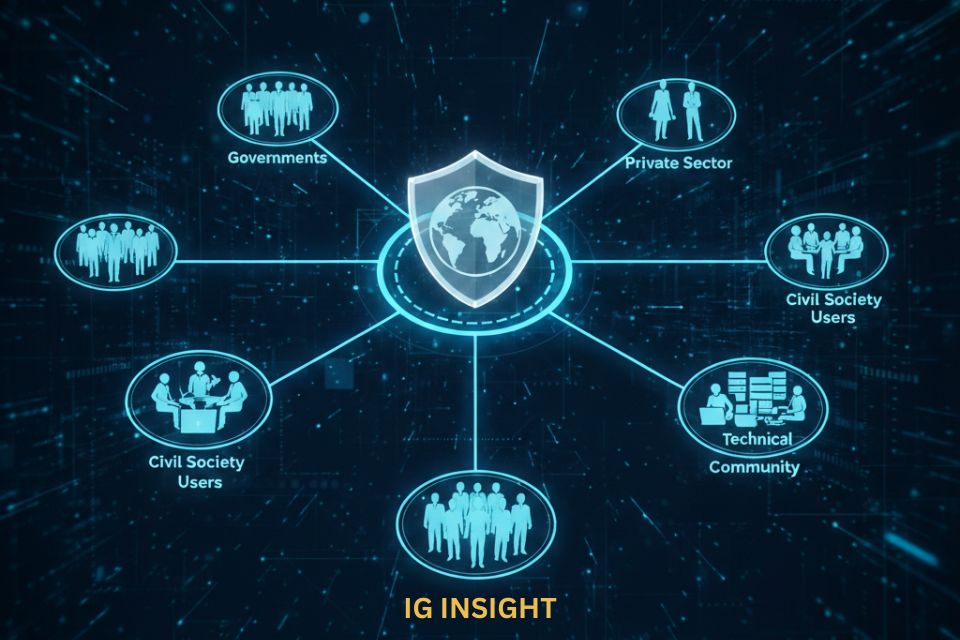
The Internet Society (ISOC) and ICANN serve distinct but complementary roles: ISOC focuses on Internet standards, advocacy, and inclusion, while ICANN manages the technical identifiers that keep the Internet running (domain names, IP addresses, DNS security). Understanding “Internet Society vs ICANN” helps clarify how governance and technical coordination work together to sustain a free, secure, and global Internet.
Two Giants, One Internet — But Very Different Jobs
Every time you type a web address, send an email, or stream a video, two invisible giants are working in the background to make it possible. Their names? The Internet Society (ISOC) and ICANN.
Most people — even tech-savvy ones — have never heard of either. And those who have often confuse them, thinking they are the same organization or have the same purpose.
They are not. And understanding the difference between the Internet Society vs ICANN is one of the most important things you can do if you care about digital rights, internet governance, and the future of the open web.
| 🔍 Quick Preview: The Internet Society champions the open, inclusive, and trustworthy internet through advocacy, education, and community. ICANN technically coordinates the domain name system and internet identifiers that keep the internet running. Both are essential — but in completely different ways. |
What Is the Internet Society (ISOC)?
| ISOC at a Glance Founded: 1992 by Vint Cerf, Bob Kahn, and internet pioneers Headquarters: Reston, Virginia, USA (with offices in Geneva) Type: Global nonprofit membership organization Mission: “The Internet Society’s mission is that the Internet is for everyone.” Members: 80,000+ individual members; 160+ organizational members; 160+ chapters worldwide Key Revenue: Public Interest Registry (PIR) — manager of the .org domain |
The Internet Society was born out of a simple but profound belief: the internet should be open, globally connected, secure, and trustworthy — for everyone, everywhere. It was co-founded by Vint Cerf and Bob Kahn, the very architects of the TCP/IP protocol that underpins the modern internet.
Think of ISOC as the internet’s civil society champion. It does not control any technical infrastructure. Instead, it influences, advocates, educates, and builds the human and policy ecosystem around the internet.
What Does the Internet Society Do for the Community?
ISOC’s community activities are wide-ranging and genuinely impactful:
| 📚 Education & Capacity Building Internet Society Foundation grants to connect the unconnectedOnline learning resources and webinars on internet governanceFellowship programs for developing-nation participantsTraining on network operations, DNSSEC, and routing securityCommunity Networks initiative to extend rural connectivity | 🌍 Policy & Advocacy Publishes Internet Impact Assessment reportsAdvocates for open internet standards at ITU and UN IGFFights against internet shutdowns and censorshipChampions encryption rights and digital privacy globallyDevelops Internet Way of Networking principles |
| 🤝 Community & Chapters 160+ local chapters in countries across all continentsChapter grants to fund local internet development projectsYouth programs and hackathonsCollaborative research with academic institutionsAnnual Global Internet Report — the definitive internet trends report | 🔒 Technical Standards Support Provides administrative home for the IETF (Internet Engineering Task Force)Funds IETF meetings and participation supportDeploys MANRS (Mutually Agreed Norms for Routing Security)Champions HTTPS and TLS adoption worldwideSupports RPKI routing security deployment globally |
What Is ICANN?
| ICANN at a Glance Founded: 1998 by the U.S. Department of Commerce Headquarters: Los Angeles, California, USA Type: Nonprofit multi-stakeholder governance body Mission: “To ensure the stable and secure operation of the Internet’s unique identifier systems.” Staff: 400+ staff members in offices worldwide Key Functions: DNS root zone management, IANA, accrediting registrars/registries |
ICANN — the Internet Corporation for Assigned Names and Numbers — was created in 1998 to take over internet coordination functions from the U.S. government. Its singular focus: make sure every device on the internet has a unique address, and every domain name resolves correctly.
If the Internet Society is the internet’s moral compass, ICANN is its traffic controller. Without ICANN, two websites could have the same address, the entire domain name system could collapse, and the internet as we know it would cease to function.
What Does ICANN Do for the Community?
ICANN’s community activities are deeply technical but have massive public impact:
| 🌐 DNS & Identifier Management Manages the DNS Root Zone — the master directory of all domain extensionsOversees IANA functions (IP address allocation, protocol parameters)Coordinates the introduction of new generic Top-Level Domains (gTLDs)Manages Internationalized Domain Names (IDNs) for non-Latin scriptsCoordinates DNSSEC deployment to secure the DNS | 🧑🤝🧑 Multi-Stakeholder Community Hosts three annual public meetings open to all stakeholdersSupports At-Large Community (ALAC) for end-user representationManages Supporting Organizations: GNSO, ccNSO, ASOConducts public comment periods on all major policy changesFunds fellowship programs for developing nation participation |
| 💼 Registrar & Registry Accreditation Accredits 2,000+ domain name registrars globally (GoDaddy, Namecheap, etc.)Enters contracts with 1,500+ domain name registriesEnforces Registrar Accreditation Agreement (RAA) complianceManages Whois/RDAP public database policiesOversees Uniform Domain-Name Dispute-Resolution Policy (UDRP) | 🛡️ Security & Stability Operates the L-Root DNS server as part of the global root systemCoordinates Security and Stability Advisory Committee (SSAC)Manages IANA cryptographic key signing ceremoniesPublishes DNS Abuse Framework to combat malicious domainsResponds to global DNS security incidents and vulnerabilities |
Key Facts & Statistics: Internet Society vs ICANN
| Metric | Internet Society (ISOC) | ICANN |
| Founded | 1992 | 1998 |
| Headquarters | Reston, VA + Geneva | Los Angeles, CA |
| Staff Size | ~200 staff globally | 400+ staff globally |
| Geographic Reach | 160+ chapters worldwide | Offices on 6 continents |
| Individual Members | 80,000+ individual members | No individual membership |
| Annual Budget | ~$150M+ (PIR revenue) | ~$140M+ (registrar fees) |
| Domain Oversight | Owns PIR (.org manager) | Oversees all gTLDs + ccTLDs |
| gTLDs Managed | Not directly | 1,500+ registries contracted |
| Standards Role | Hosts/funds IETF | Implements DNS standards |
| Policy Focus | Open internet advocacy | Technical coordination policy |
Internet Society vs ICANN: The Definitive Head-to-Head
Here is the comprehensive comparison that puts both organizations side by side across the dimensions that matter most:
| Dimension | Internet Society (ISOC) | ICANN |
| Primary Mission | Promote open, secure, and inclusive internet for all | Coordinate unique internet identifiers and DNS stability |
| Nature of Work | Advocacy, education, community building | Technical coordination, policy implementation |
| Governance Model | Membership-based, Board of Trustees | Multi-stakeholder, ICANN Board |
| Funding Source | PIR revenues, membership fees, donations | Registrar/registry fees |
| Relationship to IETF | Administrative/financial host of IETF | Implements IETF standards in DNS policy |
| Policy Power | Soft power — advocacy and influence | Hard power — contracts and accreditation |
| Internet Shutdowns | Actively campaigns against them | No direct mandate to act |
| End-User Voice | Membership-driven, chapter-based | At-Large Community (ALAC) |
| New Domain Names | Advocates for open, inclusive expansion | Directly manages gTLD application rounds |
| Open Internet Stance | Core foundational principle | Neutral technical coordinator |
| Geographic Focus | Developing nations as priority | Global, all regions equally |
| Collaboration Partner | UN IGF, IETF, governments, civil society | Registrars, registries, governments, ccTLDs |
How Do ISOC and ICANN Actually Relate to Each Other?
Here is the nuance most articles miss: these two organizations are not rivals. They operate in the same ecosystem, often collaborating, while maintaining completely separate mandates.
| ISOC → IETF ISOC provides the administrative and financial home for the IETF — the body that creates the technical standards the internet runs on (TCP/IP, HTTP, TLS, SMTP, etc.). This gives ISOC a central role in shaping internet technology even without controlling infrastructure. |
| IETF → ICANN The IETF creates standards. ICANN implements and enforces those standards within the domain name system and IP address coordination layer. They have a formal liaison relationship. |
| ICANN → Community ICANN’s multi-stakeholder model invites participation from governments, businesses, civil society, and technical experts — including ISOC chapters and members — through its Supporting Organizations and Advisory Committees. |
| ISOC → ICANN ISOC participates in ICANN’s public comment processes, attends ICANN meetings, and advocates for open internet-friendly policies within ICANN’s policy development processes. They often align but sometimes publicly disagree on specific policy outcomes. |
| Together → IGF Both organizations are major participants in the UN Internet Governance Forum (IGF), the premier global multi-stakeholder policy dialogue on internet issues. ISOC hosts workshops; ICANN runs sessions. Their combined presence shapes the global agenda. |
TRENDING FEATURE: The Internet Giants Impact Radar — 2025 Edition
The Internet Giants Impact Radar: Who Leads Where?
We created an exclusive scoring framework — the Impact Radar — to measure how ISOC and ICANN perform across 8 dimensions of internet impact. This is not about who is better. It is about understanding where each giant shines.
| Impact Dimension | ISOC Score | ICANN Score | Edge Goes To… |
| Open Internet Advocacy | ★★★★★ 5/5 | ★★☆☆☆ 2/5 | ISOC |
| Technical Infrastructure Control | ★☆☆☆☆ 1/5 | ★★★★★ 5/5 | ICANN |
| Community Grassroots Reach | ★★★★★ 5/5 | ★★★☆☆ 3/5 | ISOC |
| Policy Enforcement Power | ★★☆☆☆ 2/5 | ★★★★★ 5/5 | ICANN |
| Digital Inclusion Focus | ★★★★★ 5/5 | ★★★☆☆ 3/5 | ISOC |
| Global Standards Influence | ★★★★★ 5/5 | ★★★★☆ 4/5 | ISOC (via IETF) |
| Multi-Stakeholder Governance | ★★★★☆ 4/5 | ★★★★★ 5/5 | ICANN |
| Cybersecurity & DNS Security | ★★★☆☆ 3/5 | ★★★★★ 5/5 | ICANN |
| TOTAL SCORE | 30 / 40 | 32 / 40 | Both Win! |
| 🏆 Radar Verdict: With 30/40 vs 32/40, ICANN edges ISOC on raw score — but only because technical infrastructure carries heavy weight. In human impact categories, ISOC dominates. The truth? The internet needs BOTH of them firing on all cylinders. |
Key Milestones: A Shared History Timeline
| Year | Internet Society | ICANN |
| 1992 | ISOC founded by Vint Cerf & Bob Kahn. First INET conference held. | — |
| 1995 | ISOC becomes administrative home of IETF. | — |
| 1998 | ISOC publishes Internet Way of Networking principles. | ICANN founded by U.S. DoC. Takes over DNS coordination from IANA. |
| 2003 | ISOC launches Internet Society Foundation. | ICANN introduces Uniform Rapid Suspension (URS) system. |
| 2012 | ISOC acquires Public Interest Registry (PIR), manager of .org. | ICANN launches New gTLD Program — 1,930 applications received. |
| 2016 | ISOC joins global fight against internet shutdowns. | ICANN transition: IANA stewardship moves from U.S. government to global community. |
| 2019 | ISOC proposes sale of PIR to Ethos Capital — later reversed after backlash. | ICANN introduces Expedited Policy Development Process (EPDP) for WHOIS. |
| 2022 | ISOC launches Community Networks initiative. | ICANN opens second New gTLD application round planning. |
| 2025 | ISOC celebrates 33 years of internet advocacy. | ICANN processes 2nd new gTLD application round. |
Myth-Busting: Internet Society vs ICANN Misconceptions
| ❌ Myth 1: ISOC and ICANN are the same organization. COMPLETELY FALSE. They have separate boards, separate funding, separate headquarters, and completely different mandates. ISOC focuses on advocacy and education; ICANN focuses on technical coordination and DNS management. |
| ❌ Myth 2: ICANN controls what content you can see online. WRONG. ICANN only manages domain names and IP address allocation. It has no power over internet content, censorship, or what websites say. That is a common misconception. |
| ❌ Myth 3: Only tech companies can participate in ICANN or ISOC. FALSE. Both organizations are open to public participation. ISOC has 80,000+ individual members. ICANN’s At-Large community welcomes civil society groups and individuals from all backgrounds. |
| ❌ Myth 4: The U.S. government still controls ICANN. OUTDATED. The U.S. government formally ended its IANA stewardship over ICANN in 2016. ICANN now operates under a global multi-stakeholder governance model, accountable to the internet community. |
| ❌ Myth 5: ISOC has no technical role. MISLEADING. Through its administrative home of the IETF, ISOC plays a central role in shaping every major internet protocol — from email to web security to routing standards. |
Why This Matters to Every Internet User
You might be thinking: “This is interesting, but does it really affect me?” The answer is an unqualified yes — and here is why:
| 🔒 | When ICANN approves new domain extensions (.app, .africa, .tech), it determines what businesses can name their websites — affecting brand identity for millions of companies worldwide. |
| 🌐 | When ISOC fights internet shutdowns, it is defending your right to access information during political crises, elections, or social unrest in any country — including yours. |
| 📧 | When IETF (via ISOC) creates TLS encryption standards, it is what makes your online banking, messaging, and email secure from hackers. |
| 🏡 | When ICANN enforces DNSSEC, it prevents attackers from redirecting your traffic to fake websites — protecting you every time you type a URL. |
| 🗣️ | When ISOC advocates for multilingual domain names, it means billions of people who do not use Latin script can navigate the internet in their own language. |
Frequently Asked Questions
What is the main difference between the Internet Society and ICANN?
The Internet Society (ISOC) is a global nonprofit that promotes open internet development, education, and policy advocacy. ICANN is the technical coordination body that manages domain names, IP addresses, and internet identifiers. Put simply: ISOC is the internet’s advocate; ICANN is the internet’s traffic controller.
Is the Internet Society part of ICANN?
No. They are completely separate, independent organizations. However, they collaborate in the broader internet governance ecosystem — including at the UN Internet Governance Forum (IGF), IETF standards development, and through ICANN’s multi-stakeholder community processes.
Who funds the Internet Society?
ISOC is primarily funded through revenues from its subsidiary, the Public Interest Registry (PIR), which manages the .org top-level domain. Additional funding comes from membership fees, grants, and donations from individuals and organizations.
Who funds ICANN?
ICANN is primarily funded through fees charged to domain name registrars (companies like GoDaddy, Namecheap) and registries (organizations managing domain extensions like .com, .net, .org). This makes ICANN financially independent from any single government.
Do the Internet Society and ICANN ever disagree?
Yes. While they often align on broad principles, they have publicly disagreed on specific issues — such as ICANN’s proposed sale of the .org registry to a private equity firm in 2019 (which ISOC ultimately reversed) and debates around domain name expansion policies.
How can I get involved with ISOC or ICANN?
For ISOC: Join as an individual member at internetsociety.org, find your local chapter, or apply for fellowship programs. For ICANN: Participate in public comment periods at icann.org, join your regional At-Large Organization (RALO), or attend an ICANN Public Meeting — fellowships are available for developing nation participants.
The Internet Is Yours to Shape
Understanding the Internet Society vs ICANN is just the beginning. These two giants shape the internet you use every single day — and they both need more informed, engaged citizens in the room.
Take Action Right Now
-> Join the Internet Society as a free member at internetsociety.org
-> Find your local ISOC Chapter and attend your next community event
-> Submit a public comment on an active ICANN policy at icann.org
-> Apply for ICANN or ISOC fellowship programs to attend global meetings
-> Share this article to spread awareness about internet governance
-> Follow ISOC and ICANN on social media to stay informed on digital policy
The internet does not govern itself. And the people who show up are the ones who decide its future. Will you show up?
© 2026 2026 IG Insight Expert Blog. Published for educational and informational purposes only.

Dipankar Barua is an internet governance advocate from Dhaka, Bangladesh, who believes that voices from the Global South must be heard in the rooms where the internet’s future is decided. As an ICANN advocate and VSIG member, he actively engages in multistakeholder policy processes spanning DNS security, digital inclusion, and responsible AI governance. With an academic grounding in Computer Science and AI, and over 15 years of applied IT experience, Dipankar bridges the gap between technical communities and policy spaces — writing, participating, and advocating for a more open, equitable, and inclusive internet for all.