Your Fully Funded Path to Kathmandu and the Asia Pacific's Biggest Internet Governance Gathering
A Complete Guide to How to Apply for the APrIGF 2026 Fellowship — Eligibility, Benefits, Selection Criteria, and Every Step in Between
Kathmandu Is Calling — and the APrIGF Fellowship Could Be Your Ticket There
Big news for anyone working in or curious about internet governance across the Asia Pacific: the APrIGF 2026 Fellowship Program application is officially open. This is the moment people across the region wait for every year, because it turns a genuine interest in internet policy into a funded seat at the table where that policy gets discussed.
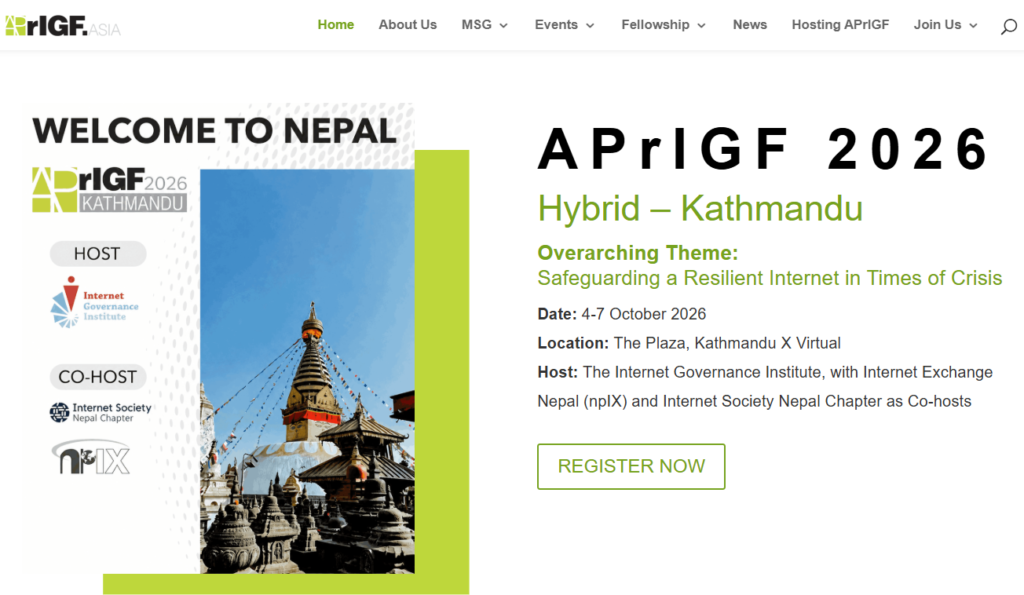
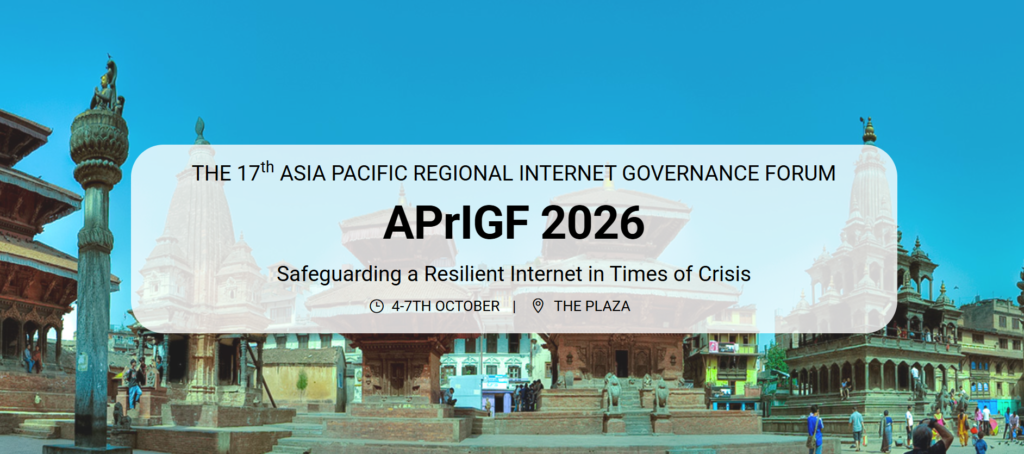
The Asia Pacific Regional Internet Governance Forum — APrIGF — is heading to The Plaza in Kathmandu, Nepal, from 4 to 7 October 2026, returning to an in-person and hybrid format after 2025’s fully virtual edition. Registrations are now open for everyone, and pre-registration is required for both on-site and remote participants. But if you want your travel, accommodation, and participation costs covered, the Fellowship Program is the pathway you need to understand.
This guide walks through exactly how to apply for the APrIGF 2026 Fellowship — who is eligible, what the selection committee actually looks for, what fellows receive, what is expected of you in return, and how to put together an application that gives you a genuine shot at one of the most valuable opportunities in regional internet governance.
| Quick Facts: APrIGF 2026 takes place at The Plaza, Kathmandu, Nepal, from 4-7 October 2026. The Fellowship Program application is open now, with guidelines published at ap.rigf.asia. Applications are submitted through the dedicated fellowship portal at fellowship.aprigf.asia, where registration is required before you can apply. |
What Is APrIGF, and Why Does the Fellowship Matter?
APrIGF serves as a platform for discussion, exchange, and collaboration on internet governance at the regional level, aggregating national IGF discussions where possible and advancing internet governance development across the Asia Pacific. It is governed by a self-organized Multi-Stakeholder Steering Group, or MSG, made up of volunteers from across the region’s internet community.
Since its first edition in Hong Kong in 2010, APrIGF has travelled across the region — Singapore, Tokyo, Seoul, Delhi, Macao, Russia in 2019, Taipei in 2024, and Kathmandu, which hosted a virtual-only edition in 2025 before returning for the in-person 2026 gathering. Each year, governments, civil society, technical experts, businesses, and everyday internet users gather to debate the issues shaping the region’s digital future.
The Fellowship Program exists because attending an international conference is simply out of reach for many of the people whose perspectives matter most to that conversation. The aim of the APrIGF Fellowship is to bring diversity into the internet governance community by fostering the participation of underrepresented communities in internet governance discussions. Without it, the loudest voices in the room would belong only to those who could already afford to be there.
Who Can Apply for the APrIGF 2026 Fellowship?
The Fellowship is open to a genuinely broad range of applicants. Eligible categories include Academia, Civil society representatives, Government and intergovernmental organizations, Private sector, Technical community members, and students. You do not need to already be an internet governance professional — what matters is a real interest in the field and the potential to contribute meaningfully to the conversation.
Both new and experienced participants can apply. Fellows are selected to reflect the diversity of the region’s economies, genders, and stakeholder groups, which means the selection committee is actively trying to build a varied, representative cohort rather than simply ranking applicants on a single scale. That said, there is one important limit worth knowing before you apply: no person may be granted the APrIGF Fellowship more than twice, and past fellows are generally less likely to be selected than new applicants, since the program deliberately prioritizes bringing in new faces each year.
Selected fellows may be offered a full or partial fellowship, depending on the Fellowship Committee’s evaluation against a defined points system. This is worth understanding clearly: not every successful applicant receives the same level of support, and the committee makes that determination based on need and on how strongly your application matches the program’s selection criteria.
What the Fellowship Committee Is Actually Looking For?
Understanding the points-based selection criteria is the single most useful thing you can do before submitting your application, because it tells you exactly what to emphasize.
The committee looks closely at whether you have engaged with any APrIGF events or global or local internet governance initiatives before, and asks you to provide details of that engagement if you have. Prior engagement increases your chances, but it is not a strict requirement — the program also wants new participants, so a compelling case for why you are ready to engage now can carry real weight even without a long track record.
Just as important is whether you have a clear plan or vision for community engagement after the conference — what will you actually do with what you learn once you go home. The committee also evaluates whether your participation is likely to help with the equal participation of women and gender-diverse communities at the regional and local level, and whether your plan is likely to enhance the multistakeholder concept that underpins the entire internet governance model. A strong application speaks directly to these points rather than leaving the committee to guess at your motivations.
| Application Tip: Do not just describe your background — connect it explicitly to the four scored criteria: prior engagement, your post-conference contribution plan, your potential to support gender-diverse participation, and your potential to strengthen multistakeholderism. Applicants who address these directly tend to score better than those who simply submit a general bio. |
How to Apply for the APrIGF 2026 Fellowship: Step by Step
| Read the Official Guidelines First Before applying, read the full APrIGF 2026 Fellowship Application Guidelines published at ap.rigf.asia. Guidelines are updated each year, so do not rely on a previous cycle’s details — confirm the current eligibility rules, deadlines, and required documents directly from the source. |
| Register on the Fellowship Portal All applications are submitted through the dedicated Fellowship Management System at fellowship.aprigf.asia. If you do not already have an account, you will need to register before you can start your application — do this early, since account verification can take a little time. |
| Prepare Your Supporting Information Gather details of any prior internet governance engagement — APrIGF sessions, national or local IGF initiatives, relevant community work. Draft a clear, specific statement of your post-conference engagement plan: what you intend to do with what you learn, and how you will share it with your community. |
| Complete the Online Application Fill out the application form in full through the Fellowship Management System, answering each section honestly and specifically. Incomplete applications make it harder for the committee to score you fairly against the published criteria, so leave nothing blank. |
| Submit Before the Deadline Submit your application before the stated closing date. Fellowship application windows do not get extended, so build in time to review your answers before you submit rather than finishing at the last minute. |
| Watch for the Results Announcement Selected fellows are notified directly, and results are also announced publicly on the APrIGF website. If you are not selected this cycle, the program welcomes reapplication in future years — many fellows succeeded only after applying more than once. |
What Fellows Receive — and What Is Expected in Return
Based on the structure used in the most recent cycles, fellows receive a contribution toward flight costs, calculated against a typical economy class airfare, with the ticket purchased by the fellow and the agreed amount reimbursed after the event. A stipend of up to USD 100 in local currency is typically provided at the start of Day 0, subject to final confirmation of the fellowship budget. Fellows are responsible for their own visa fees, travel insurance, land transport, and any extra costs like baggage fees or seat upgrades.
In return, fellows take on real commitments. You will be expected to attend designated online introductory courses on internet governance before the conference, join a pre-conference preparation webinar, and participate in activities supported by mentors and the Fellowship Committee — including Townhall sessions connected to the conference’s Synthesis Document and a dedicated reporting session, typically held on Day 3.
After the conference, fellows are asked to share their key takeaways through a blog post, video, or similar format within two weeks, join a post-conference buddy review call, and consent to joining the Fellows alumni network. One commitment carries particular long-term weight: fellows are expected to join the Multi-Stakeholder Steering Group as an Observer Member for at least one year, extending their involvement in the APrIGF community well beyond the conference itself.
APrIGF 2026 Fellowship: Key Facts at a Glance
| Fact | Detail |
| APrIGF 2026 venue | The Plaza, Kathmandu, Nepal |
| Conference dates | 4-7 October 2026 |
| Fellowship application portal | fellowship.aprigf.asia — registration required |
| Guidelines published at | ap.rigf.asia |
| Eligible applicant categories | Academia, civil society, government/IGO, private sector, technical, students |
| Maximum fellowships per person | No more than twice — new applicants are prioritized |
| Selection method | Points system evaluated by the Fellowship Committee |
| Flight support | Economy-class airfare contribution, reimbursed after the event |
| Stipend | Up to USD 100 in local currency, provided on Day 0 |
| Post-fellowship commitment | Join the MSG as an Observer Member for at least 1 year |
DON’T CONFUSE THE TWO: APrIGF Fellowship vs. APNIC Fellowship
A Quick Note: APrIGF Fellowship Is Not the Same as the APNIC Fellowship
If you search around for fellowship opportunities in this space, you will quickly run into a separate program: the APNIC Fellowship. It is easy to confuse the two since both operate in the Asia Pacific region and both lower the cost barrier to participation, but they are run by different organizations for different events.
The APNIC Fellowship supports participation in APNIC’s own conferences and policy activities, with categories for professional, youth, and master fellows, and a particular emphasis on supporting community members from the Asia Pacific’s Developing, Least Developed Country, and Small Island Developing State economies. The APrIGF Fellowship, by contrast, is specifically tied to the annual APrIGF conference and its multistakeholder internet governance discussions. If your interest is squarely in the policy and governance side of the internet rather than technical number-resource policy, the APrIGF Fellowship is the one to focus on — but it is worth knowing both exist, since some applicants end up pursuing each at different points in their journey.
Frequently Asked Questions
Q1: Where exactly do I submit my APrIGF 2026 Fellowship application?
All applications go through the dedicated Fellowship Management System at fellowship.aprigf.asia. You will need to register for an account on that portal before you can begin or submit an application. The official guidelines, which explain the current cycle’s eligibility rules and required materials in full, are published separately at ap.rigf.asia — read those first, then move to the fellowship portal itself to apply.
Q2: I have never attended an APrIGF event before. Can I still apply?
Yes. The Fellowship Program is explicitly open to both new and experienced participants, and prior engagement with APrIGF or other internet governance initiatives is only one of several factors the committee weighs — it increases your chances but is not a requirement. In fact, because the program deliberately tries to bring in new faces each year, a thoughtful application from a genuine newcomer can be very competitive, especially if you can clearly explain why you want to engage now and what you plan to do with the experience afterward.
Q3: What is the difference between a full and a partial fellowship?
Selected fellows may be offered either a full or a partial fellowship, depending on the Fellowship Committee’s evaluation of each application against the points-based criteria and the available program budget. A full fellowship typically covers a fuller range of costs, while a partial fellowship may cover a reduced level of support. The exact allocation is determined case by case during the selection process rather than being something applicants choose for themselves.
Q4: Can I apply for the APrIGF Fellowship more than once if I am not selected?
Yes, reapplying in future cycles is completely normal and welcomed if you are not selected. What you cannot do is receive the fellowship itself more than twice in total — that is a hard limit on how many times you can actually be awarded the fellowship, not on how many times you can apply. Many successful fellows applied in more than one cycle before being selected, often strengthening their application each time with new community engagement to point to.
Q5: What happens after I am selected as a fellow?
Once selected, you will be expected to attend designated online introductory courses on internet governance and a pre-conference preparation webinar before the event. During the conference, mentors and the Fellowship Committee guide you through activities including Townhall sessions tied to the Synthesis Document and a dedicated Day 3 reporting session. Afterward, you are asked to share your key takeaways publicly within two weeks, join a post-conference buddy review call, and join the Multi-Stakeholder Steering Group as an Observer Member for at least one year — turning the fellowship into an ongoing relationship with the APrIGF community rather than a one-off trip.
Kathmandu Is Waiting. Your Application Is the First Step.
The APrIGF 2026 Fellowship exists to make sure the people shaping the Asia Pacific’s internet governance conversation actually reflect the region itself — its students, its civil society advocates, its technologists, and its underrepresented voices, not just those who could already afford the trip.
Applications are open now. Here is exactly where to go:
Apply for the APrIGF 2026 Fellowship Today
- Read the official Fellowship Guidelines at ap.rigf.asia
- Register and apply now at fellowship.aprigf.asia
- Register for APrIGF 2026 itself (Kathmandu, 4-7 October) at ap.rigf.asia
- Contact the Secretariat with questions at sec[at]aprigf.asia
- Explore past Fellowship outcomes and reports at ap.rigf.asia/category/fellowship
Share this guide with someone in your network who belongs in that room!
The Asia Pacific’s internet future is being shaped in Kathmandu this October. Make sure your voice is in the room.
© 2026 IG Insight Blog. This article is published for educational and informational purposes.

Dipankar Barua is an internet governance advocate from Dhaka, Bangladesh, who believes that voices from the Global South must be heard in the rooms where the internet’s future is decided. As an ICANN advocate and VSIG member, he actively engages in multistakeholder policy processes spanning DNS security, digital inclusion, and responsible AI governance. With an academic grounding in Computer Science and AI, and over 15 years of applied IT experience, Dipankar bridges the gap between technical communities and policy spaces — writing, participating, and advocating for a more open, equitable, and inclusive internet for all.