The Community Structure That Gives Everyday Internet Users a Real Voice in How the Internet Is Governed
A Complete Plain-English Guide to RALOs — What They Are, How They Work, Who Can Join, and Why Your Participation Matters
Most people who use the internet every day have no idea that there is a formal governance structure designed specifically to represent their interests in the decisions that shape it. They do not know that within ICANN — the organization that coordinates the domain name system and sets policies that govern hundreds of millions of websites — there is a dedicated community structure whose entire purpose is to make sure that ordinary internet users have a genuine say in how the internet evolves.
That structure is the At-Large Community, and its regional building blocks are the Regional At-Large Organizations — RALOs.
RALOs are not bureaucratic committees or technical expert groups. They are community bodies that bring together civil society organizations, digital rights advocates, community groups, academics, and engaged individuals from every region of the world to represent the perspective of internet users in ICANN’s policy processes. They are the mechanism through which the interests of billions of internet users — the vast majority of whom have no commercial stake in the domain name industry — are formally heard and considered by ICANN’s Board.
If you care about how the internet is governed, if you work with communities that depend on the internet, or if you simply believe that ordinary users should have a voice in policies that directly affect them, then understanding RALOs is essential. And the pathway to joining one is more accessible than most people realize.
| The Essential Definition: A Regional At-Large Organization (RALO) is one of five geographic bodies within ICANN’s At-Large Community, each representing the civil society organizations and individual internet users of a specific world region. RALOs aggregate and amplify the voices of their member At-Large Structures (ALS) and individual community members, channeling user perspectives into ICANN’s formal governance and policy development processes. |
The At-Large Community: RALOs in Context
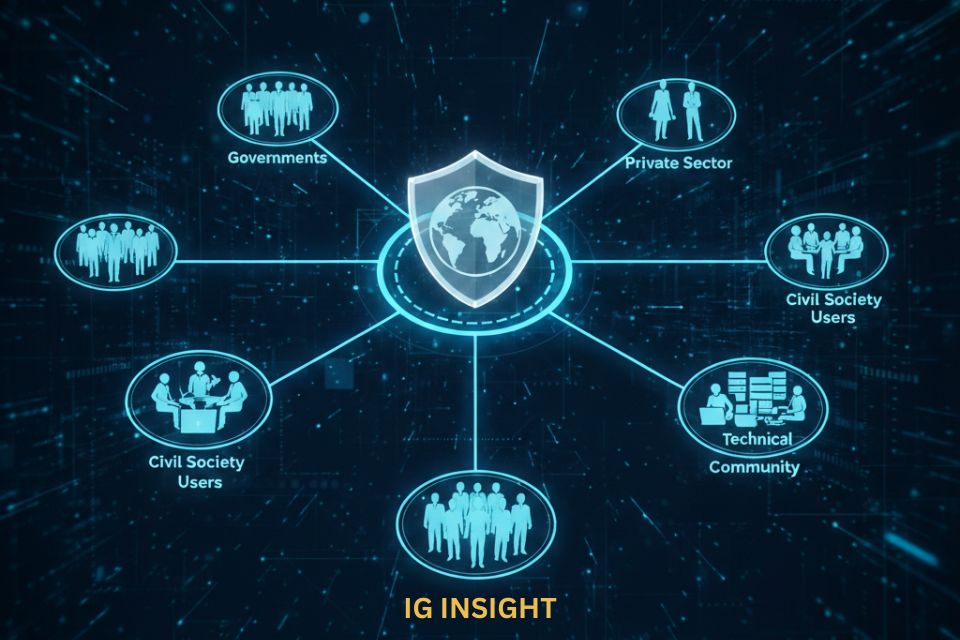
To understand what a RALO is and why it exists, you first need to understand where it fits in ICANN’s broader governance architecture. ICANN’s multi-stakeholder model is built on the principle that everyone with a stake in the internet’s governance should have a formal voice in shaping it. The primary stakeholders with industry interests — registries, registrars, intellectual property holders, commercial users, ISPs — participate through the Generic Names Supporting Organization (GNSO). But what about the people who are not part of the domain name industry? What about ordinary internet users?
The At-Large Advisory Committee — the ALAC — is ICANN’s answer to that question. ALAC is the formal body that represents individual internet users in ICANN’s governance, providing advice directly to the ICANN Board on matters affecting user interests. But a single committee of 15 people cannot adequately represent the diversity of perspectives held by 5+ billion internet users across 195 countries speaking thousands of languages. RALOs solve this scale problem.
RALOs are the regional layer between the global ALAC and the local At-Large Structures (ALS) that form the base of the At-Large Community. There are five RALOs, one for each of ICANN’s geographic regions, and each RALO brings together the civil society organizations in its region that have affiliated with ICANN’s At-Large Community, coordinates regional positions on ICANN policy issues, and elects or appoints members to the ALAC. RALOs are where the regional diversity of internet user perspectives is organized before being channeled into global governance.
The Five RALOs: Who They Are and What They Cover
Each of the five RALOs represents a distinct geographic region and brings together a unique set of civil society contexts, languages, legal frameworks, and internet governance challenges. Understanding what each RALO does — and who it serves — is essential to understanding where you fit.
AFRALO — Africa Regional At-Large Organization
AFRALO represents the At-Large community across the 54 countries of the African continent. It is the RALO serving the region where internet access has grown most dramatically in recent years, where mobile-first connectivity has created entirely new patterns of internet use, and where local language content and multilingual domain name support remain critical policy priorities.
AFRALO engages on issues that are particularly acute in the African context: the affordability of domain name registration and renewal for individuals and small businesses; the development of indigenous language internet content; the rollout of internationalized domain names in Arabic, Amharic, and other African scripts; and the governance of data and privacy in contexts where national data protection frameworks are still developing. AFRALO coordinates closely with the African Network Information Centre (AFRINIC) and African civil society organizations working on internet rights and access.
APRALO — Asia Pacific Regional At-Large Organization
APRALO covers the most populous and most linguistically diverse region in the world, encompassing 56 economies across East Asia, South Asia, Southeast Asia, Central Asia, the Pacific Islands, and Oceania. This extraordinary diversity means that APRALO’s policy engagement reflects an equally extraordinary range of perspectives — from the highly connected urban populations of Japan and South Korea, to the rural connectivity challenges facing Pacific Island communities, to the massive internet governance implications of China and India’s combined 2.5 billion internet users.
APRALO is particularly active on issues relating to multilingual internet access and Universal Acceptance — the challenge of ensuring that domain names in Chinese, Japanese, Korean, Devanagari, Thai, and other scripts work correctly in all internet applications. Its coordination with APNIC and national internet governance forums across the region makes it one of the most technically engaged RALOs in the At-Large Community.
EURALO — European Regional At-Large Organization
EURALO represents the At-Large community across Europe — ICANN’s region that broadly encompasses the European continent, with some overlapping coordination on regions covered by the RIPE NCC. Europe brings a distinctive set of policy priorities to the At-Large Community, shaped by the European Union’s regulatory environment: the GDPR’s implications for WHOIS and domain registration data, the EU’s Digital Services Act and its effects on domain name ecosystem accountability, and European Union engagement with ICANN through the Governmental Advisory Committee (GAC).
EURALO is known for its strong civil society tradition and for the policy sophistication of its member organizations, many of which are experienced digital rights advocates with deep expertise in EU internet regulation. Its engagement on data protection policy has been particularly influential in ICANN’s WHOIS/RDAP deliberations.
LACRALO — Latin America and Caribbean Regional At-Large Organization
LACRALO represents the At-Large community across the 33 countries and territories of Latin America and the Caribbean — a linguistically diverse region (Spanish, Portuguese, French, Dutch, and English) with a young and rapidly growing internet population. Latin America has produced some of the internet governance community’s most engaged civil society voices, and LACRALO is one of the most active and participatory RALOs in the At-Large Community.
LACRALO’s policy priorities reflect the region’s combination of rapid digital growth and persistent digital divides: affordable access for rural and low-income communities, indigenous language internet content, regional cybersecurity frameworks, and the governance implications of the platform economy for emerging markets. LACRALO coordinates closely with LACNIC and the region’s active network operator community.
NARALO — North America Regional At-Large Organization
NARALO represents the At-Large community across North America — the United States, Canada, and a number of Caribbean and North Atlantic territories. As the region containing ICANN’s headquarters and historically the largest English-language internet community, NARALO’s member organizations bring a range of perspectives from community internet access advocates, academic researchers, digital rights organizations, and civic technology groups.
While North America has the most mature internet infrastructure of any RALO region, NARALO’s engagement on issues like universal access, platform accountability, and consumer protection in the domain name marketplace reflects the reality that digital inclusion challenges exist within wealthy countries as well as between them.
How RALOs Work: Structure, Governance, and Functions
Each RALO is a self-governing body with its own operational structure, but all five operate under a common framework established by ICANN’s At-Large community guidelines. Understanding how RALOs work internally is essential to understanding how they exercise influence within ICANN’s governance.
RALOs are governed by their member At-Large Structures through elected leadership — typically a Chair, one or more Vice Chairs, and a Secretariat. These leaders are elected by the member ALS organizations and are responsible for coordinating the RALO’s activities, representing the RALO in ICANN-wide processes, and facilitating communication between the RALO’s members and the broader At-Large Community. RALO leadership meets regularly — at least monthly via video conference, and in person at ICANN Public Meetings — to coordinate regional positions and manage RALO business.
On policy issues, RALOs develop regional positions through open community processes. When a significant ICANN policy question arises — a new gTLD program consultation, a WHOIS policy review, a DNS security initiative — the RALO circulates the issue to its members, facilitates discussion through mailing lists and virtual calls, and works toward a regional consensus position that can inform the ALAC’s formal advice to the ICANN Board. This regional deliberation ensures that the ALAC’s advice reflects genuinely diverse perspectives rather than the views of any single country or constituency within the region.
RALOs also elect or appoint the regional members of the ALAC. Each RALO is allocated a certain number of ALAC seats, and the process for filling those seats varies by region — some use direct elections among ALS member organizations, others use nomination and selection processes. ALAC members from each RALO serve as the formal link between regional deliberation and global governance, carrying the regional perspective into ICANN’s highest advisory body for internet users.
| The Influence Chain: Your civil society organization joins an ALS → the ALS affiliates with its RALO → the RALO develops regional positions through member deliberation → the RALO’s ALAC members carry those positions into formal advice to the ICANN Board → the ICANN Board must consider ALAC advice when making decisions on user-affecting policy. This is how individual organizations influence global internet governance. |
Who Can Join a RALO? The At-Large Structure Pathway
Joining a RALO is done through the At-Large Structure (ALS) system. An ALS is a civil society organization that has formally affiliated with ICANN’s At-Large Community — and affiliation is what gives an organization membership in its regional RALO. Understanding what an ALS is, and what it takes to become one, is the key to understanding the pathway to RALO membership.
An At-Large Structure can be any non-commercial civil society organization that represents the interests of individual internet users. The range of organizations that qualify is deliberately broad: local internet user associations, digital rights organizations, academic institutions, community groups focused on digital access, NGOs working on online rights, professional associations of internet practitioners, and many others. The key requirements are that the organization is non-commercial in its purpose, that it genuinely represents or advocates for internet users’ interests, and that it is not already a member of another ICANN Supporting Organization (which would create a conflict of interest).
Crucially, an ALS does not need to be an internet-focused organization in the narrow technical sense. A rural community cooperative working on digital access, a women’s rights organization advocating for online safety, a secondary school with an active digital literacy program, or a media freedom group working on online expression rights can all potentially qualify as At-Large Structures. The test is whether the organization’s work relates meaningfully to the interests of internet users — and that test is interpreted broadly.
Individual internet users can also engage directly with the At-Large Community without organizational affiliation. Individual members can participate in RALO activities, contribute to policy discussions, attend RALO meetings, and engage with the At-Large Community’s online spaces without their organization formally becoming an ALS. However, formal RALO membership — with voting rights and formal representation in ALAC processes — comes through the ALS affiliation pathway.
How to Join: The ALS Affiliation Application Process?
The process for affiliating an organization as an At-Large Structure with its regional RALO is documented and straightforward. Here is the step-by-step pathway.
| Confirm Eligibility Review the ALS eligibility criteria at atlarge.icann.org. Confirm that your organization is non-commercial, represents internet users’ interests, is not already affiliated with another ICANN body, and has legal standing in your country (formal registration is typically required, though the specific documentation accepted varies). If you are unsure whether your organization qualifies, contact the At-Large staff directly — they are helpful and responsive. |
| Identify Your RALO Determine which RALO covers your country using the regional breakdown: AFRALO (Africa), APRALO (Asia Pacific), EURALO (Europe), LACRALO (Latin America and Caribbean), NARALO (North America). Each RALO has its own leadership and community culture, and connecting with your regional community early in the process is valuable. |
| Prepare Your Application Materials The ALS application typically requires: basic organizational information (legal name, country of registration, date of establishment); a description of your organization’s activities and how they relate to internet users’ interests; documentation of your organization’s legal existence (registration certificate, articles of incorporation, or equivalent); a designated organizational contact; and a statement of commitment to At-Large Community participation. The application is submitted online through the At-Large portal at atlarge.icann.org. |
| Submit Through the At-Large Portal Complete and submit your application through the At-Large Community’s online application system. After submission, At-Large staff review the application for completeness and eligibility. The review process typically takes 4 to 8 weeks. You may be contacted for clarifying information or additional documentation during the review. Incomplete applications are the most common cause of delays. |
| RALO Acceptance and Onboarding Once approved by At-Large staff, your application is presented to the relevant RALO for formal acceptance. RALO acceptance is typically a formal vote by existing RALO members. After acceptance, your organization becomes a full ALS member of the RALO with access to RALO mailing lists, meetings, and policy deliberations. At-Large staff provide onboarding support to help new ALS organizations navigate the community. |
| Engage and Contribute Formal ALS membership is the beginning, not the end. Active RALOs expect their member ALS organizations to engage in regional policy discussions, participate in RALO calls, respond to At-Large consultations, and contribute to the regional community’s positions on ICANN policy issues. The strength of a RALO’s voice in ICANN governance is directly proportional to the engagement of its member organizations. |
Why RALO Participation Matters — For Your Organization and for the Internet
Joining a RALO through ALS affiliation is not just a governance formality. It is a decision to invest your organization’s voice and credibility in the processes that shape the internet for your community. Here is why that investment matters.
| Direct Influence on Policies That Affect Your Community ALAC’s formal advice to the ICANN Board carries weight precisely because it represents the aggregated positions of hundreds of At-Large Structures from every region of the world. When your organization’s perspective informs your RALO’s position, and that position informs ALAC’s advice, your community’s interests are formally considered in decisions about new domain extensions, registration data access, DNS security requirements, and every other policy issue that ICANN addresses. This is not symbolic influence — it is structural authority embedded in ICANN’s governance framework. |
| Access to the At-Large Community’s Knowledge and Network ALS membership gives your organization access to a global community of civil society organizations working on internet governance issues. The At-Large Community’s mailing lists, virtual meetings, and in-person events at ICANN Public Meetings connect you with peers from 100+ countries who share your interest in user-centric internet governance. This network is a resource for policy analysis, collaborative advocacy, capacity building, and professional development that extends far beyond any single RALO. |
| Eligibility for ICANN Fellowship and Travel Support ALS membership and RALO engagement are factors that strengthen applications for the ICANN Fellowship Program and At-Large travel support. ICANN funds participation by At-Large community members in ICANN Public Meetings — including for individuals from ALS organizations in developing regions. For organizations whose staff would not otherwise be able to attend ICANN meetings, the fellowship and travel support pathways that come with ALS membership can dramatically expand their participation. |
| Contributing to a More Representative Internet Governance Community Every ALS organization that joins a RALO makes the At-Large Community more diverse — more geographically representative, more linguistically diverse, more reflective of the full range of communities whose lives the internet shapes. The legitimacy of ICANN’s governance depends on the breadth of its community participation. Your organization’s membership is a direct contribution to that legitimacy. |
Regional At-Large Organizations in ICANN: Key Facts
| RALO Fact | Detail |
| Number of RALOs | Five — one for each ICANN geographic region |
| Five RALOs | AFRALO (Africa), APRALO (Asia Pacific), EURALO (Europe), LACRALO (Latin America/Caribbean), NARALO (North America) |
| At-Large Advisory Committee | ALAC — 15 members drawn from the five RALOs — advises ICANN Board directly |
| ALS organizations (approx.) | 200+ At-Large Structures affiliated globally across all five RALOs |
| ALAC advice standing | ICANN Board must formally consider and respond to all ALAC advice |
| Individual participation | Individuals can engage with RALOs without organizational ALS affiliation |
| ALS application portal | atlarge.icann.org — free, online application process |
| Application review time | Typically 4-8 weeks from submission to RALO acceptance |
| RALO governance | Self-governing with elected leadership; operational framework set by ICANN Bylaws |
| ICANN meeting participation | ALS members eligible for fellowship and At-Large travel support for ICANN Public Meetings |
UNIQUE FEATURE: Regional At-Large Meetings (RALMs) — Where Community Becomes Policy
Regional At-Large Meetings (RALMs): The Community in Action
One of the most distinctive features of the RALO system is the Regional At-Large Meeting — the RALM. Three times per year, at each ICANN Public Meeting, each of the five RALOs convenes a RALM — a dedicated in-person and virtual gathering of RALO leadership, ALS representatives, and At-Large community members from the region.
RALMs are where the RALO’s community gathers to review ICANN policy issues on the agenda, develop regional positions, prepare ALAC statements, coordinate with ALAC members on upcoming policy votes, and engage in capacity building and community development. Unlike ICANN’s general policy sessions, which can be technically complex and oriented toward experienced practitioners, RALMs are explicitly designed to be accessible to community members at all levels of ICANN experience — from long-time ALS representatives to first-time attendees participating through the fellowship program.
RALMs are also where the RALO community builds its internal cohesion and sense of shared purpose. The relationships formed between ALS representatives from different countries within a region — the Kenyan digital rights advocate who connects with a community internet operator from Senegal, the Indonesian civil society leader who builds a collaborative relationship with a Pacific Island network operator — are the human infrastructure that makes RALO community positions genuinely representative rather than simply bureaucratically produced.
All RALMs are open to the public — both in person at the ICANN meeting venue and virtually through ICANN’s remote participation system. Observing a RALM before joining the At-Large Community formally is a highly recommended step for organizations considering ALS affiliation. Seeing the community in action, understanding the issues on the agenda, and meeting some of the people involved gives you a much richer sense of what joining a RALO actually means in practice than any written description can provide.
| Join a RALM Today: The next ICANN Public Meeting features RALMs for all five regions. Virtual attendance is free — register at icann.org/meetings and look for your regional RALO’s meeting in the schedule. No prior community membership is required to observe as a guest. |
Frequently Asked Questions
Q1: What is the difference between a RALO, an ALS, and the ALAC?
These three terms describe three different levels of ICANN’s At-Large Community hierarchy. An At-Large Structure (ALS) is an individual civil society organization that has formally affiliated with the At-Large Community — it is the base unit of participation. A Regional At-Large Organization (RALO) is a regional body that brings together all the ALS organizations from one geographic region — it is the middle layer that aggregates regional perspectives. The At-Large Advisory Committee (ALAC) is the global advisory body formed from representatives elected or appointed by the five RALOs — it is the formal governance interface with the ICANN Board. ALS organizations are members of a RALO; RALOs are constituents of the ALAC; the ALAC advises ICANN’s Board.
Q2: Can an individual join a RALO, or only organizations?
Individuals can participate in RALO activities and engage with the At-Large Community without their organization being an ALS. RALOs welcome individual community members to join their mailing lists, attend RALO virtual calls and Regional At-Large Meetings, contribute to policy discussions, and engage with the community. However, formal RALO membership with voting rights in RALO elections and formal representation in ALAC processes comes through organizational ALS affiliation. For individuals who are not affiliated with any organization, some RALOs have mechanisms for direct individual engagement — the specifics vary by region.
Q3: Does joining a RALO cost money?
No. ALS affiliation with ICANN’s At-Large Community is free. There are no membership fees for At-Large Structures or for individual community members. ICANN funds the At-Large secretariat and staff support as part of its organizational budget. The only investment joining requires is time — staff time to complete the application, volunteer time to engage in RALO activities, and organizational commitment to participate in the community. For travel to in-person ICANN meetings, fellowship and travel support programs are available through ICANN to help ALS members and RALO representatives from developing regions participate.
Q4: How much influence does the ALAC actually have on ICANN’s decisions?
ALAC’s formal advisory role gives it meaningful, documented influence on ICANN Board decisions. ICANN’s Bylaws require the Board to formally consider and respond to ALAC advice — it cannot simply ignore ALAC statements. In practice, ALAC advice has influenced significant ICANN decisions on new gTLD program policies, WHOIS data privacy frameworks, DNS security requirements, and consumer protection provisions in registry agreements. ALAC’s influence is greatest when it speaks with a clear, unified voice — which is why the quality of regional deliberation in RALOs directly determines the effectiveness of ALAC’s advice. Well-prepared, evidence-based ALAC statements that represent genuine regional consensus carry significant weight.
Q5: What is the difference between being an observer at ICANN and being part of the At-Large Community?
Anyone can observe ICANN’s public processes — attend Public Meetings (virtually for free), read public comment submissions, follow mailing list archives, and access policy documents. This observer status has no formal governance standing. Being part of the At-Large Community through ALS affiliation with a RALO gives your organization formal standing in ICANN’s governance: your perspective contributes to RALO deliberations that inform ALAC advice to the Board; your organization’s representative can speak in formal ALAC sessions; and your participation is documented as part of the community engagement record that supports ICANN’s legitimacy claims. The distinction is between being an interested observer and being a recognized participant with formal governance standing.
Internet Users Deserve a Voice in Internet Governance. RALOs Are How They Get It.
The Regional At-Large Organizations exist because ICANN’s legitimacy depends on representing the full diversity of the global internet user community — not just the industry stakeholders with commercial contracts. Your organization’s perspective, your community’s experience, and your region’s internet governance priorities deserve to be heard in the rooms where internet governance decisions are made.
Joining a RALO through ALS affiliation is free, open, and consequential. Here is how to start:
Join the At-Large Community Today
- Start your ALS affiliation application at atlarge.icann.org — free, online, open to civil society
- Find your RALO at atlarge.icann.org/ralos — connect with your regional community
- Observe the next RALO virtual meeting — register free at icann.org/meetings
- Learn about the At-Large Community at learn.icann.org — Introduction to ICANN course
- Apply for ICANN Fellowship support at icann.org/fellowshipprogram — travel support for RALO participants
Share this guide with a civil society organization in your network that should be part of this community
ICANN’s governance is only as good as the community that participates in it. Make your community part of that governance. Apply today.
© 2026 IG Insight Blog. This article is published for educational and informational purposes.

Dipankar Barua is an internet governance advocate from Dhaka, Bangladesh, who believes that voices from the Global South must be heard in the rooms where the internet’s future is decided. As an ICANN advocate and VSIG member, he actively engages in multistakeholder policy processes spanning DNS security, digital inclusion, and responsible AI governance. With an academic grounding in Computer Science and AI, and over 15 years of applied IT experience, Dipankar bridges the gap between technical communities and policy spaces — writing, participating, and advocating for a more open, equitable, and inclusive internet for all.