IGF and ICANN play very different but complementary roles in Internet governance: ICANN manages the technical backbone of the Internet (domain names, IP addresses, DNS security), while IGF provides a global UN-convened platform for dialogue on digital policy, inclusion, and rights. Understanding “IGF vs ICANN” is key to grasping how the Internet remains open, secure, and globally coordinated.
Let’s be honest — when most people think about who “runs the internet,” they picture some shadowy tech billionaire in a bunker. The reality is far more interesting (and democratic). Two organizations sit at the heart of global internet governance: the Internet Governance Forum (IGF) and the Internet Corporation for Assigned Names and Numbers (ICANN).
So what exactly is the difference between IGF vs ICANN? Are they rivals? Allies? Or two sides of the same coin?
Buckle up — we’re breaking it all down in plain English.
Quick Facts at a Glance
| Feature | IGF | ICANN |
| Full Name | Internet Governance Forum | Internet Corporation for Assigned Names & Numbers |
| Founded | 2006 (UN mandate) | 1998 (US Dept. of Commerce) |
| Type | Multi-stakeholder dialogue forum | Non-profit technical coordination body |
| Legal Authority | None (advisory) | Binding contracts & policies |
| Headquarters | Geneva, Switzerland (UN) | Los Angeles, California, USA |
| Membership | Open to all stakeholders | Board + supporting organizations |
| Mandate | Policy discussion & recommendations | DNS, IP addresses, protocol parameters |
| Budget (2024) | ~$3M (UN-funded) | ~$170M+ (fee-based revenue) |
| Key Output | Reports, session outcomes, BPFs | Policies, contracts, IANA functions |
What Is the IGF? (And Why Should You Care?)
The Internet Governance Forum (IGF) is a United Nations-mandated platform created in 2006 following the World Summit on the Information Society (WSIS). Think of it as the United Nations of internet policy — a global town hall where governments, businesses, civil society, technical experts, and everyday internet users come together to shape the future of the web.
| 💡 Key Insight: The IGF doesn’t make binding decisions. It’s a deliberative space — and that’s a feature, not a bug. It gives every voice a seat at the table without any single actor dominating. |
What Does the IGF Actually Do?
- Hosts an annual global forum (rotating host countries — 2024: Riyadh, Saudi Arabia)
- Coordinates national and regional IGF initiatives (NRIs) in 170+ countries
- Publishes Best Practice Forums (BPFs) on topics like cybersecurity, data governance, and universal access
- Runs intersessional work throughout the year — not just a once-a-year event
- Produces the IGF Messages — policy recommendations forwarded to UN bodies and governments
- Hosts Dynamic Coalitions on issues like AI governance, gender, and accessibility
IGF by the Numbers (2024)
| Annual forum participants | ~10,000+ from 180+ countries |
| National & Regional IGFs (NRIs) | 170+ active initiatives |
| Dynamic Coalitions | 30+ active groups |
| Years in operation | Since 2006 (19th forum in 2024) |
| Sessions at annual meeting | 300+ sessions over 5 days |
| UN mandate renewal | Extended through 2025 (WSIS+20 review pending) |
What Is ICANN? (The Internet’s Traffic Controller)
ICANN — the Internet Corporation for Assigned Names and Numbers — is a non-profit organization founded in 1998. If the internet had a central nervous system, ICANN would be the part that makes sure signals go to the right place.
It’s responsible for the technical coordination of the internet’s unique identifiers: domain names (like .com, .org, .africa), IP addresses, and protocol parameters. Without ICANN, typing ‘google.com’ into your browser wouldn’t lead anywhere.
| 🔑 Core Role: ICANN manages the Domain Name System (DNS) — the ‘phone book’ of the internet. It also oversees the IANA (Internet Assigned Numbers Authority) functions that were transferred from US government control in 2016, a landmark moment in internet governance history. |
What Does ICANN Actually Do?
- Coordinates the global DNS root zone — the master list of all top-level domains (TLDs)
- Accredits domain name registrars worldwide (thousands of companies like GoDaddy, Namecheap)
- Manages the new gTLD program (500+ new generic top-level domains introduced since 2013)
- Sets policies for domain name disputes (UDRP — Uniform Domain-Name Dispute-Resolution Policy)
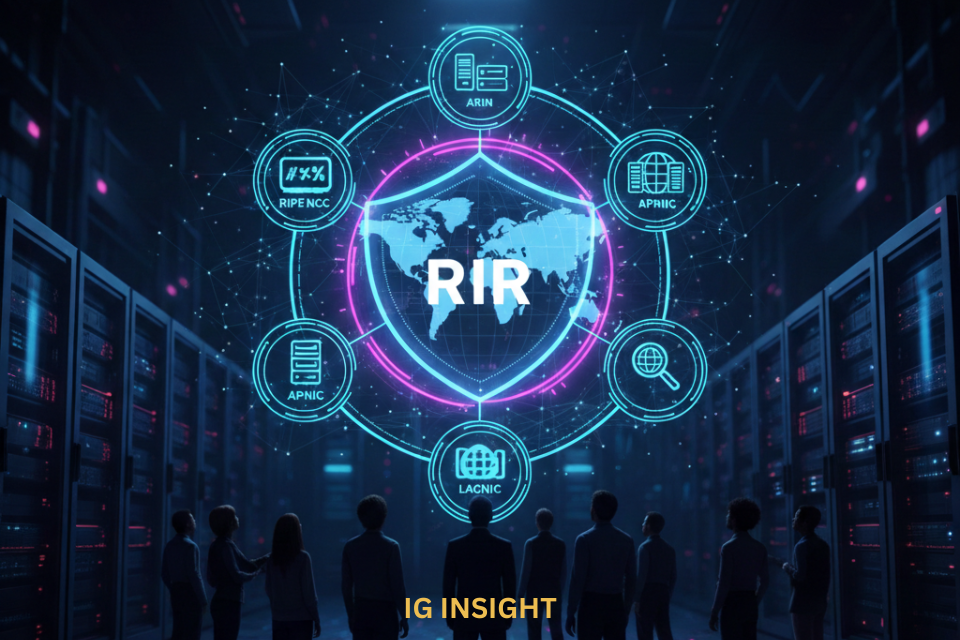
- Oversees IP address allocation through Regional Internet Registries (RIRs)
- Manages the IANA functions — the foundational technical protocols of the internet
- Holds annual public meetings (ICANN 79, 80, 81 in 2024–2025)
ICANN by the Numbers (2024)
| Annual revenue | ~$170 million+ (fee-based) |
| Staff worldwide | ~400+ employees |
| Accredited registrars | 3,500+ worldwide |
| TLDs in root zone | 1,500+ (country + generic) |
| UDRP cases (all-time) | 70,000+ domain disputes resolved |
| Contracted parties | 20+ registries, 3,500+ registrars |
Fellowship Programs: Building Tomorrow’s Internet Leaders
One of the most exciting (and underrated) aspects of both the IGF and ICANN is their fellowship programs. These aren’t just scholarships — they’re talent pipelines for the next generation of internet governance professionals, particularly from the Global South.
IGF Fellowship Program
| 🌍 Mission: To support participation of individuals from developing countries and underrepresented communities who would otherwise be unable to attend the IGF. |
- Open to participants from developing nations, civil society, academia, and technical community
- Covers travel, accommodation, and conference registration for the annual IGF meeting
- Fellows receive mentoring and capacity-building throughout the year
- Network of 1,000+ IGF alumni across 100+ countries
- Special tracks for youth fellows (under 30) — a dedicated Youth IGF Programme
- Intersessional engagement — fellows don’t just attend; they contribute to working groups
- 2024 theme: Connecting the Next Billion — focused on digital inclusion
ICANN Fellowship Program
| 🌐 Mission: To build capacity in internet governance by enabling stakeholders from underserved regions to participate in ICANN’s policy development process. |
- Three annual cohorts matching ICANN’s public meetings (ICANN 79, 80, 81 in 2024–2025)
- Covers flights, hotels, visa support, and per diem for international meetings
- Priority given to applicants from Africa, Asia-Pacific, Latin America & Caribbean, and MENA
- Fellows are embedded in Supporting Organizations (SOs) and Advisory Committees (ACs)
- A dedicated Fellowship Coordinator provides year-round support and mentoring
- Alumni program: ICANN Fellows Alumni Association (IFAA) — a powerful global network
- NextGen@ICANN: A youth-focused track for students aged 18–30 with real policy participation
- Fellows have gone on to become ICANN Board members, ccTLD managers, and policy leaders
| Fellowship Feature | IGF Fellowship | ICANN Fellowship |
| Frequency | Annual (1 meeting/year) | 3x per year (per ICANN meeting) |
| Target group | Developing countries, civil society | Underserved regions globally |
| Age focus | Youth under 30 (Youth IGF) | NextGen: 18–30 |
| Duration | 5-day annual IGF meeting | 5–6 day ICANN meeting |
| Policy involvement | Dynamic Coalitions, BPFs | SOs, ACs, policy working groups |
| Alumni network | 1,000+ globally | IFAA — active global association |
| Application cycle | Annual (usually June–August) | Per meeting cycle (3x/year) |
Trendy & Unique Features in 2024–2025
Both organizations are evolving fast to stay relevant in an era defined by AI, cybersecurity threats, and digital sovereignty battles. Here’s what’s hot right now:
IGF’s Trendy Features
- AI Governance Track: IGF 2024 had a dedicated AI track — the hottest topic in internet policy
- Hybrid & remote participation: Post-COVID, IGF has fully embraced virtual engagement with thousands attending online
- NRIs as grassroots power: National and regional IGFs now influence global policy from the bottom up
- Parliamentary engagement: IGF increasingly connects with national parliaments and legislatures
- WSIS+20 preparation: IGF is positioning itself as the central venue for the 20-year WSIS review in 2025
- Youth Summit: A dedicated Youth IGF Summit runs parallel to the main event
ICANN’s Trendy Features
- Universal Acceptance (UA): Ensuring all new domain scripts (Arabic, Chinese, Hindi) work across all software
- New gTLD Program Round 2: The long-awaited second round of new generic TLDs — thousands of new extensions
- RDAP replacing WHOIS: The modern, privacy-respecting replacement for the old WHOIS database is live
- DNS Abuse initiatives: ICANN cracking down on domains used for phishing, malware, and spam
- Continuous Data Initiative: Real-time data collection and transparency reports — radical openness
- ICANN Learn: A free online learning platform for internet governance education
- Root Zone Label Generation Rules (LGRs): Supporting internationalized domain names in all scripts
IGF vs ICANN: Are They Rivals or Partners?
Here’s the nuance that most people miss in the IGF vs ICANN debate: they’re not competing — they’re complementary. They operate in the same ecosystem but at different levels.
| 🔄 The Relationship: IGF provides the deliberative space where policy ideas are debated and shaped. ICANN implements those ideas (within its specific technical mandate). Policy discussions at IGF often inform ICANN’s policy development process — and ICANN participants frequently attend and shape IGF sessions. |
Key Differences at a Glance
- Authority: IGF has none; ICANN has real contractual authority over domain registrars and registries.
- Scope: IGF covers all internet issues; ICANN focuses specifically on DNS and identifiers.
- Stakeholder model: Both are multi-stakeholder, but IGF is more open and decentralized.
- Funding: IGF is UN-funded (limited budget); ICANN is self-funded through registrar fees (much larger budget).
- Output: IGF produces non-binding recommendations; ICANN produces binding policies and contracts.
Community Activities: How Each Organization Serves You
IGF Community Activities
| Activity | Description & Impact |
| Best Practice Forums (BPFs) | Year-round working groups producing practical guides on cybersecurity, IPv6, local content, and gender digital equality |
| Dynamic Coalitions (DCs) | 30+ self-organized groups tackling specific issues like AI, blockchain, accessibility, and child online safety |
| National & Regional IGFs | 170+ local forums bringing global debates to regional and national contexts in every continent |
| Youth IGF Programme | Empowering young people aged 14–25 to participate in internet governance at all levels |
| Parliamentary Track | Dedicated sessions for parliamentarians to understand internet policy implications |
| Open Forums | Governments and organizations present their internet governance policies publicly |
| IGF Messages | Non-binding but influential policy outputs sent to UN General Assembly and member states |
ICANN Community Activities
| Activity | Description & Impact |
| Public Comment Process | Any person on Earth can comment on proposed ICANN policies — radical transparency in policy-making |
| Supporting Organizations (SOs) | GNSO, ccNSO, ASO — community bodies that develop policies for ICANN’s Board to adopt |
| Advisory Committees (ACs) | ALAC, GAC, SSAC, RSSAC — non-binding advisory bodies representing diverse stakeholders |
| UDRP Domain Dispute Resolution | Free & accessible domain dispute process used by trademark holders worldwide |
| ICANN Learn Platform | Free online courses on DNS, internet governance, and ICANN processes — open to all |
| Multistakeholder Outreach | Regional engagement in Africa (AFCON), Asia-Pacific, Latin America, MENA, and Europe |
| DNS Abuse Framework | Community-driven initiative to combat malicious use of domain names |
Frequently Asked Questions (FAQ)
Q: Is IGF part of ICANN?
A: No. The IGF is a UN body created under the World Summit on the Information Society (WSIS) mandate. ICANN is an independent non-profit corporation. They are separate organizations that operate in the same ecosystem but have distinct mandates, governance structures, and funding sources.
Q: Does ICANN control the internet?
A: Not exactly. ICANN controls the technical coordination of the Domain Name System (DNS) and internet identifiers — which is enormously powerful. But content, data flows, cybersecurity policy, and most internet rules are governed by national governments, other international bodies, and platforms.
Q: Why doesn’t the IGF have decision-making power?
A: By design. The IGF’s strength is its inclusivity — governments, businesses, civil society, and individuals all participate as equals. Giving it binding power would require either a treaty (creating a UN-style bureaucracy) or delegation from states, which many governments resist. The trade-off is influence without authority.
Q: How can I apply for an IGF or ICANN fellowship?
A: IGF Fellowship: Applications open annually (typically June–August) via the IGF Secretariat website (intgovforum.org). Priority is given to participants from developing countries and underrepresented communities. ICANN Fellowship: Applications open 3 times per year before each ICANN meeting. Visit icann.org/fellowshipprogram. For NextGen@ICANN (ages 18–30), a separate application cycle is available.
Q: What is the WSIS+20 and why does it matter for IGF vs ICANN?
A: The World Summit on the Information Society (WSIS) was held in 2003 and 2005, and its outcomes are due for a 20-year review in 2025 (WSIS+20). This review will determine the future mandate of the IGF and potentially reshape the relationship between IGF, ICANN, and other internet governance bodies. It’s the most significant internet governance moment of the decade.
Q: Are there alternatives to ICANN for domain management?
A: Some countries and communities have explored alternative root systems and blockchain-based naming systems (like ENS — Ethereum Name Service). However, ICANN’s root remains the universally interoperable standard. Alternatives exist but don’t have global acceptance.
Q: What is the IANA transition and why was it historic?
A: In 2016, the US government transferred stewardship of the IANA (Internet Assigned Numbers Authority) functions to the global multi-stakeholder community via ICANN’s IANA Stewardship Transition. This ended 18 years of US government oversight and was celebrated as a victory for the multi-stakeholder model of internet governance.
Q: Can individuals participate in IGF and ICANN processes?
A: Yes! Both organizations actively encourage individual participation. The IGF is free to attend (in-person or online), and ICANN holds open public comment periods on every major policy. The ICANN At-Large community specifically represents individual internet users. You don’t need to be a government or corporation to have a voice.
Final Thoughts: Two Pillars of the Open Internet
The IGF vs ICANN comparison is really a story about two different but essential pillars of internet governance. One deliberates, the other implements. One is open and advisory, the other is technical and contractual. Together, they form the backbone of the multi-stakeholder model that has kept the internet global and open for decades.
As the internet faces new challenges — AI governance, digital sovereignty, cybersecurity, and the push for data localization — both the IGF and ICANN will be more important than ever.
Whether you’re a policy wonk, a tech entrepreneur, a student, or just a curious internet user, understanding these organizations means understanding who shapes the digital world you live in every single day.
Ready to Shape the Internet’s Future?
Don’t just read about internet governance — participate in it.
-> Apply for the IGF Fellowship: intgovforum.org
-> Explore ICANN Fellowship & NextGen: icann.org/fellowshipprogram
-> Join the conversation at your national IGF
The internet belongs to everyone. Make your voice heard.
© 2026 IG Insight Blog. This article is published for educational and informational purposes.

Dipankar Barua is an internet governance advocate from Dhaka, Bangladesh, who believes that voices from the Global South must be heard in the rooms where the internet’s future is decided. As an ICANN advocate and VSIG member, he actively engages in multistakeholder policy processes spanning DNS security, digital inclusion, and responsible AI governance. With an academic grounding in Computer Science and AI, and over 15 years of applied IT experience, Dipankar bridges the gap between technical communities and policy spaces — writing, participating, and advocating for a more open, equitable, and inclusive internet for all.
Related posts:
 Internet Society vs ICANN: Two Internet Giants — But They Do Completely Different Things
 The Internet’s Global Meeting Room: What Is the IGF and Why Everyone Is Talking About It?
 ccTLD vs gTLD: The Domain Name Secret Most Website Owners Don’t Know
 ARIN vs RIPE vs APNIC vs AFRINIC vs LACNIC: The Key Differences That Power the Internet