Why the Internet Needs a Lock — And Who Holds the Key
How One Organization Holds the Cryptographic Keys That Keep Your DNS Safe From Attackers
Every time you type a website address, your device asks the internet’s directory system — the Domain Name System (DNS) — to translate that name into a numerical IP address. It happens in milliseconds, billions of times a day. And for decades, it happened with a dangerous vulnerability: anyone could intercept or forge those directory responses.
DNSSEC — Domain Name System Security Extensions — was created to fix that. And ICANN is the organization at the very top of that security architecture, responsible for signing the root of the entire system.
Understanding ICANN’s role in DNSSEC is not just technical trivia. It is the story of how the internet’s foundational security layer works — and why that matters to every user, every business, and every government on Earth.
| 💡 In a Nutshell: ICANN operates the DNS Root Zone — the very top of the internet’s naming hierarchy. DNSSEC secures that hierarchy with cryptographic signatures. ICANN’s specific role is to sign the Root Zone with the Root Zone Signing Key (ZSK), manage the Key Signing Key (KSK) through its IANA functions, and coordinate the global Root Zone KSK Rollover process. |
What Is DNSSEC?
DNSSEC — Domain Name System Security Extensions — is a suite of Internet Engineering Task Force (IETF) specifications that add cryptographic authentication to the DNS. Specifically, DNSSEC allows DNS resolvers to verify that a DNS response is authentic — that it actually came from the authoritative source and has not been tampered with in transit.
Without DNSSEC, the DNS is vulnerable to a class of attacks called DNS cache poisoning or DNS spoofing, where attackers inject fraudulent records into a resolver’s cache, redirecting users to malicious websites without their knowledge — even when they type the correct address.
How DNSSEC Works — Simply Explained
DNSSEC uses a chain of cryptographic trust — called a chain of trust — that flows from the DNS Root Zone downward through every level of the domain name hierarchy:
- The DNS Root Zone is signed by ICANN using the Root Zone Signing Key (ZSK) and Key Signing Key (KSK)
- Top-Level Domain operators (.com, .ng, .uk, etc.) sign their zones and have their signatures validated against the root
- Individual domain owners sign their own zones, validated against the TLD above them
- DNS resolvers check every step of this chain before accepting a response as authentic
| 🔐 Key Concept: DNSSEC does not encrypt DNS queries. It authenticates them. The difference matters: encryption hides content; authentication proves the content is genuine and unmodified. DNSSEC tells your browser: this DNS answer really came from the legitimate source and nobody changed it. |
ICANN’s Specific Role in DNSSEC
ICANN’s role in DNSSEC is unique, critical, and irreplaceable. As the operator of the IANA (Internet Assigned Numbers Authority) functions, ICANN manages the DNS Root Zone — the single most trusted anchor in the entire global DNS hierarchy. Here is a breakdown of every layer of ICANN’s responsibility:
1. Root Zone Key Signing Key (KSK) Management
The KSK is the master cryptographic key that sits at the very top of the DNSSEC chain of trust — often called the Trust Anchor. ICANN, through its IANA functions, generates, safeguards, and uses the KSK to sign the Zone Signing Key (ZSK), which in turn signs the actual DNS Root Zone data.
This KSK is stored in Hardware Security Modules (HSMs) held in two highly secure Key Management Facilities (KMFs) — one in El Segundo, California and one in Culpeper, Virginia. Access to these facilities requires multi-person authorization (a minimum of five key holders from a community of trusted individuals from around the world), physical security protocols, and cryptographic access controls. The process is one of the most audited and witnessed security procedures in internet history.
2. Key Signing Ceremonies
Four times a year, ICANN conducts Root KSK Signing Ceremonies — formal, scripted, publicly witnessed events where the KSK is used to sign the next set of ZSKs. These ceremonies are:
- Conducted at the two KMFs in California and Virginia, alternating quarterly
- Witnessed by Trusted Community Representatives (TCRs) — community-selected individuals from different global regions
- Live-streamed to the public and fully audited
- Scripted to the exact command line — every action is pre-approved and recorded
- Documented in publicly available ceremony records
3. Root Zone Zone Signing Key (ZSK) Operations
While the KSK is used only four times per year, the ZSK is used continuously to sign the DNS Root Zone data. ICANN’s IANA team manages the ZSK on behalf of VeriSign (which operates the Root Zone under NTIA/ICANN arrangements), ensuring that the root zone remains continuously signed and that resolvers worldwide can validate DNS responses.
4. The 2018 Root KSK Rollover
The most significant event in DNSSEC history was the Root KSK Rollover of October 11, 2018 — the first-ever replacement of the Root Zone Trust Anchor. This was the cryptographic equivalent of changing the master key to the entire internet. ICANN coordinated this rollover across years of preparation, public consultation, and technical coordination with every resolver operator, ISP, and DNS software vendor worldwide — successfully rolling over the key without breaking DNS for any end user.
| Key Milestone: The Root KSK Rollover on October 11, 2018 was the first time in history the top-level cryptographic key of the entire internet’s naming system was replaced. ICANN coordinated the process over three years of preparation, two key generation ceremonies, and global outreach to DNS operators on every continent. |
Why ICANN Is the Right Body to Manage DNSSEC?
The question of why ICANN — and not a government, a corporation, or a standards body — manages the top of the DNSSEC hierarchy is one of the most important questions in internet governance. The answer comes down to three principles:
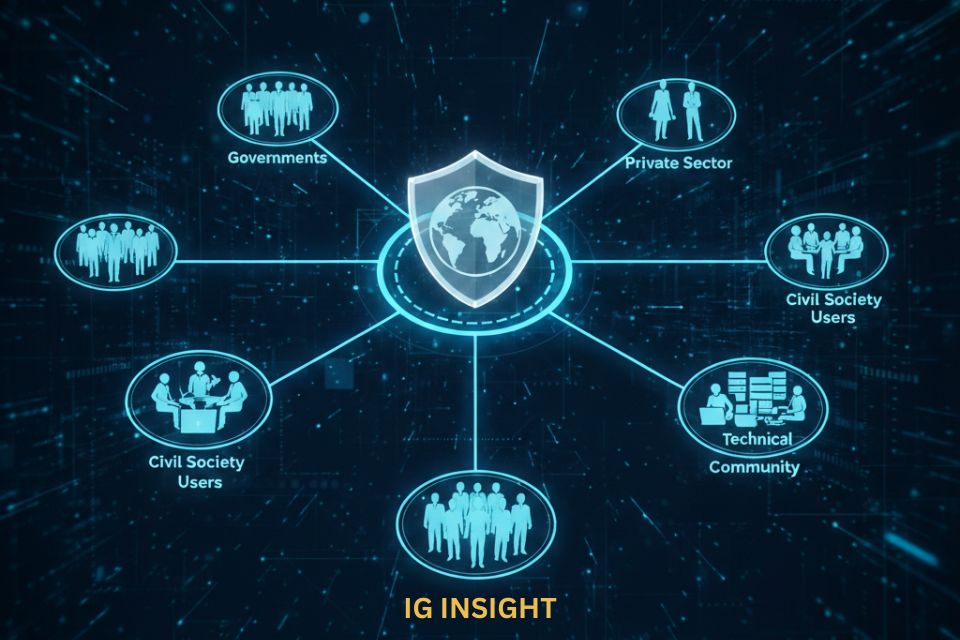
- Neutrality — ICANN is a nonprofit, multi-stakeholder organization accountable to the global internet community, not to any single government or commercial interest. No single nation or corporation can unilaterally influence the Root KSK.
- Technical mandate — ICANN’s IANA functions include the management of the DNS Root Zone. DNSSEC management flows naturally from this existing and long-established operational role.
- Multi-stakeholder accountability — the Trusted Community Representatives who participate in Key Signing Ceremonies are drawn from civil society, technical experts, and academia across multiple regions — ensuring no single group controls access.
This multi-stakeholder architecture for DNSSEC management is widely regarded as a model for how critical shared internet infrastructure should be governed: with transparency, community oversight, geographic diversity, and strong technical security.
DNSSEC Policy: The Framework ICANN Operates Within
ICANN’s DNSSEC activities are governed by a detailed policy and contractual framework. Key policy documents include:
| Policy Document | What It Covers |
| ICANN Root Zone DNSSEC Policy | Defines ICANN’s obligations for KSK management, signing ceremonies, and key rollover procedures — published as a Certification Practice Statement (CPS) |
| Root Zone KSK Operator CPS | The Certification Practice Statement for Root KSK operations — a detailed technical and procedural specification for how the KSK is generated, stored, used, and revoked |
| Root Zone KSK Rollover Plan | The policy and technical plan for conducting the Trust Anchor Rollover — governing how and when the Root KSK is replaced, including community consultation requirements |
| DNSSEC Practice Statements (DPS) | Required from TLD registry operators under ICANN contracts — governs how each TLD signs its own zone and how it links into the chain of trust from the root |
| Registry Agreement DNSSEC Clause | ICANN’s Registry Agreements with new gTLD operators require DNSSEC signing of all delegated zones — a contractual mandate for universal DNSSEC adoption |
| SSAC Advisory on DNSSEC | ICANN’s Security and Stability Advisory Committee (SSAC) publishes technical advisories on DNSSEC deployment best practices, vulnerability disclosures, and operational guidance |
ICANN and DNSSEC: Key Facts at a Glance
| Fact | Detail |
| DNSSEC Root KSK algorithm | RSA/SHA-256 — 2048-bit key (as of 2017 rollover preparation) |
| Root Zone signing frequency | ZSK rolls every 3 months; KSK used in quarterly ceremonies |
| Key Management Facilities | 2 facilities — El Segundo, California and Culpeper, Virginia |
| Trusted Community Representatives | 14 Crypto Officers + 14 Recovery Key Share Holders globally selected |
| Signing ceremony frequency | 4 times per year — publicly witnessed and live-streamed |
| First Root KSK generation | June 16, 2010 — the date the Root Zone DNSSEC Trust Anchor was first created |
| Root KSK Rollover date | October 11, 2018 — first-ever replacement of the internet’s Trust Anchor |
| DNSSEC adoption (TLDs) | All ICANN-contracted new gTLDs are required to sign their zones with DNSSEC |
| DNSSEC adoption (resolvers) | ~90% of DNS resolvers validate DNSSEC globally as of 2024 (APNIC data) |
| Public ceremony records | All ceremony scripts, logs, and audit records publicly available at iana.org |
UNIQUE FEATURE: The DNSSEC Trust Chain — From Root to Your Browser
The DNSSEC Trust Chain Visualized
Here is how ICANN’s root-level DNSSEC management flows down to protect your everyday browsing — a clear picture of the chain of trust from the internet’s most secure room to your screen:
| Step 1 — ICANN KSK (Root Trust Anchor) ICANN holds the Root Key Signing Key in Hardware Security Modules at two geographically separated Key Management Facilities. This is the Trust Anchor — the single point that all DNSSEC validation ultimately traces back to. |
| Step 2 — Root Zone Signing (IANA / ICANN) The KSK signs the Zone Signing Key (ZSK). The ZSK is used to sign all records in the DNS Root Zone — the master directory that lists every top-level domain (.com, .ng, .uk, etc.) and their authoritative name servers. |
| Step 3 — TLD Zone Signing (e.g., Verisign for .com) Each top-level domain operator signs their zone with their own DNSSEC key. Their Delegation Signer (DS) record is published in the root zone, linking their key to ICANN’s chain of trust. |
| Step 4 — Domain Zone Signing (e.g., your-domain.com) Individual domain owners can sign their own zones. Their DS records are published in the TLD’s zone, extending the chain one step further. Now the full chain from root to domain is cryptographically authenticated. |
| Step 5 — Resolver Validation (Your ISP / DNS Resolver) When your computer’s DNS resolver looks up a domain, it checks every signature in the chain — from the domain, through the TLD, back to the root. If every signature is valid, the response is trusted. If any signature fails, the resolver returns an error — protecting you from DNS spoofing. |
Frequently Asked Questions
Q1: What exactly is ICANN’s role in DNSSEC?
ICANN, through its IANA functions, manages the Root Zone Key Signing Key (KSK) — the master cryptographic key at the top of the global DNSSEC chain of trust. This includes generating and safeguarding the KSK in tamper-resistant Hardware Security Modules, conducting quarterly public Root KSK Signing Ceremonies, signing the DNS Root Zone, and managing the KSK Rollover process when the key needs to be replaced.
Q2: What is the DNS Root Zone and why does signing it matter?
The DNS Root Zone is the topmost level of the Domain Name System — it is the authoritative directory that lists every top-level domain (.com, .org, .uk, .ng, etc.) and their name servers. Signing the Root Zone with DNSSEC creates the foundational Trust Anchor that every subsequent DNSSEC signature in the entire internet traces back to. Without a signed root, the global DNSSEC chain of trust would not exist.
Q3: What is the Root KSK Rollover and why was it significant?
The Root KSK Rollover, completed on October 11, 2018, was the first-ever replacement of the Root Zone Trust Anchor — the master cryptographic key at the top of the entire internet’s DNSSEC hierarchy. It was significant because it affected every DNSSEC-validating DNS resolver on Earth. If resolvers were not updated to trust the new key, they would have failed to resolve DNS for their users. ICANN coordinated years of preparation, testing, and global outreach to make the rollover transparent and seamless.
Q4: How does ICANN ensure the Root KSK is kept secure?
ICANN stores the Root KSK in Hardware Security Modules (HSMs) at two geographically separate Key Management Facilities — in El Segundo, California and Culpeper, Virginia. Each facility requires multi-person access authorization from a community of globally selected Trusted Community Representatives. All signing ceremonies are scripted, publicly witnessed, live-streamed, and fully audited. No single person or country can access or use the key alone.
Q5: Is DNSSEC mandatory for domain owners?
For domain names registered under ICANN-contracted new gTLD registries, DNSSEC signing of the TLD zone is contractually required. For individual domain owners (second-level domains like example.com), DNSSEC is not universally mandated but is strongly encouraged by ICANN, ISOC’s MANRS program, and security best practice frameworks. Resolver-side DNSSEC validation is also not universal — but as of 2024, approximately 90% of DNS resolvers globally validate DNSSEC according to APNIC measurement data.
Your DNS Security Starts at the Root.
ICANN’s role in DNSSEC is not abstract policy — it is the foundation of the cryptographic security that protects your DNS lookups, your email, your banking, and your identity online. Every time DNSSEC validation stops a forged DNS response, ICANN’s root-level key management is part of what made that protection work.
Take Action Today
- Check if your domain is DNSSEC-signed at dnssec-analyzer.verisignlabs.com
- Watch an ICANN Root KSK Signing Ceremony at iana.org/dnssec/ceremonies
- Read ICANN’s Root Zone KSK Certification Practice Statement at iana.org
- Enable DNSSEC signing through your domain registrar — most offer it free
Learn more at https://www.icann.org/resources/pages/dnssec-what-is-it-why-important-2019-03-05-en
DNSSEC is not optional for a secure internet. And ICANN’s stewardship of the Root Trust Anchor is what makes the whole system work. Understand it. Trust it. Help spread it.
© 2026 IG Insight Blog. This article is published for educational and informational purposes.

Dipankar Barua is an internet governance advocate from Dhaka, Bangladesh, who believes that voices from the Global South must be heard in the rooms where the internet’s future is decided. As an ICANN advocate and VSIG member, he actively engages in multistakeholder policy processes spanning DNS security, digital inclusion, and responsible AI governance. With an academic grounding in Computer Science and AI, and over 15 years of applied IT experience, Dipankar bridges the gap between technical communities and policy spaces — writing, participating, and advocating for a more open, equitable, and inclusive internet for all.