Trust, Security, and the Future of a Unified Global Internet
How a Cryptographic Protocol Became the Cornerstone of Internet Governance Policy — and Why Every Stakeholder Must Care
Internet governance is fundamentally about trust. Trust that domain names resolve to the right places. Trust that the technical infrastructure underpinning global communications is managed responsibly. Trust that no single actor — government, corporation, or criminal — can unilaterally undermine the shared resource that billions of people depend on every day.
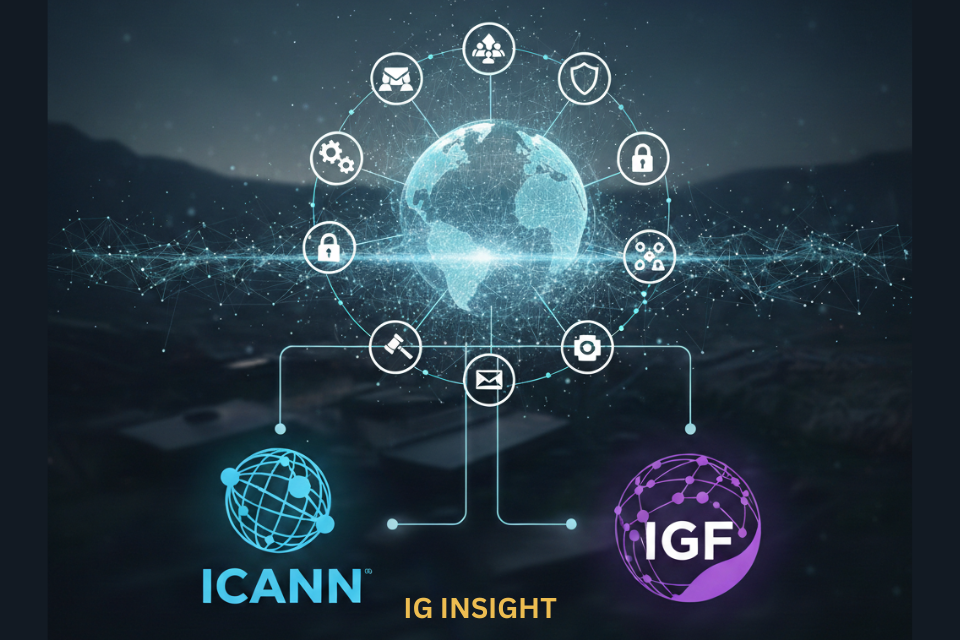
DNSSEC — Domain Name System Security Extensions — is not merely a cybersecurity tool. It is a governance instrument. It is the mechanism through which the multi-stakeholder community, led by ICANN and guided by the IETF, has built a globally verifiable, cryptographically enforced layer of trust into the internet’s foundational naming infrastructure.
Understanding the importance of DNSSEC for internet governance means understanding why securing the DNS is inseparable from the project of governing the internet fairly, openly, and for the benefit of all its users.
| 🔑 Central Thesis: DNSSEC matters to internet governance because it operationalizes trust in the multi-stakeholder system. When ICANN signs the Root Zone, when TLD operators sign their zones, and when domain owners sign their domains, they are collectively building a technically verifiable chain of accountability that mirrors the governance accountability structure of the internet itself. |
DNSSEC: A Quick Governance-Oriented Overview
DNSSEC is a suite of IETF specifications (RFC 4033, 4034, 4035, updated in subsequent RFCs) that add digital signatures to DNS records. Every signed DNS response can be cryptographically verified by a validating resolver — confirming that the answer is authentic and unmodified.
The DNS without DNSSEC is like the internet’s phone book with no way to verify whether the listings are genuine. DNSSEC adds the verification layer — making it possible for any resolver, anywhere in the world, to confirm that the DNS record they received is exactly what the authoritative source published.
The governance significance is profound: the chain of trust that DNSSEC establishes flows from the ICANN-managed DNS Root Zone downward through TLD operators and individual domain owners. This hierarchy mirrors the accountability structure of the internet governance model itself — and makes that accountability technically enforceable.
How DNSSEC Shapes and Influences Internet Governance?
The importance of DNSSEC for internet governance extends far beyond technical DNS security. It touches every pillar of how the internet is governed, who governs it, and how governance decisions are implemented and enforced:
1. Anchoring the Multi-Stakeholder Model in Technical Infrastructure
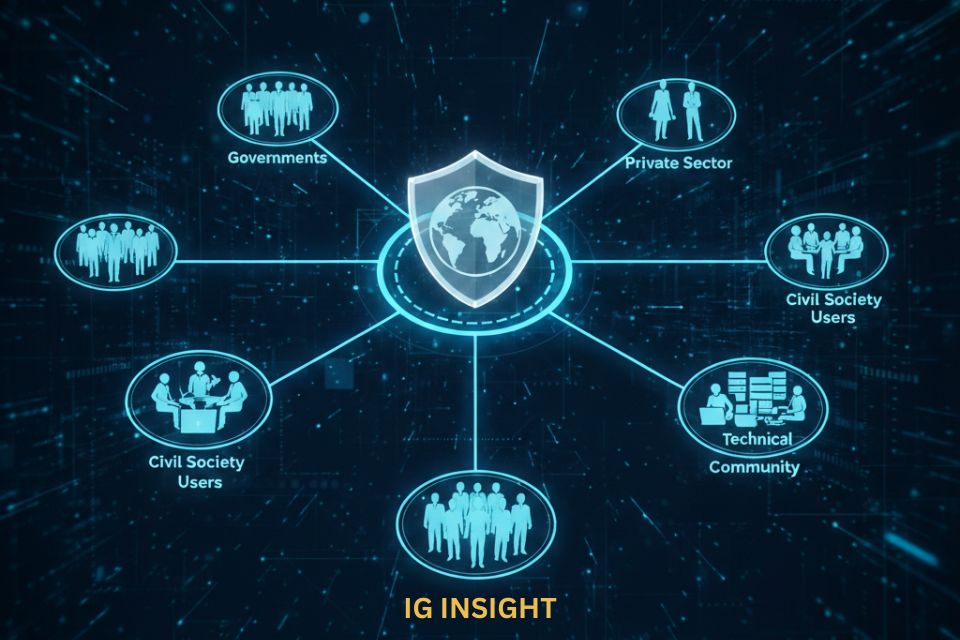
The multi-stakeholder model of internet governance holds that decisions about the internet should involve governments, civil society, the private sector, and the technical community. DNSSEC gives this model technical teeth.
When ICANN signs the Root Zone KSK, that signing ceremony involves Trusted Community Representatives drawn from multiple global regions — civil society members, technical experts, academics. The governance model is not just a policy aspiration; it is embedded in the cryptographic ceremony that secures the internet’s root.
2. Preventing Fragmentation and Protecting the Single Internet
One of the central challenges in internet governance is preserving the single, globally interconnected internet against fragmentation. DNS hijacking and manipulation — particularly by state actors — is one of the primary technical mechanisms through which internet fragmentation occurs.
When governments or other actors manipulate DNS responses to redirect, block, or alter internet traffic, DNSSEC-enabled domains expose those manipulations because the forged responses fail cryptographic validation. DNSSEC is therefore a technical check on DNS manipulation and a defense of the unified global internet that governance bodies work to preserve.
3. Enabling Accountability in the Domain Name Ecosystem
DNSSEC creates a verifiable record of who authorized every DNS record. When a domain is signed and its DS record is published in the parent zone, there is a documented, cryptographically verifiable chain of custody from the domain owner through the TLD operator to the root. This chain of custody has direct governance implications — it supports DNS abuse investigation, legal proceedings, and regulatory compliance verification.
4. Supporting Human Rights and Access to Information
Internet governance frameworks, including the IGF’s multistakeholder outputs, consistently affirm that internet users have rights to access information freely and without manipulation. DNS cache poisoning and hijacking attacks that redirect users to fraudulent or censored versions of websites directly violate these principles.
DNSSEC protects the integrity of DNS responses, ensuring that users who query for a domain receive the authentic answer — not a manipulated one. In regions where DNS manipulation is used as a censorship or surveillance tool, DNSSEC’s authentication layer provides a technical defense for users’ right to access authentic information.
5. Strengthening Digital Economy and Critical Infrastructure
The internet economy — e-commerce, banking, cloud services, government portals — depends on DNS integrity. DNS hijacking attacks against financial services and critical infrastructure have caused measurable economic harm. The 2019 Sea Turtle DNS hijacking campaign targeting government and telecommunications networks in the Middle East and North Africa, for instance, was enabled by the absence of DNSSEC on targeted domains.
Governing the internet includes governing its economic infrastructure. DNSSEC adoption is thus a governance intervention that directly protects the economic fabric of the digital economy — from individual consumers to multinational enterprises.
DNSSEC and Internet Governance: Key Facts
| Fact | Detail |
| Root Zone DNSSEC signing | ICANN signed the DNS Root Zone on July 15, 2010 — the foundational moment for global DNSSEC governance |
| Root KSK ceremonies | Conducted 4 times per year; publicly witnessed by Trusted Community Representatives from multiple global regions |
| Global resolver validation | ~90% of DNS resolvers globally validate DNSSEC (APNIC measurement data, 2024) |
| ICANN-contracted gTLDs | 100% of new ICANN-contracted gTLDs are required to sign zones with DNSSEC under Registry Agreement |
| ccTLD signing rates | Over 75% of ccTLDs have enabled DNSSEC, with rates highest in Europe and rising in Africa and Asia Pacific |
| NIS2 Directive mandate | EU NIS2 requires DNS security including DNSSEC for all essential and important entities as of 2024 |
| NIST requirement | US federal agencies mandated to implement DNSSEC under NIST SP 800-81r1 |
| ICANN SSAC advisories | Multiple SSAC reports (SAC 032, SAC 048, SAC 072) recommend universal DNSSEC deployment as governance priority |
| Root KSK Rollover (2018) | First-ever replacement of Root Zone Trust Anchor — coordinated with global multi-stakeholder community |
| Internet fragmentation link | DNS manipulation by state actors identified as primary driver of internet fragmentation in IGF policy reports |
Key DNSSEC Activities in the Internet Governance Ecosystem
The importance of DNSSEC for internet governance is reflected in the active work of every major governance organization. Here is what the key bodies are doing:
| ICANN Activities Root Zone KSK management and quarterly signing ceremoniesDNSSEC requirement in all new gTLD Registry AgreementsSSAC publication of DNSSEC operational advisoriesDNSSEC workshops and training at all 3 annual ICANN meetingsRoot KSK Rollover coordination (2018 and future rollovers)ICANN Learn free DNSSEC Fundamentals course (learn.icann.org) | IETF Activities Maintains core DNSSEC standards: RFC 4033, 4034, 4035, 6840DNSOP Working Group — operational best practices for DNSSECDANE standards (RFC 6698) built on DNSSEC foundationOngoing work on DNSSEC automation (RFC 8901 — Multi-Signer)Algorithm agility work — transitioning to more resilient algorithmsCDS/CDNSKEY automation for easier DNSSEC management (RFC 7344) |
| Internet Society / MANRS MANRS (Mutually Agreed Norms for Routing Security) promotes DNSSECDNSSEC included in MANRS Action 3: Global RPKI and DNS securityISOC publishes Internet Impact Assessments on DNS security policyChapter advocacy for DNSSEC adoption in national regulatory frameworksFellowship programs supporting DNSSEC education at IGF and ICANNISOC Pulse tracks DNSSEC adoption metrics globally | RIRs and NOGs APNIC Academy — DNSSEC Implementation course (free)RIPE NCC Academy — DNSSEC Operations course (free)AfNOG and AFRALO promote DNSSEC adoption across AfricaLACNOG training on DNSSEC deployment for Latin American operatorsAPNIC Blog publishes DNSSEC measurement researchRegional Internet Registries support DNSSEC in RPKI coordination |
DNSSEC Policy: The Governance Framework in Detail
DNSSEC is embedded in the most significant internet governance and cybersecurity policy frameworks globally. Here is how policy has translated the technical importance of DNSSEC into enforceable governance instruments:
| Policy Instrument | DNSSEC Provision | Governance Significance |
| ICANN Root Zone DNSSEC CPS | Defines KSK management, ceremony procedures, and community oversight requirements | Embeds multi-stakeholder accountability into root-level DNS security |
| ICANN Registry Agreement | Contractually mandates DNSSEC signing for all new gTLD operators | Converts governance policy into binding technical obligation |
| IETF RFC 4033-4035 | Core technical specifications enabling DNSSEC globally | Standards-based governance ensures interoperability across all operators |
| EU NIS2 Directive (2024) | Requires DNS security measures including DNSSEC for essential entities | Regulatory enforcement of DNSSEC in the world’s largest digital market |
| NIST SP 800-81r1 | Mandates DNSSEC for all US federal agency domains | Sets government procurement and compliance standard for DNSSEC |
| ITU-T X.1038 | International standard including DNSSEC in DNS security architecture | Global harmonization of DNSSEC requirements across UN member states |
| ICANN SSAC SAC 072 | Recommends universal DNSSEC deployment as community security priority | Multi-stakeholder technical community endorsement of DNSSEC mandate |
| IGF Best Practice Forums | BPF outputs recommend DNSSEC as baseline internet infrastructure security | Civil society and governance community endorsement |
How to Advance DNSSEC Adoption: A Practical Action Guide
Understanding why DNSSEC matters for internet governance is the first step. Acting on that understanding — as an operator, policymaker, or advocate — is what moves the needle. Here is what each stakeholder group can do:
| Domain Owners and Website Operators Enable DNSSEC signing on your domain through your registrar or DNS hosting provider. Log in to your DNS management console, activate DNSSEC, and publish your DS record. Use the DNSSEC Analyzer at dnssec-analyzer.verisignlabs.com to verify your full chain of trust is properly configured. This takes under 30 minutes for most providers and is typically free. |
| Network Operators and ISPs Configure your recursive DNS resolvers to validate DNSSEC signatures. Both BIND and Unbound (the two dominant open-source resolver implementations) support DNSSEC validation with a single configuration line. Join MANRS (manrs.org) and commit to Action 3 — global routing and DNS security including DNSSEC. Enable DNSSEC signing for your own authoritative zones. |
| Policymakers and Government Agencies Adopt DNSSEC deployment requirements in your national cybersecurity framework and critical infrastructure regulations. Reference NIST SP 800-81r1 and EU NIS2 as policy templates. Mandate DNSSEC for all government-operated domains and require DNSSEC verification for government DNS resolver infrastructure. Engage with ICANN’s Government Advisory Committee (GAC) on DNSSEC policy. |
| Civil Society and Internet Governance Advocates Raise DNSSEC as a digital rights issue at IGF sessions and national internet governance forums. Frame DNS integrity as a prerequisite for users’ right to access authentic information online. Submit public comments during ICANN GNSO and ccNSO consultations on DNS security policy. Engage with ISOC chapters to promote DNSSEC awareness in your community. |
| Educators and Technical Trainers Integrate DNSSEC into internet governance and network security curricula. Use ICANN Learn’s free DNSSEC Fundamentals course (learn.icann.org) and APNIC Academy’s DNSSEC Implementation course (academy.apnic.net). Teach the governance dimension — not just the technical mechanics — so learners understand DNSSEC as a governance instrument, not merely a protocol extension. |
UNIQUE FEATURE: The DNSSEC Governance Impact Matrix — Where Technical Security Meets Policy Accountability
The DNSSEC Governance Impact Matrix
This exclusive matrix maps how DNSSEC’s technical functions translate into specific internet governance outcomes — showing precisely why the importance of DNSSEC for internet governance is both technical and institutional:
| DNSSEC Technical Function | Governance Outcome | Policy Instrument Aligned |
| Root Zone KSK management by ICANN | Anchors multi-stakeholder governance model in technical infrastructure | ICANN Root Zone DNSSEC CPS; KSK Ceremony Procedures |
| Chain of trust from root to domain | Creates verifiable accountability ladder for all DNS operators | ICANN Registry Agreements; SSAC SAC 072 |
| Detection of forged DNS responses | Protects users’ right to access authentic information (human rights) | IGF BPF outputs; NIS2 Article 28; NIST SP 800-81r1 |
| DANE certificate verification via DNS | Reduces dependence on fragile Certificate Authority ecosystem | IETF RFC 6698; ITU-T X.1038; ISO/IEC 27001 |
| Signing ceremony community oversight | Demonstrates multi-stakeholder accountability in critical infrastructure | ICANN Bylaws; IANA Stewardship Transition; Affirmation of Commitments |
| Algorithm agility and key rollover | Ensures long-term resilience of governance-anchored security model | IETF RFC 8624; SSAC SAC 099; Root KSK Rollover Plan |
| DNSSEC validation at resolver layer | Distributes trust verification to every network — democratizes security | MANRS Action 3; RIPE NCC deployment guides; APNIC Academy |
| Mandatory gTLD signing (ICANN contracts) | Ensures governance policy is technically implemented at TLD layer | ICANN Registry Agreement Specification 6; new gTLD Policy |
Frequently Asked Questions
Q1: Why is DNSSEC described as an internet governance issue, not just a cybersecurity issue?
DNSSEC is a governance issue because it operationalizes the accountability and trust principles that underpin the internet governance model. When ICANN manages the Root Zone KSK through community-witnessed ceremonies, when TLD operators sign their zones under ICANN contracts, and when domain owners extend that chain of trust to individual domains, they are participating in a technically enforced governance hierarchy. DNSSEC makes DNS accountability verifiable — not just aspirational. It is the technical mechanism through which internet governance becomes technically implementable.
Q2: How does DNSSEC relate to internet fragmentation — a major internet governance concern?
Internet fragmentation — the splitting of the global internet into incompatible national or regional networks — is one of the most pressing concerns in internet governance today. DNS manipulation by state actors, corporations, or malicious intermediaries is one of the primary technical mechanisms through which fragmentation occurs. DNSSEC-enabled domains expose DNS manipulation because forged responses fail cryptographic validation. While DNSSEC cannot prevent all forms of fragmentation, it creates a verifiable baseline of DNS integrity that makes DNS-based fragmentation technically more difficult and more detectable.
Q3: What role does the IETF play in DNSSEC governance, and how does it relate to ICANN?
The IETF (Internet Engineering Task Force) develops and maintains the technical standards that define how DNSSEC works — specifically RFC 4033, 4034, 4035, and many subsequent RFCs. ICANN implements and operationalizes those standards for the DNS Root Zone through its IANA functions. The relationship exemplifies the internet governance principle of separation of technical standardization (IETF) from operational coordination (ICANN) — both essential, neither sufficient alone. The Internet Society (ISOC) provides the administrative home for the IETF, adding a third governance layer to the DNSSEC ecosystem.
Q4: How does DNSSEC adoption vary globally, and what are the governance implications of uneven adoption?
DNSSEC adoption is geographically uneven: Europe leads with high rates among both TLDs and resolver operators; Asia Pacific has strong adoption among technical operators with growing resolver validation rates; Africa and parts of Latin America have lower adoption rates, though both AFRINIC, LACNIC, and regional NOGs are actively promoting deployment. The governance implication of uneven adoption is significant: the internet’s chain of trust is only as strong as its weakest links. Regions with lower DNSSEC adoption are more vulnerable to DNS hijacking and manipulation — which disproportionately harms users in those regions. Closing the DNSSEC adoption gap is therefore also a digital inclusion and equity issue.
Q5: Is DNSSEC adoption mandatory, and what happens to non-compliant operators?
DNSSEC adoption is mandatory in specific contexts: all ICANN-contracted new gTLD registry operators are contractually required to sign their TLD zones under the Registry Agreement. US federal agencies are required to implement DNSSEC under NIST SP 800-81r1. EU essential and important entities are required under NIS2. For individual domain owners and ISPs outside these regulated contexts, DNSSEC is currently recommended but not universally mandated. Non-compliant operators in regulated sectors face contractual remediation by ICANN’s Compliance team or regulatory enforcement by national authorities under NIS2 or equivalent frameworks. The governance trend is clearly toward greater DNSSEC mandates across both public and private sector operators.
DNSSEC Is Governance in Action. Be Part of It.
The importance of DNSSEC for internet governance is not theoretical. It is the technical foundation that makes multi-stakeholder accountability real, that protects users’ right to authentic information, and that guards the unified global internet against manipulation and fragmentation.
Every domain signed, every resolver configured to validate, every policy that mandates DNSSEC — these are all acts of internet governance. Here is how you contribute:
Your DNSSEC Governance Actions
- Enable DNSSEC on your domain — verify at dnssec-analyzer.verisignlabs.com
- Learn DNSSEC governance at learn.icann.org — free DNSSEC Fundamentals course
- Watch ICANN Root KSK ceremonies at iana.org/dnssec/ceremonies — governance in action
- Join MANRS at manrs.org — commit to DNS and routing security as a network operator
- Engage with ICANN’s GNSO and SSAC on DNSSEC policy at icann.org/participate
- Raise DNSSEC at your next IGF or national internet governance forum session
The internet’s governance is only as strong as its technical foundations. DNSSEC is one of those foundations. Build it.
© 2026 Internet Governance Expert Blog. Published for educational purposes only.

Dipankar Barua is an internet governance advocate from Dhaka, Bangladesh, who believes that voices from the Global South must be heard in the rooms where the internet’s future is decided. As an ICANN advocate and VSIG member, he actively engages in multistakeholder policy processes spanning DNS security, digital inclusion, and responsible AI governance. With an academic grounding in Computer Science and AI, and over 15 years of applied IT experience, Dipankar bridges the gap between technical communities and policy spaces — writing, participating, and advocating for a more open, equitable, and inclusive internet for all.