Most university students who care about the internet — its governance, its security, its future — have no idea there is a fully funded program waiting for them at ICANN. NextGen@ICANN is exactly that: a structured, mentored, travel-funded pathway that takes university students from interested observer to active participant in the rooms where global internet policy is shaped.
This is not a scholarship to study internet governance in a classroom. It is an immersive program that puts students inside an actual ICANN Public Meeting — among the diplomats, engineers, civil society advocates, and policy developers who coordinate the systems that make the internet work globally. And it funds your entire trip to get there.
This article explains exactly what NextGen@ICANN is, how it works from application to presentation, who is eligible, what it covers, and how it connects to the broader ICANN and internet governance ecosystem. Whether you are discovering this program for the first time or seriously preparing an application, this is your complete guide.
| One-Line Definition: NextGen@ICANN is ICANN’s youth engagement program that gives university students aged 18–30 — living and studying in the region hosting an ICANN Public Meeting — fully funded participation including economy airfare, hotel, and a stipend, plus six weeks of pre-meeting preparation, mentorship, and a 10-minute presentation at the meeting itself. |
What Is ICANN and Why Does It Matter for Students?
Before understanding NextGen@ICANN, it helps to understand what ICANN does and why that work is consequential for students across every field.
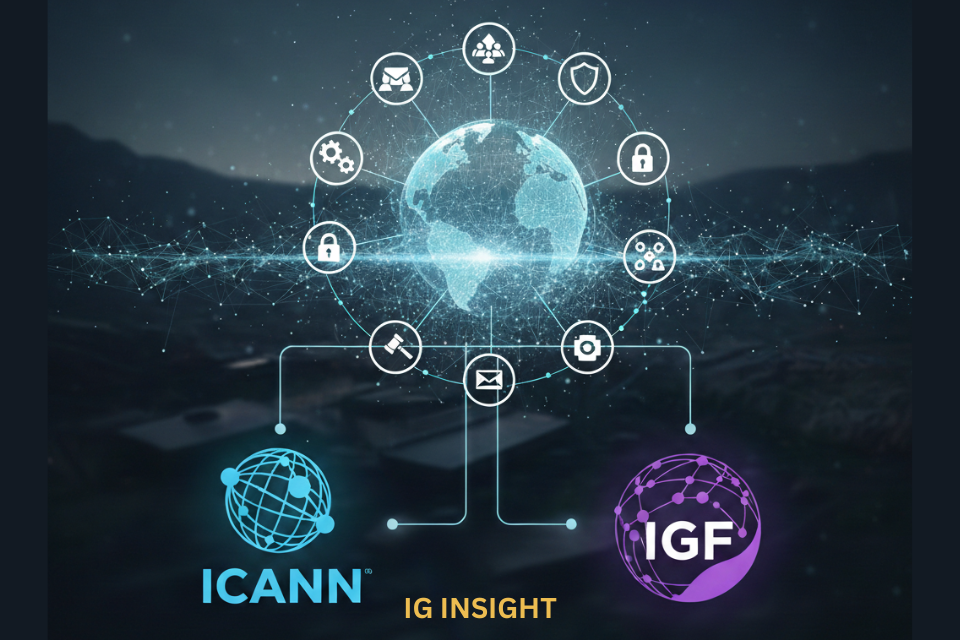
ICANN — the Internet Corporation for Assigned Names and Numbers — is the nonprofit organisation responsible for coordinating the global system of unique internet identifiers. That means domain names (.com, .org, .net, and every country-code and new generic TLD), IP address allocation through the five Regional Internet Registries, and the protocol parameters that make internet communication work consistently across billions of devices and thousands of networks worldwide.
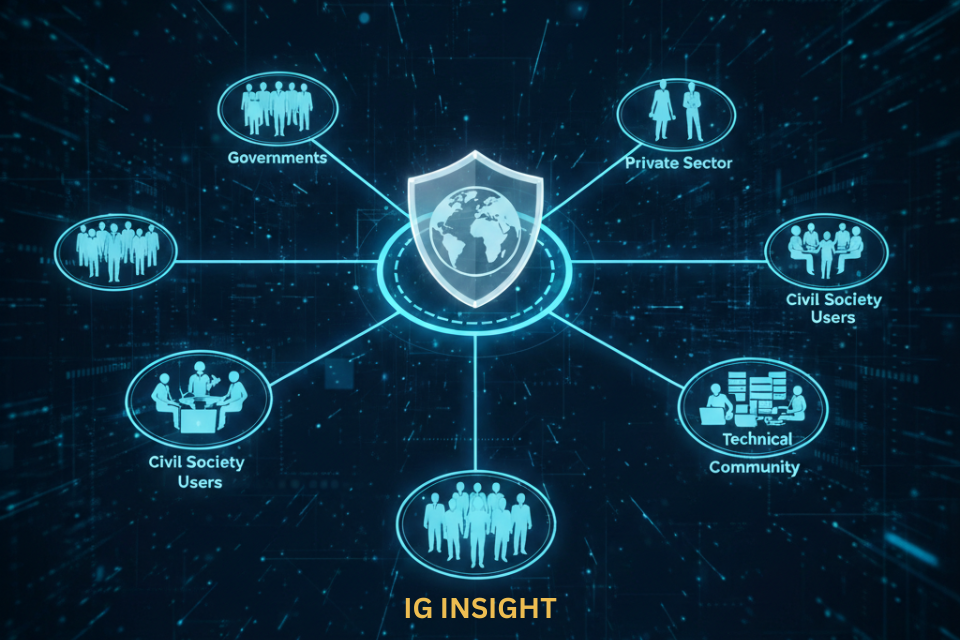
ICANN operates through a multistakeholder model: governments, civil society, the technical community, the private sector, and individual internet users all participate in its policy-making processes. This is not an intergovernmental organisation where only states have votes — it is a community-governed institution where well-prepared, informed individuals from any background can contribute to decisions that shape the internet for billions of people. NextGen@ICANN is designed specifically to bring the next generation of those individuals into that community.
| Why NextGen Exists: ICANN’s stated mission for NextGen is to increase accessibility to the internet governance ecosystem and raise awareness and encourage participation among youth who are not currently engaged. The program is explicitly positioned as a step-by-step journey into the ICANN ecosystem — not a one-time event, but an entry point into an ongoing community. |
How NextGen@ICANN Works: The Full Programme Arc
NextGen@ICANN is structured around ICANN’s Public Meetings, which happen three times a year: an Annual General Meeting, a Policy Forum, and a Community Forum. Each time one of these meetings is held in a particular region of the world, ICANN opens a NextGen application round for students living and studying in that region. Here is the complete arc of how the programme works:
Application Opens
ICANN announces the NextGen@ICANN application round, typically two to three months before the meeting. The application is submitted through the ICANN website and requires an ICANN Account. By applying, students agree to attend the ICANN meeting with the NextGen group and all required events. Applications must be written in English and should demonstrate genuine interest in internet governance and ICANN’s work, not just a desire to travel.
Selection and Announcement
The NextGen Selection Committee reviews all applications and announces successful candidates on the ICANN website, typically six to eight weeks after the application deadline. For NextGen@ICANN87 (Muscat, October 2026), successful candidates were announced on 7 July 2026. For NextGen@ICANN88 (Lisbon, March 2027), the announcement is set for 17 December 2026.
Six Weeks of Pre-Meeting Preparation
Selected participants begin a structured six-week online preparation programme before the ICANN Public Meeting. This covers ICANN’s mission and organisational structure, the internet ecosystem and how its governance works, ICANN’s policy development processes (including how the GNSO, ccNSO, and supporting organisations function), and practical guidance on how to engage with the meeting’s sessions and community. Experienced mentors — drawn from the ICANN community — support participants throughout this preparation period.
The ICANN Public Meeting
During the meeting itself — typically six days — NextGen participants attend sessions alongside the full ICANN community, engage with policy discussions, and build real relationships with the practitioners, advocates, and experts who make up the ICANN community. NextGen participants are not observers in the back of the room: they are expected to be active contributors throughout the meeting.
The 10-Minute Presentation
Every NextGen@ICANN participant is required to deliver a 10-minute presentation during the meeting. This is the programme’s most distinctive and valuable feature. Presentation topics can include: research the student is working on or has completed; an activity related to ICANN’s work; an ICANN-related website the student is affiliated with; a thesis project; or any other internet governance topic the student brings genuine insight to. The presentation requirement transforms students from passive attendees into active contributors — exactly what ICANN is looking for.
Eligibility: Who Can Apply for NextGen@ICANN?
NextGen@ICANN has three core eligibility requirements, all of which must be met simultaneously. They are specific, and the regional requirement in particular catches many potential applicants off guard.
First, you must be enrolled as an undergraduate, graduate, or doctoral student at the time of the application. There is no restriction on your field of study — computer science, law, political science, international relations, economics, communications, and many other backgrounds are represented in NextGen cohorts. What matters is that you are currently a student.
Second, you must be between 18 and 30 years old at the time of the ICANN meeting. The programme is specifically for youth participants — if you have recently graduated but are still within the age range, check the current round’s eligibility rules carefully. If you do not meet the NextGen criteria, ICANN explicitly points people toward the main ICANN Fellowship Program, which has no age restriction and is open to all sectors.
Third, and most importantly for planning your application: you must currently be living and studying in the region of the respective ICANN meeting. This means the regional eligibility changes with every meeting. NextGen@ICANN85 (Mumbai, March 2026) was open to Asia Pacific region students. NextGen@ICANN86 (Seville, June 2026) was open to European region students. NextGen@ICANN87 (Muscat, October 2026) was open to Asia Pacific region students. NextGen@ICANN88 (Lisbon, March 2027) is open to European region students. You cannot apply for a NextGen round in a region where you are not currently living and studying.
| ⚠️ Key Eligibility Point: The regional requirement means your window to apply depends entirely on where ICANN holds its meetings and where you are based. Asia Pacific students typically have one or two opportunities per year depending on the meeting rotation. If you miss a round, the next eligible one may be six to twelve months away — so apply as soon as a round opens in your region. |
What NextGen@ICANN Provides — and What It Does Not
NextGen@ICANN provides a grant of support covering economy-class airfare, hotel accommodation during the meeting, and a stipend. The programme also provides structured pre-meeting preparation, experienced mentors from the ICANN community, and access to the full ICANN Public Meeting. Students are expected to secure and pay for their own visas. Travel and health insurance, if desired, is also at the participant’s own expense.
It is worth being clear-eyed about what the programme is and is not. NextGen@ICANN is an entry point — an immersive introduction to how ICANN works and who makes up its community. It is not a guaranteed pathway to a career at ICANN or a commitment from ICANN to involve you in its work beyond the meeting. What NextGen participants make of the experience afterward depends almost entirely on what they put in: whether they stay engaged with ICANN community processes, whether they follow up with the people they met, whether they participate in open working groups and public consultations.
Past NextGen participants who have gone on to become active ICANN community members, fellowship recipients, and even working group contributors consistently identify one factor: they treated the meeting not as an end point but as a beginning. That framing is the most important thing to carry into a NextGen@ICANN application.
NextGen@ICANN vs. the ICANN Fellowship: Understanding the Difference
Because both NextGen@ICANN and the ICANN Fellowship Program involve funded participation in ICANN Public Meetings, they are frequently confused. The distinction is straightforward but important.
| NextGen@ICANN: The Student Pathway Open exclusively to currently enrolled students aged 18–30 living and studying in the region of the meeting. Includes a mandatory 10-minute presentation requirement. Specifically designed as an introductory, educational immersion into ICANN for people who are new to the field. Typically more limited in number of participants than the main Fellowship. Best for: University students at the beginning of their internet governance journey who want a structured, mentored introduction to ICANN and the broader IG ecosystem. |
| ICANN Fellowship Program: The Broader Pathway Open to all sectors — government, civil society, private sector, technical community, academia — with no age restriction beyond the 21-year minimum. No presentation requirement. Designed for individuals already engaged in or interested in ICANN-related work (policy, DNS operations, internet security). Can be received up to twice, with a separate Policy Forum fellowship for alumni. Best for: Professionals, practitioners, and community members at any career stage who want sustained, policy-engaged participation in ICANN’s multistakeholder model. |
Frequently Asked Questions
Q1: Do I need to already know about internet governance to apply for NextGen@ICANN?
No. NextGen@ICANN is explicitly designed for students who are interested in internet governance but may be early in their understanding of it. What the selection committee looks for is genuine curiosity, a demonstrated connection between your studies or activities and internet-related topics, and a clear explanation of what you hope to learn and how you plan to use the experience. Six weeks of structured pre-meeting preparation is provided precisely because ICANN does not expect students to arrive as experts.
Q2: What should my 10-minute presentation be about?
Your presentation should demonstrate a genuine connection between your work or studies and internet governance or ICANN-related topics. Strong presentations have covered: original research on DNS security or cybersecurity policy; analysis of a national internet governance issue; a thesis project on digital rights, data sovereignty, or platform regulation; an internet governance project or initiative the student is involved with; or a policy perspective on an issue before ICANN. The key is that the topic is genuinely yours — something you know well, care about, and can speak to credibly in ten minutes.
Q3: What happens after the NextGen@ICANN programme ends?
The programme itself ends with the meeting, but ICANN encourages NextGen alumni to stay engaged with the community. Past participants have gone on to apply for the main ICANN Fellowship Program, join GNSO and ALAC working groups, participate in ICANN public consultations, contribute to regional internet governance forums, and become active members of the ICANN alumni network. The most important next steps are: follow up with the people you met, join relevant ICANN mailing lists, participate in ICANN’s public comment processes, and look for the next fellowship round relevant to your region.
Q4: Can I apply for NextGen@ICANN if I study in one country but am a citizen of another?
The eligibility requirement is that you are currently living and studying in the region of the respective ICANN meeting — not that you are a citizen or national of a country in that region. If you are an international student enrolled at a university in the meeting’s region and are physically living there, you are eligible for that round. Citizenship and nationality are not the determining factors — your current location and student status are.
Q5: Is NextGen@ICANN available if the ICANN meeting goes virtual?
Yes. ICANN has stated explicitly that if an ICANN Public Meeting is held virtually, the NextGen@ICANN Programme will also be held virtually, incorporating the key elements of the standard programme. This was established during the pandemic period when several ICANN meetings moved online. The virtual format maintains the pre-meeting preparation, mentorship, and presentation requirements, though the travel grant would not apply for a virtual edition.
| The Next ICANN Public Meeting Is Happening in Your Region. NextGen@ICANN Is Your Funded Entry Point. Internet governance is not a spectator sport. The policies that determine how the domain name system works, how IP addresses are allocated, how DNS security is maintained, and how the internet’s technical infrastructure is governed are made by the people who show up, engage, and contribute. NextGen@ICANN is ICANN’s investment in making sure the next generation of those people reflects the full diversity of the internet’s users — not just those who already knew where to find the door. Here is everything you need to start: Apply for NextGen@ICANN at icann.org Find the current NextGen@ICANN round at icann.org/public-responsibility-support/nextgen Create a free ICANN Account at account.icann.org — required to apply Take free ICANN Learn courses at learn.icann.org to strengthen your application Read more on IG Insight: ICANN Fellowship Program | How to Write a Public Comment for ICANN Follow APrIGF and APSIG fellowship opportunities at iginsight.org if you are in Asia Pacific Follow IG Insight at iginsight.org for every internet governance fellowship announcement The internet’s next generation of leaders is already out there. NextGen@ICANN is how they find their seat at the table. IG Insight is your guide to getting there. |

Dipankar Barua is an internet governance advocate from Dhaka, Bangladesh, who believes that voices from the Global South must be heard in the rooms where the internet’s future is decided. As an ICANN advocate and VSIG member, he actively engages in multistakeholder policy processes spanning DNS security, digital inclusion, and responsible AI governance. With an academic grounding in Computer Science and AI, and over 15 years of applied IT experience, Dipankar bridges the gap between technical communities and policy spaces — writing, participating, and advocating for a more open, equitable, and inclusive internet for all.