The Engineers, Organizations, and Communities Who Build and Maintain the Infrastructure That the Whole World Depends On
The internet is often described as belonging to everyone — and in a meaningful sense, that is true. No single government, company, or organization owns or controls the global internet. But that does not mean the internet runs itself. Thousands of organizations, working groups, and communities perform the technical work of keeping the internet stable, secure, and interoperable across every country and every device.
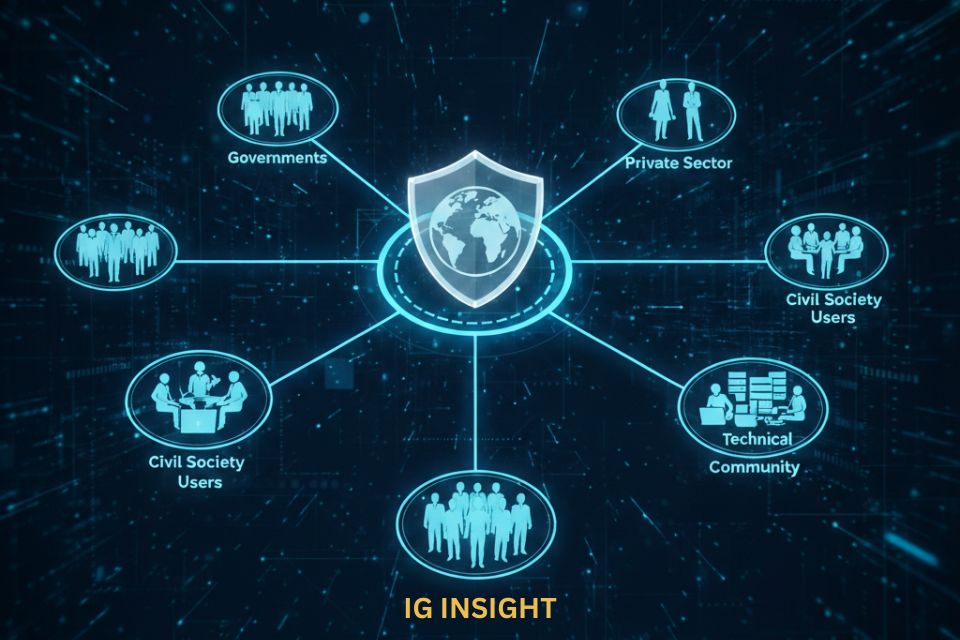
In internet governance, this constellation of organizations is referred to as the technical community — one of the five stakeholder groups recognized in the multistakeholder model alongside governments, the private sector, civil society, and academia. But who exactly are the technical actors of the internet? What do they do? And why does it matter for anyone who wants to understand or engage with internet governance?
This article maps the key technical actors — from the bodies that define how the internet works to those who allocate its resources, run its physical infrastructure, and develop the security systems that keep it trustworthy — and explains how educators like Prof. Alfredo Calderón and DiploFoundation’s Jovan Kurbalija teach practitioners to engage with these communities.
| 🔧 The Technical Community’s Role: In the multistakeholder model of internet governance, the technical community is the stakeholder group responsible for the development, maintenance, and operation of the internet’s core infrastructure — protocols, addressing systems, routing, and security. Their participation in governance processes brings operational expertise and a globally distributed perspective that government and civil society actors cannot replicate. |
The Standard-Setters: IETF and the IAB
At the foundation of everything the internet does is a set of agreed-upon rules for how computers communicate. Those rules — called protocols — are defined and developed by the Internet Engineering Task Force, the IETF. Founded in 1986, the IETF is an open, volunteer-driven community of network engineers, software developers, and researchers who produce technical specifications called RFCs (Requests for Comments). Every time you send an email, load a website over HTTPS, or make a video call, you are using protocols the IETF defined.
The IETF operates with no formal membership and no fees. Anyone can participate by joining a working group mailing list, attending meetings, or contributing to a draft standard. Decisions are made through rough consensus — not voting — based on the principle that the best technical outcome emerges from the widest possible pool of expertise. The Internet Architecture Board (IAB) provides strategic oversight of the IETF’s technical direction, manages key liaison relationships with other standards bodies, and publishes architectural guidance on how the internet should evolve.
The IETF and IAB are organizationally hosted by the Internet Society (ISOC) — ISOC provides the legal and financial structure that allows the IETF to function as a global standards body without being a formal organization itself. This relationship illustrates how the technical community is not a monolith: different actors play complementary roles, with the IETF doing the technical work and ISOC providing the institutional framework.
The Coordinators: IANA and ICANN
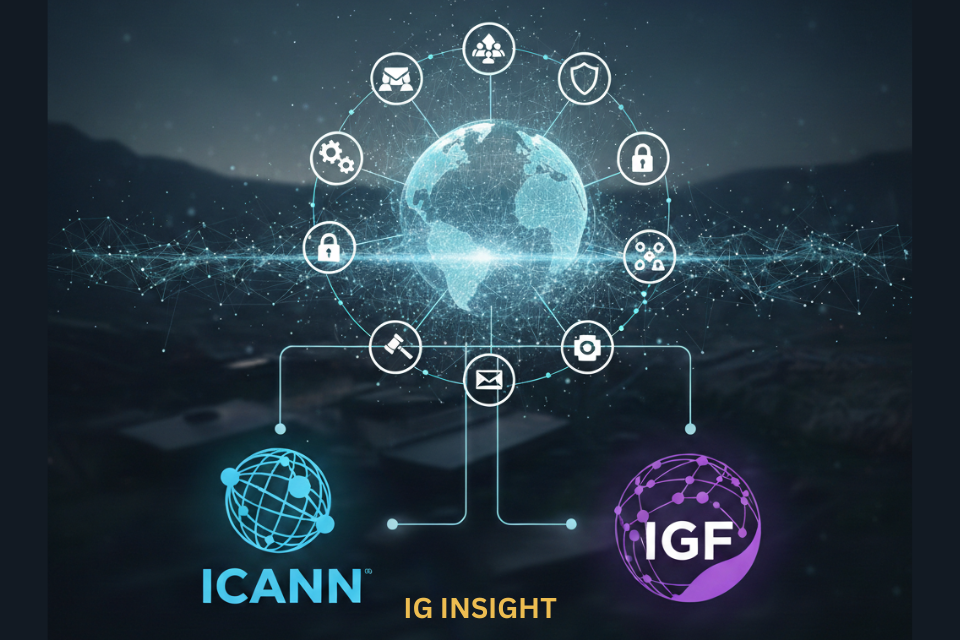
While the IETF defines how internet protocols work, a separate function manages the unique identifiers those protocols depend on: IP addresses, domain names, and protocol parameter registries. This is the IANA function — the Internet Assigned Numbers Authority — currently performed by ICANN (the Internet Corporation for Assigned Names and Numbers).
IANA sits at the top of three critical coordination hierarchies. For the Domain Name System, IANA maintains the DNS root zone — the authoritative master list of every Top-Level Domain (TLD) on the internet, from .com and .org to country-code TLDs like .ng, .in, and .de, to the 1,200+ new gTLDs. For IP addressing, IANA allocates large blocks of IPv4 and IPv6 address space to the five Regional Internet Registries. For protocol parameters, IANA maintains the authoritative registries of thousands of technical identifiers — port numbers, media types, and other codes that internet standards depend on for interoperability.
ICANN, the organization that performs the IANA functions, is also responsible for coordinating the policy framework for the domain name system — working with the registrar and registry ecosystem, developing policies through its multistakeholder community processes, and ensuring the DNS root zone remains stable and globally interoperable. The 2016 IANA Stewardship Transition transferred oversight of the IANA functions from the US government to the global multistakeholder community, a landmark shift in how the technical community’s accountability structures are organized.
The Regional Internet Registries: Allocating the Address Space
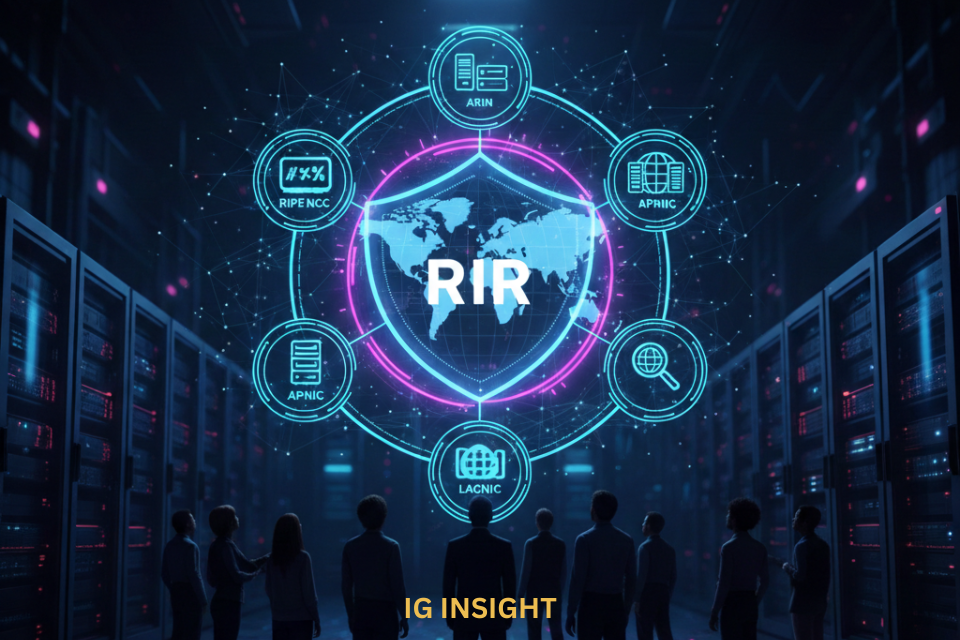
Below IANA in the IP address allocation hierarchy sit the five Regional Internet Registries — the organizations that distribute IP address space to Internet Service Providers and network operators within their regions. Each RIR serves a different part of the world and develops its own address allocation policies through open, community-driven processes.
| APNIC — Asia Pacific Network Information Centre APNIC serves the Asia Pacific region — from Japan and South Korea in the northeast to Australia and New Zealand in the south, from Afghanistan in the west to Pacific island nations in the east. APNIC was the first RIR to exhaust its allocation of IPv4 addresses from IANA’s free pool in April 2011, and it has been one of the most active advocates for IPv6 deployment in the years since. APNIC also runs an influential research program and publishes widely read technical analysis through its blog at blog.apnic.net. |
| ARIN — American Registry for Internet Numbers ARIN manages IP address allocation for the United States, Canada, and many Caribbean and North Atlantic territories. It was established in 1997 and ran out of its free pool of IPv4 addresses in September 2015. ARIN maintains a waiting list for organizations seeking IPv4 space and has developed a regulated transfer market allowing organizations to buy and sell unused IPv4 address blocks within its region. ARIN’s public policy process is open to anyone — any community member can propose a policy change for consideration. |
| RIPE NCC — Réseaux IP Européens Network Coordination Centre RIPE NCC serves Europe, the Middle East, and parts of Central Asia. It was the first of the five RIRs to be established, growing from the informal RIPE (Réseaux IP Européens) working group founded in 1989. RIPE NCC exhausted its free IPv4 pool in September 2012. It maintains one of the most active and technically engaged RIR communities, with RIPE Meetings held twice yearly that bring together network operators, researchers, and policymakers across its service region. |
| LACNIC — Latin America and Caribbean Network Information Centre LACNIC serves Latin America and the Caribbean — one of the fastest-growing internet user populations in the world. Established in 2002, LACNIC has been particularly active in IPv6 deployment advocacy and in capacity-building initiatives across its region. LACNIC’s FRIDA program funds internet development projects in the region, and its annual LACNIC meetings are a major gathering point for the Latin American technical and internet governance communities. |
| AFRINIC — African Network Information Centre AFRINIC serves the African continent — the region with the largest remaining potential for internet growth and, historically, one of the most underserved in terms of IP address allocation. Established in 2005 and headquartered in Mauritius, AFRINIC manages the smallest existing IPv4 allocation and has been navigating a governance crisis in recent years that has highlighted the challenges of running a global technical coordination body under African continental governance conditions. AFRINIC’s policy development process is open and community-driven, with AFRINIC meetings rotating across the continent. |

Other Key Technical Actors: Root Server Operators, NOGs, and IXPs
The five organizations described above are often called the ‘I* community’ — ICANN, IANA, IETF, ISOC, and the RIRs — but the technical community extends well beyond them. Three other categories of technical actor are essential to understanding how the internet physically operates.
Root server operators manage the 13 logical root name servers — the starting point for every DNS lookup on the internet. Despite being called 13, the root server system is actually a distributed network of over 1,700 physical server instances operated by 12 independent organizations including ICANN, Verisign, NASA, WIDE Project, the US Army Research Laboratory, and several universities and non-profits. These operators coordinate through the Root Server System Advisory Committee (RSSAC) within the ICANN community and have never been involved in a globally disruptive root server failure — a testament to both the system’s technical design and the professionalism of its operators.
Network Operators Groups (NOGs) are regional and national communities of network engineers who operate the networks that make up the internet — ISPs, enterprise networks, content delivery networks, and data center operators. NOGs like APNOG (Asia Pacific), NANOG (North America), RIPE (Europe), LACNOG (Latin America), and AfNOG (Africa) hold regular meetings where operators share best practices, discuss routing security, and coordinate on operational challenges. NOGs are where the internet’s day-to-day operation is managed — they are less visible than ICANN or IETF but equally essential.
Internet Exchange Points (IXPs) are the physical locations where different networks connect and exchange traffic. Without IXPs, all internet traffic between networks in the same city would have to travel to distant data centers and back — adding latency and cost. IXPs reduce both, and they play a particularly important role in developing regions where expensive international bandwidth would otherwise make local internet connectivity unaffordable. The presence of a functioning IXP in a country significantly reduces the cost of internet access for everyone in that country.
Learning the Technical Landscape: Who Teaches It Best
Understanding who the technical actors of the internet are is a foundational competency for anyone engaging seriously with internet governance — whether as a civil society advocate, a government official, a researcher, or a policy professional. The best education programs in the field are specifically designed to build this understanding.
Prof. Alfredo Calderón, founder and lead instructor of the Virtual School on Internet Governance (VSIG), built the VSIG curriculum to cover the technical infrastructure layer explicitly — DNS, IP addressing, routing, IANA, RIRs, and the IETF standards process — alongside the governance and policy dimensions. Prof. Calderón received ICANN’s Dr. Tarek Kamel Award for Capacity Building in October 2025 in recognition of his contributions to internet governance education globally. VSIG Group O, the current English-language cohort, runs free of charge from September 7 to November 27, 2026. Registration is open at virtualsig.org.
DiploFoundation’s Introduction to Internet and Digital Governance, founded and led by Jovan Kurbalija, DiploFoundation’s Executive Director, covers the same technical community in its Infrastructure and Development module — explaining IP addresses, DNS, IXPs, and technical standards in accessible terms designed for participants from non-technical backgrounds. Kurbalija’s approach frames technical understanding as a prerequisite for effective digital diplomacy — not just a nice-to-have background. The course costs EUR 500, with partial scholarships available for developing-country participants, and is available at diplomacy.edu.
| 📚 For Practitioners: Both VSIG (free, virtualsig.org) and DiploFoundation (EUR 500 with scholarships, diplomacy.edu) cover the technical community and its governance role as core curriculum — not as a footnote. Completing either course will give you the vocabulary and conceptual framework to engage meaningfully with IETF working groups, RIR policy processes, NOG meetings, and IXP governance discussions. |
Technical Actors of the Internet: Quick Reference
| Actor | Primary Role | Key Resource |
| IETF | Develops internet technical standards (RFCs) | ietf.org / datatracker.ietf.org |
| IAB | Strategic oversight and architecture guidance for the IETF | iab.org |
| ISOC | Legal/financial home for IETF; internet advocacy globally | internetsociety.org |
| IANA (ICANN) | DNS root zone, IP allocation to RIRs, protocol parameters | iana.org |
| ICANN | DNS policy framework; coordinates domain name ecosystem | icann.org |
| APNIC | IP addresses for Asia Pacific region | apnic.net / blog.apnic.net |
| ARIN | IP addresses for North America and Caribbean | arin.net |
| RIPE NCC | IP addresses for Europe, Middle East, Central Asia | ripe.net |
| LACNIC | IP addresses for Latin America and Caribbean | lacnic.net |
| AFRINIC | IP addresses for Africa | afrinic.net |
| Root server ops | Operate the 13 logical DNS root name servers | root-servers.org |
| NOGs | Network operator communities; manage day-to-day internet ops | nanog.org / afrinog.org etc. |
| IXPs | Physical points where networks interconnect and exchange traffic | peeringdb.com |
Frequently Asked Questions
Q1: Why is the technical community recognized as a separate stakeholder group in internet governance?
Because the technical community brings expertise and a perspective that no other stakeholder group can fully replicate. Network engineers, protocol designers, and RIR staff understand how technical decisions create real-world constraints and opportunities in ways that government officials and civil society advocates — however expert in their own domains — often do not. In the multistakeholder model, the technical community’s participation ensures that governance decisions are grounded in operational reality, not just policy preferences. At ICANN, the IETF, and the IGF, technical community representatives have formal roles in governance structures precisely because this expertise is considered essential to legitimate outcomes.
Q2: Can non-technical people participate in organizations like the IETF or the RIRs?
Yes — and they do. IETF working groups on policy-adjacent issues (privacy, human rights in protocols, internationalization) welcome participants with legal, policy, and civil society expertise alongside engineers. RIR policy processes are explicitly community-driven and open to any member of the RIR’s service region, with many policy participants coming from ISP management, government, and civil society rather than purely technical roles. That said, a basic working knowledge of the technical concepts involved — IP addressing, DNS, routing — makes participation significantly more effective. This is precisely why VSIG and DiploFoundation include technical content as a core component of their curricula.
Q3: What is the difference between the IETF and the ITU-T?
Both develop technical standards relevant to the internet, but they operate on completely different models. The IETF is an open, volunteer-driven community with no formal membership or government affiliation — anyone can participate, and standards emerge from rough consensus and running code. ITU-T (the ITU’s standardization sector) is an intergovernmental body where membership is held by national governments and private sector entities that pay membership fees — participation is more restricted and standards emerge through a different consensus process. The two bodies overlap in scope on some issues, and their relationship is one of coordination rather than competition, but their governance models reflect fundamentally different philosophies about how technical standards should be made.
Q4: What is a Network Operator Group (NOG) and how do NOGs participate in internet governance?
A NOG is a community of network engineers who operate the networks that physically constitute the internet — ISPs, data centers, content delivery networks, and enterprise networks. NOGs hold regular meetings where operators share routing security practices, discuss operational incidents, and coordinate on technical standards adoption. In internet governance terms, NOGs are significant because they represent the operational reality of the internet: the people who actually implement what IETF standards define and what RIRs allocate. NOGs participate in ICANN discussions, contribute to RIR policy processes, and increasingly engage in IGF sessions on cybersecurity and operational security.
Q5: Why are Internet Exchange Points (IXPs) important for internet governance in developing regions?
IXPs are critical for developing regions because they allow local internet traffic to stay local — without an IXP, data sent between two organizations in the same city may have to travel to a distant international hub and back, adding latency and cost. For countries with expensive international bandwidth, local IXPs dramatically reduce the cost of internet connectivity for everyone in the country. Governance bodies like ISOC, APNIC, and AFRINIC actively support IXP development in developing regions as part of their capacity-building mandates. The presence and governance of IXPs has become an important internet policy question in many developing countries, intersecting with national digital strategy, competition policy, and infrastructure investment decisions.
| The Internet’s Technical Actors Keep the Network Running. Understanding Them Is How You Engage With Its Governance. The IETF, IANA, ICANN, five RIRs, root server operators, NOGs, and IXPs are not abstract acronyms — they are the communities and institutions doing the technical work that makes the internet function for five billion people. Understanding who they are, what they do, and how they relate to each other is the foundation for meaningful engagement with internet governance at every level. Start building that understanding today: Explore More at IG Insight Register free for VSIG Group O (Sept 7-Nov 27) at virtualsig.org — covers the full technical community Apply for DiploFoundation IG Course (EUR 500, scholarships) at diplomacy.edu Explore APNIC’s technical blog at blog.apnic.net — the best free resource on IP and routing Browse IETF active working groups at datatracker.ietf.org Read: What Is IANA? | What Is the IETF? | IPv4 vs IPv6 — on IG Insight Follow IG Insight at iginsight.org — the internet’s technical community, explained simply The technical community built the internet. Understanding them is how you help govern it. IG Insight is your entry point. |
© 2026 IG Insight Blog. This article is published for educational and informational purposes.

Dipankar Barua is an internet governance advocate from Dhaka, Bangladesh, who believes that voices from the Global South must be heard in the rooms where the internet’s future is decided. As an ICANN advocate and VSIG member, he actively engages in multistakeholder policy processes spanning DNS security, digital inclusion, and responsible AI governance. With an academic grounding in Computer Science and AI, and over 15 years of applied IT experience, Dipankar bridges the gap between technical communities and policy spaces — writing, participating, and advocating for a more open, equitable, and inclusive internet for all.