Democracy for the Internet — How Billions of Users, Governments, Businesses, and Experts All Get a Voice in One Room
A Complete, Plain-English Guide to the Governance Model That Runs the Internet Without Any Single Government or Corporation in Charge
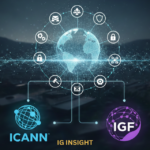
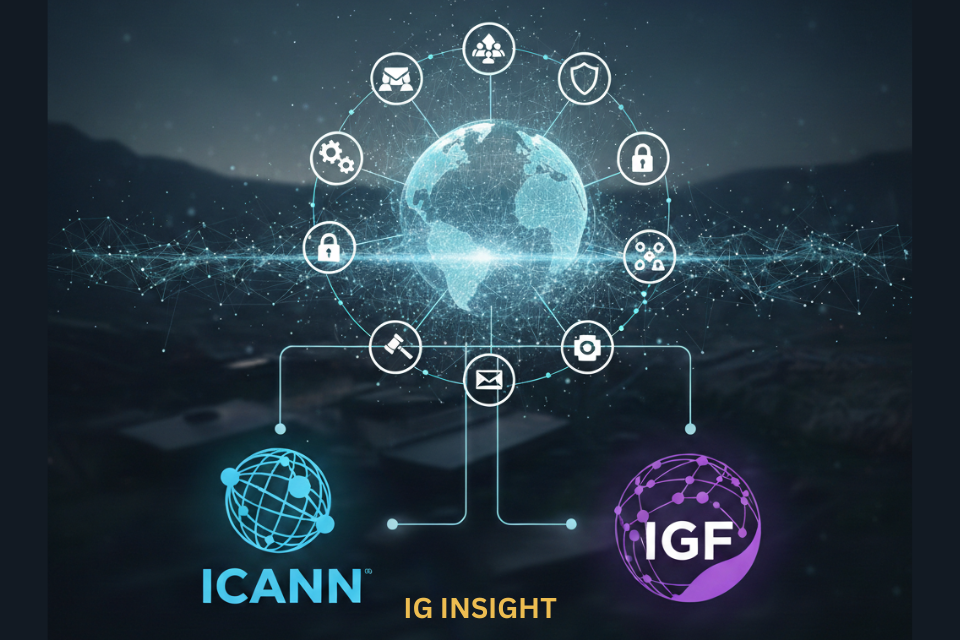
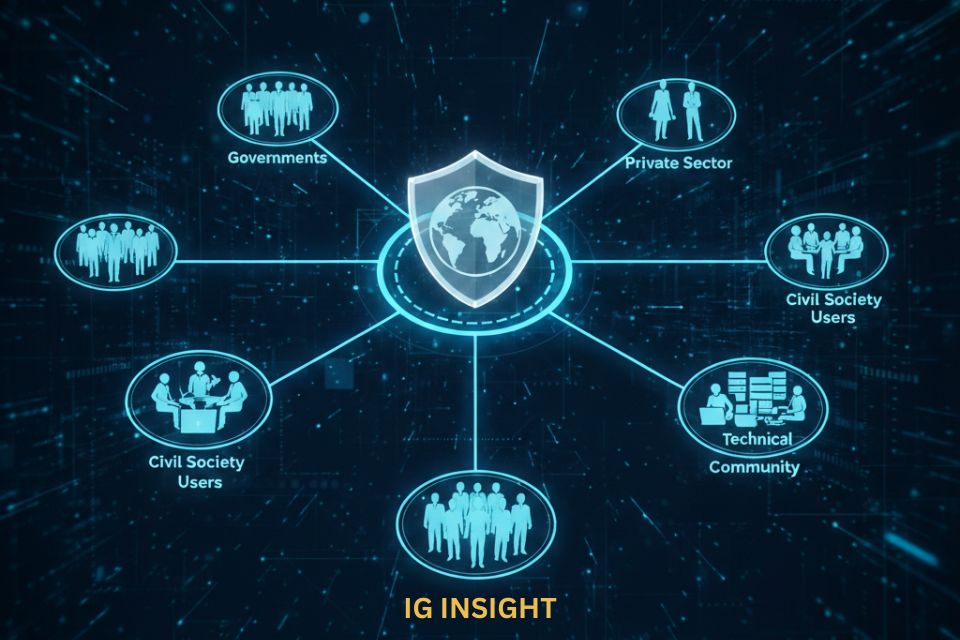
Here is a question that sounds complicated but has a surprisingly profound answer: Who runs the internet? Not any single government. Not any corporation. Not the United Nations. The honest answer is that the internet is governed by a community — a diverse, global community of governments, businesses, technical experts, civil society organizations, and individual users, all working together through a framework called the multistakeholder model.
ICANN — the Internet Corporation for Assigned Names and Numbers — is the organization where this model is put into practice most visibly and consequentially. Every policy that governs how domain names are registered, how the DNS evolves, how new internet extensions are added, and how the internet’s technical infrastructure is coordinated — goes through ICANN’s multistakeholder process.
Understanding how the multistakeholder model works in ICANN is not just an academic exercise. It is the key to understanding why the internet remains an open, globally interconnected resource rather than a fragmented, nationally controlled set of networks — and it is your entry point to actually participating in shaping the internet’s future.
| The Core Idea: The multistakeholder model holds that the internet is a shared global resource and that decisions about how it is governed should involve everyone who has a stake in it — governments, businesses, technical experts, civil society, and individual users — on an equal footing, through transparent, open processes rather than top-down authority. |
What Is the Multistakeholder Model? The Foundation Explained
The multistakeholder model is a governance philosophy and practice that distributes decision-making authority across multiple categories of participants rather than concentrating it in a single actor — whether a government, an international organization, or a private company.
In traditional intergovernmental organizations — the UN, ITU, WTO — states are the primary actors. Businesses and civil society can observe but rarely vote. The multistakeholder model flips this: it gives governments, businesses, technical experts, civil society organizations, and individual users equivalent standing to propose, debate, and shape decisions.
This model did not emerge from political philosophy. It emerged from the practical reality of how the internet was built. The internet grew from a community of technical researchers and engineers who made decisions through rough consensus — not votes, not hierarchical authority, but documented agreement among diverse experts. When ICANN was created in 1998 to coordinate the domain name system at a global scale, it preserved and formalized this bottom-up, participatory approach as the core of its governance architecture.
| Why It Matters: The alternative to the multistakeholder model is either governmental control — where states decide internet governance through intergovernmental treaties — or private control — where corporations manage the internet as a commercial asset. The multistakeholder model preserves the internet’s character as a shared global resource governed in the public interest. |
How the Multistakeholder Model Became Internet Governance’s Cornerstone?
The multistakeholder model’s formal endorsement as the organizing principle for internet governance came at the World Summit on the Information Society (WSIS) — a two-phase UN summit held in Geneva in 2003 and Tunis in 2005. World leaders gathered to address how the information society should be governed, and the defining outcome was the Tunis Agenda — a document that articulated the multistakeholder model as the appropriate approach to internet governance.
The Tunis Agenda endorsed ICANN’s multi-stakeholder model while also creating the Internet Governance Forum (IGF) as a broader dialogue space for internet policy issues. It explicitly stated that governments, the private sector, and civil society all have roles and responsibilities in internet governance, and that no single entity should have exclusive control over the internet.
This WSIS endorsement was significant because it gave the multistakeholder model international political legitimacy — establishing it not just as ICANN’s internal governance preference but as the internationally recognized framework for internet governance more broadly. Every subsequent debate about internet governance — from the 2012 ITU World Conference on International Telecommunications (WCIT) to ongoing discussions about AI governance — traces back to the principles established at WSIS.
Who Are the Stakeholders? The Five Communities in ICANN’s Model
ICANN’s multistakeholder model is built around five distinct stakeholder communities, each bringing a different perspective, expertise, and set of interests to the governance process. Understanding who they are — and what role each plays — is essential to understanding how the model functions.
Governments and Intergovernmental Organizations
Governments participate in ICANN through the Governmental Advisory Committee — the GAC. The GAC currently includes representatives from more than 180 national governments and a number of intergovernmental organizations, including the European Commission and the African Union Commission.
Critically, the GAC is an advisory body — not a decision-making one. Governments do not vote on ICANN policy in the same way they vote in the United Nations. They provide advice to the ICANN Board on public policy matters — and ICANN’s Board must take that advice seriously and formally respond to it, but it is not automatically binding. This is a deliberate design choice that prevents any single government from unilaterally controlling ICANN’s decisions while still ensuring that government perspectives on public interest considerations are formally heard and considered.
The GAC’s influence is real, however. When the GAC achieves consensus on a matter, the ICANN Board is expected to follow that advice or explain with reasons why it cannot. GAC interventions have shaped significant ICANN decisions on new gTLD strings, geographic names, and sensitive domain categories.
The Private Sector and Industry
The private sector participates in ICANN primarily through the Generic Names Supporting Organization (GNSO) and its constituent Stakeholder Groups and Constituencies. The GNSO brings together a rich and diverse industry community organized into two main camps: the Contracted Parties (registries and registrars who have direct contracts with ICANN) and the Non-Contracted Parties (commercial users, intellectual property interests, ISPs, and connectivity providers).
Registry operators — the companies that run TLD registries like Verisign for .com or PIR for .org — are contractually obligated to participate in ICANN’s processes and comply with its policies. Registrars — the businesses that sell domain names to the public — similarly operate under ICANN’s Registrar Accreditation Agreement.
The private sector’s engagement in ICANN is often the most technically sophisticated and best-resourced. Industry participants bring deep operational knowledge of how the DNS works in practice, what policy changes are technically feasible, and what the commercial implications of various governance decisions would be. This expertise is invaluable — but it must be balanced against other stakeholder perspectives to ensure that commercial interests do not dominate outcomes at the expense of the public interest.
Civil Society and Academia
Civil society participation in ICANN takes two main forms. The first is through the GNSO’s Non-Commercial Stakeholder Group (NCSG), which includes nonprofits, academic institutions, human rights organizations, and other non-commercial entities that engage with domain name policy issues. The second is through the At-Large Advisory Committee (ALAC) and its five Regional At-Large Organizations (RALOs), which formally represent the interests of individual internet users worldwide.
Civil society brings perspectives that neither governments nor industry are well-positioned to articulate: the interests of users who are not domain name industry professionals, the human rights implications of DNS policy decisions, the needs of communities in the Global South for whom the internet is newer and access remains challenging, and the advocacy for open, rights-respecting governance norms.
Academic participation adds research rigor — empirical data, independent analysis, and long-term thinking that is not driven by short-term commercial or political interests. Universities and research institutions participate across multiple ICANN bodies and are particularly active in the GNSO’s policy working groups.
The Technical Community
The technical community in ICANN includes the engineers, network operators, and standards experts who build and operate the infrastructure that makes the internet work. This community participates through bodies like the Security and Stability Advisory Committee (SSAC), the Root Server System Advisory Committee (RSSAC), and through individual participation in policy working groups.
The technical community’s role is distinctive: it provides the authoritative voice on what is technically feasible, what will work at internet scale, and what security risks are associated with various policy choices. When the SSAC publishes an advisory on DNSSEC, or when the RSSAC provides guidance on root server operations, it is providing input that no other stakeholder community can replicate.
It is worth noting that the technical community is not monolithic. Network operators, software developers, security researchers, and DNS specialists sometimes have different technical perspectives. ICANN’s model accommodates this diversity by creating spaces for these different voices to inform policy without any single technical faction determining outcomes.
Individual Internet Users
The most numerous and in some ways the least organized stakeholder group is individual internet users — the 5+ billion people who use the internet daily and are the ultimate constituency for internet governance decisions. ICANN’s At-Large Community exists specifically to aggregate and amplify the voices of individual users in ICANN’s policy processes.
The At-Large community is organized through At-Large Structures (ALS) — civil society organizations that have affiliated with one of ICANN’s five Regional At-Large Organizations. The five RALOs represent Africa (AFRALO), Asia Pacific (APRALO), Europe (EURALO), Latin America and the Caribbean (LACRALO), and North America (NARALO). The At-Large Advisory Committee (ALAC) formed from these groups advises ICANN’s Board directly on matters affecting individual internet users.
Individual participation in ICANN’s multistakeholder model is genuinely open: anyone can join a RALO’s activities, submit public comments on ICANN consultations, attend virtual ICANN meetings, and contribute to policy working groups without needing to represent an organization or pay fees.
How the Multistakeholder Model Works in Practice: The Policy Process
Understanding the stakeholders is only half the picture. The other half is understanding how they actually interact to produce decisions. ICANN’s multistakeholder model is not just a set of participants — it is a set of structured processes through which those participants deliberate and reach decisions.
The primary mechanism for policy development is the Policy Development Process (PDP). When a policy issue is identified — through community discussion, a public petition, or a formal request — the relevant Supporting Organization initiates a working group with open membership. Anyone with genuine interest in the topic can join. The working group meets regularly, uses public mailing lists for ongoing discussion, hears from subject matter experts, and works toward consensus positions through structured deliberation.
The process requires transparency at every stage. Issue reports are published for public comment before a PDP begins. Initial reports and final reports are published for community input during the process. Meeting recordings are publicly available. The working group must document how it responded to every substantive public comment — not just acknowledge that comments were received, but explain how each point was considered and what the working group’s response was.
Consensus — not majority vote — is the gold standard. ICANN’s processes aim for full consensus where possible, and document minority views where it is not. This requirement for consensus is both a strength and a limitation: it means that well-reasoned minority positions get heard and sometimes shift the final outcome, but it also means that policy development can be slow when stakeholders have genuinely different interests.
| The Balance of Power: The multistakeholder model in ICANN is not perfectly equal — some communities have more resources, more technical expertise, and more organizational capacity than others. ICANN’s fellowship programs, capacity building initiatives, and At-Large support structures exist specifically to reduce these power asymmetries and ensure that underrepresented communities — particularly from the Global South — have a genuine voice in outcomes. |
Why the Multistakeholder Model Matters: Three Reasons It Is Indispensable
| Reason 1: It Keeps the Internet Open and Unified The most important consequence of the multistakeholder model is that it prevents any single actor — any government, corporation, or bloc of nations — from capturing internet governance for their own purposes. By requiring that policies be developed through open, transparent, multi-participant processes, the model creates structural resistance to capture. This is why the internet has remained globally interconnected and relatively open even as individual governments have sought greater control over their national internet environments. |
| Reason 2: It Produces Better, More Legitimate Policies Policies developed through the multistakeholder model benefit from the full range of relevant expertise and perspectives. A technical expert identifies what is operationally feasible. A civil society advocate identifies what is rights-respecting. A business representative identifies what is commercially viable. A government delegate identifies what is consistent with public policy. A user advocate identifies what serves end-user interests. Policies that survive this multi-perspective scrutiny are typically more robust, more practical, and more widely accepted than those developed by any single group. |
| Reason 3: It Is Adaptable to Emerging Challenges The internet evolves faster than any governance structure designed purely around static institutional rules could accommodate. The multistakeholder model’s flexibility — its ability to convene new working groups on emerging topics, incorporate new communities of expertise, and develop policy through community deliberation rather than top-down mandate — is one of its most important strengths. As challenges like AI governance, quantum computing, and new identifier technologies emerge, the multistakeholder model can adapt its processes to incorporate the relevant new communities of knowledge. |
Multistakeholder Model in ICANN: Key Facts
| Fact | Detail |
| ICANN founded | 1998 — multi-stakeholder model embedded from its founding charter |
| WSIS endorsement | 2005 Tunis Agenda formally endorsed multistakeholder governance for the internet |
| GAC membership | 180+ national governments participate in the Governmental Advisory Committee |
| GNSO constituencies | 8 Stakeholder Groups and Constituencies representing all private sector and civil society interests |
| At-Large RALOs | 5 Regional At-Large Organizations representing individual users across all global regions |
| Open policy participation | Anyone in the world can join GNSO working groups and submit public comments — no fee, no application |
| ICANN Public Meetings | 3 per year, rotating globally — virtual participation is always free |
| ICANN Fellowship Program | Funded participation for underrepresented communities — icann.org/fellowships |
| Accountability mechanism | ICANN Empowered Community — community power to reject Board decisions and remove Directors |
| Policy development standard | Consensus-based — majority voting is the exception, not the rule |
UNIQUE FEATURE: The Empowered Community — ICANN’s Built-In Accountability Revolution
The Empowered Community: ICANN’s Most Innovative Governance Mechanism
In 2016, ICANN underwent the most significant structural reform in its history. When the U.S. government ended its oversight role over the IANA functions — transitioning stewardship to the global community — ICANN created a new accountability mechanism to replace it: the Empowered Community.
The Empowered Community is a formal structure that gives ICANN’s stakeholder communities collective powers that no individual stakeholder group had before. It brings together the five Supporting Organizations and Advisory Committees — the GNSO, ccNSO, ASO, GAC, ALAC, SSAC, and RSSAC — to act as a community body with real enforcement authority.
The powers of the Empowered Community are extraordinary. It can reject ICANN Board decisions on fundamental matters. It can approve amendments to ICANN’s foundational Bylaws. It can initiate independent review of ICANN’s compliance with its own rules. And in the most serious circumstances, it can remove individual Board Directors or the entire Board of Directors.
These are not theoretical powers. They are documented in ICANN’s Bylaws and were specifically designed to ensure that if ICANN’s Board ever made decisions that fundamentally violated the interests of the internet community, the community itself would have the legal and procedural tools to correct course. The Empowered Community is the multistakeholder model’s ultimate accountability mechanism — and it is one of the most innovative governance structures in the history of global internet coordination.
| Why This Matters: Before 2016, ICANN’s accountability ultimately depended on U.S. government oversight. After the IANA transition, the Empowered Community replaced that accountability. For the first time in history, the internet’s key coordination body is accountable not to any single government but to a structured community of all its stakeholders — globally, democratically, and with enforceable powers. |
Frequently Asked Questions
Q1: What makes ICANN’s multistakeholder model different from traditional intergovernmental organizations?
Traditional intergovernmental organizations like the ITU or WTO are state-centric — only national governments are voting members, and businesses and civil society can observe but not formally decide. ICANN’s multistakeholder model places governments in an advisory role alongside businesses, civil society, technical experts, and individual users — all with formal structural roles and none with unilateral authority. Decisions emerge from community deliberation and consensus rather than state-level voting. This design reflects the internet’s nature as a shared global resource built and operated by many actors, not a traditional diplomatic domain managed exclusively by governments.
Q2: Does the multistakeholder model mean anyone can veto ICANN decisions?
No. The multistakeholder model does not give any individual stakeholder or group a simple veto. Policy decisions are made through consensus-based processes in working groups, voted on by the relevant Supporting Organization, and then adopted by the ICANN Board. Individual dissent is documented but does not stop the process. However, the Empowered Community — the collective of ICANN’s Supporting Organizations and Advisory Committees acting together — does have specific powers to reject Board decisions on fundamental matters and to remove Board directors. This is a structural accountability mechanism, not a routine veto.
Q3: Is the multistakeholder model actually inclusive — or does it favor wealthy, Western participants?
This is one of the most important and honest critiques of the model in practice. Wealthier, better-resourced stakeholders — particularly from North America and Europe — have historically had more presence and influence in ICANN processes than participants from Africa, Asia, and Latin America. ICANN has acknowledged this asymmetry and actively works to address it through Fellowship Programs, At-Large capacity building, multilingual participation support, and rotating meeting locations. The model’s principles are genuinely inclusive; the implementation is an ongoing, imperfect work in progress that requires continued community attention.
Q4: How does the Governmental Advisory Committee (GAC) fit into the multistakeholder model?
The GAC is governments’ formal participation channel in ICANN’s multistakeholder model. It includes 180+ national governments and intergovernmental bodies and advises the ICANN Board on public policy matters. When the GAC reaches consensus on a position, ICANN’s Board is expected to take that advice or explain why it cannot. This gives governments real influence without giving any single government veto power over ICANN’s technical and policy coordination. The design reflects the Tunis Agenda principle that governments have a role in internet governance for public policy aspects while the private sector and civil society lead on technical and operational matters.
Q5: What is the future of the multistakeholder model — is it under threat?
The multistakeholder model faces genuine challenges. Some governments — particularly larger state actors — have periodically pushed for greater intergovernmental control over internet governance, arguing that state sovereignty should take precedence. The expansion of national internet regulations, the rise of digital sovereignty arguments, and debates over AI governance all create pressure points for the model. At the same time, the 2016 IANA transition demonstrated that the multistakeholder community can successfully take on greater responsibility. The model’s future depends on whether its practitioners — businesses, civil society, technical experts, and engaged individuals — continue to invest in making it work, and whether it can demonstrate its value in governing emerging challenges like AI as effectively as it has governed the DNS.
The Multistakeholder Model Needs You. Truly.
The multistakeholder model in ICANN is not just an organizational structure or a governance theory. It is a living practice that works better when more diverse voices participate. Every time someone new joins a working group, submits a public comment, or attends an ICANN meeting, the model becomes more representative — and its decisions become more legitimate.
The internet governs billions of lives. The multistakeholder model is how that governance happens. Your participation is not just welcome — it is essential.
Join the Internet’s Governance Community Today
- Submit a public comment at icann.org/public-comments — open to everyone, no cost
- Join your regional RALO at atlarge.icann.org — represent individual internet users
- Browse GNSO working groups at gnso.icann.org — join one on a topic you care about
- Apply for ICANN Fellowship at icann.org/fellowships — funded in-person participation
- Attend the next ICANN Public Meeting virtually — free at icann.org/meetings
- Learn the model at learn.icann.org — free Introduction to ICANN course
The people who shape the internet are the people who show up. In the multistakeholder model, showing up is the point.
© 2026 IG Insight Blog. This article is published for educational and informational purposes.

Dipankar Barua is an internet governance advocate from Dhaka, Bangladesh, who believes that voices from the Global South must be heard in the rooms where the internet’s future is decided. As an ICANN advocate and VSIG member, he actively engages in multistakeholder policy processes spanning DNS security, digital inclusion, and responsible AI governance. With an academic grounding in Computer Science and AI, and over 15 years of applied IT experience, Dipankar bridges the gap between technical communities and policy spaces — writing, participating, and advocating for a more open, equitable, and inclusive internet for all.